Updated on
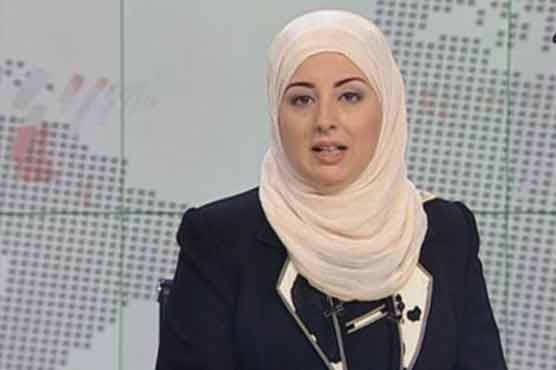
Summary Wearing a cream-colored headscarf and a dark suit, Fatma Nabil read the 12 o'clock news bulletin on
Nabil and several other female news presenters scheduled to go on air mark the end of a ban on presenters wearing the Muslim head covering, a policy that state TV has enforced throughout the half century of its existence.A large majority of Egyptian women cover their hair. But under the ousted secular-leaning President Hosni Mubarak and his predecessors, female TV employees who did so would be asked to take jobs away from the cameras. Some sued against the policy and won, but a Ministry of Information run by staunch regime loyalists would ignore the rulings.The end result was that the faces on state TV mirrored those of the wives of the ruling elite, where the style was set by women like the well-coiffed First Lady Suzanne Mubarak.Mubaraks overthrow in a 2011 uprising, and the subsequent election of Islamist Mohammed Morsi as president, put a new face on power. Morsi wears an Islamic beard, and the countrys new First Lady Naglaa Mahmoud covers not just her hair but the entire upper half of her body, minus her face a veiling style associated with the working class.The vast majority of Muslim Egyptian women wear some form of head covering from stylish scarves to Mahmouds khaimar body-covering to the full face-covering niqab. Privately-owned networks have long employed veiled presenters and many famous actresses have taken the veil and continued to appear in soap operas aired on state TV.But TV presenters represented one form of employment others included hotel and airline work where the government apparently wanted to promote a vision of modernity that it considered incompatible with veiling.Nabil worked for a year in the Muslim Brotherhood TV network Misr 25 after she was barred by TV from appearing on air because of her veil. With Morsis election and the appointment of the new Information Minister, Salah Abdel-Maksoud, who is a member of the Muslim Brotherhood, she said she was given the green light to come back to state TV.Now the standards have nothing to do with the veil, which is a personal choice, but are all about professional skills and intellect, she said.But critics perceive the appearance of veiled women not as a breakthrough in personal freedom but a cosmetic change: State employees they say will still take their cues from the ruling elite, but from an Islamic one rather than a secular one.In the aftermath of last years uprising, revolutionary groups said the Ministry of Information should be abolished altogether to ensure media freedom.Current Information Minister Abdel-Maksoud has said that he will be Egypts last. But many liberals and journalists are skeptical. They protested the latest shuffle of state editors by the Islamist-dominated upper house of parliament or Shura Council, where most of the 50 new appointees were either Islamists or sympathizers. Egypts union of journalists has accused the Brotherhood of trying to make the press its mouthpiece.In several incidents, journalists say, the new editors-in-chief have censored anti-Islamist columnists. In others they have fawned on Morsi as they once did on Mubarak. State-owned October magazine ran a cover page last month depicting the president as a knight riding a horse and with a subtitle, The revolution takes off.I want to see state media tell the truth and to stop serving the ruler, whoever the ruler is, said Farida el-Shoubashi, a media expert. I dont want the state media to tell me that the president weeps while he prays. I want to know how to the president is going to lift the countrys battered economy.