Updated on
Summary Violence in Nigeria's troubled north has left two suicide bombers and three others dead.
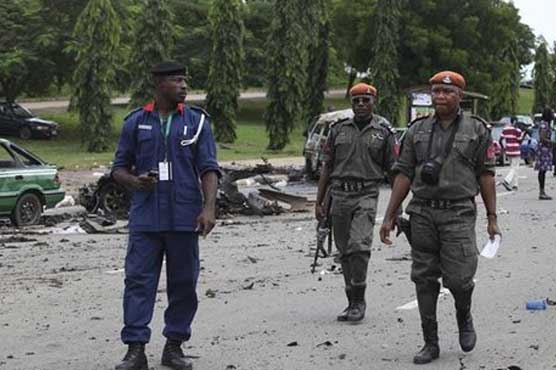
Attacks targeting authorities in two major cities of Nigerias troubled north have left two suspected suicide bombers dead and killed three others, authorities said Monday.Simultaneous suicide bomb attacks Monday in the major northwestern city of Sokoto also killed a civilian and a police officer, said the regional police chief, Assistant Inspector General of Police Mukhtar Ibrahim. One of the bombers struck a compound containing a police station and regional police offices, he said, while another attacked a police station about two miles (four kilometers) away.An injured man at Specialist Hospital Sokoto, who spoke on condition of anonymity because of the sensitivity of the matter, said he saw a car race into the main gate of the compound. He said he was on a bicycle when the blast went off, the impact threw him from the bike, and he hurt his hand in the fall.Police sealed off roads leading to both police premises soon after the blasts.Motorcycle-mounted gunmen later shot at a third police station in another part of the city, said Sokoto state police spokesman Sani Dahiru. He could not immediately say how many gunmen there were, or whether there had been casualties.The twin explosions and drive-by shooting come as Nigeria faces an increasing threat from a radical Islamist sect known as Boko Haram.There has also been a spate of recent attacks targeting uniformed officers, some of which have been blamed on the sect.Three gunmen killed a shoe-shiner Monday morning outside an uninhabited house belonging to Nigerian Vice President Namadi Sambo in the north central city of Zaria, said Kaduna state police spokesman Abubakar Balteh. He said the house had been under renovation and that the man was near policemen who had been guarding the construction site.Rioters had burned down that same house during postelection violence that swept across northern Nigeria after April 2011 presidential polls, Balteh said.