Updated on
Summary Ping said Africa's recent geopolitical situation had been mixed.
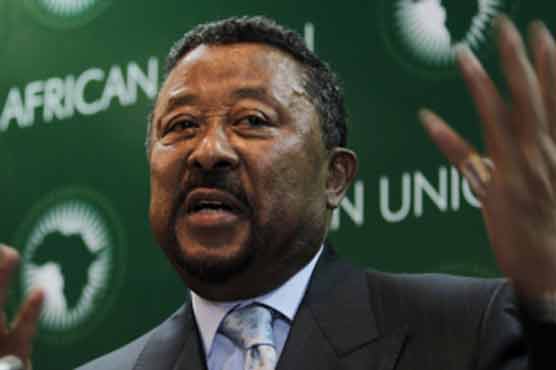
Malis crisis is one of the most serious challenges facing the continent, African Union commission leader Jean Ping told a meeting of heads of state in Ethiopia on Saturday.The vast desert north of Mali has been taken over by Al Qaeda-linked Islamist militants in the aftermath of a March military coup in the southern capital Bamako, raising fears of a new regional haven for extremists.The situation in Mali is one of the most serious situations our continent is confronted with, Ping said at the start of a closed-door meeting on Mali and on tensions between Sudan and the year-old breakaway nation South Sudan. He said Malis crisis imperils the very existence of Mali as a nation.Ivory Coast President Alassane Ouatarra, the AU peace and security council chair, said the conference condemns the aim of the terrorist groups to turn northern Mali into a sanctuary and a coordination centre for terrorist groups on the continent such as AQIM, MUJAO, Boko Haram and al-Shebab.The Movement for Oneness and Jihad in West Africa (MUJAO) is an armed group presented as an offshoot of Al-Qaeda in the Islamic Maghreb (AQIM).Nigerian Islamist group Boko Haram has since 2009 stepped up attacks on government and Christian targets, while Somalias Shebab Islamists, fighting to overthrow the weak, Western-backed government, still stage guerrilla attacks despite having lost ground to African Union troops in recent months.Ouatarra said the four militant groups constitute a serious threat to regional and international peace and security.In Mali, Islamist fighters took advantage of the chaos following a military coup in March to seize key towns in the north.The jihadists fought alongside, but then chased off, separatist Tuareg rebels, and have since enforced strict Islamic law and destroyed ancient World Heritage sites they consider idolatrous in the fabled city of Timbuktu.At the summit in Addis Ababa, the leaders underlined the need to restore security in Malis north and noted that the nations political situation is further complicated by the absence of interim president Dioncounda Traore who has been in Paris since May 23 seeking medical treatment.Ouatarra reiterated an earlier call by west African leaders to the UN Security Council for the speedy adoption of a resolution authorising the deployment of troops in Mali under Chapter Seven of the UN charter.A west African group of nations has said it is ready to send a 3,300-troop force to help restore order in Mali if it has UN backing.On the conflict between Sudan and South Sudan -- the other issue on the agenda for Saturdays meeting -- Ping said progress at AU-backed peace talks between the two countries has been slow and maybe even a little uneven. He said Thabo Mbeki, the former South African president and AU lead mediator between the two Sudans, would present a report to the summit.The AU and UN have passed resolutions urging the rivals to reach deals on security, oil sharing revenues and border demarcation by August 2.Talks have dragged on in recent weeks, and although Khartoum and Juba, which just celebrated the nations first birthday, agreed to a cessation of hostilities at the last round of talks, no concrete deals have been forged.South Sudans President Salva Kiir attended the opening session. His northern counterpart Omar al-Bashir arrived a little later. Both leaders left in the mid-afternoon, a few minutes apart, without making any comment.Ping said Africas recent geopolitical situation had been mixed.Among other flashpoints he cited the east of the Democratic Republic of Congo where a group of army mutineers known as M23 recently seized a string of small towns from the regular army. The heads of state and government are meeting on peace and security issues ahead of a two-day summit starting Sunday at which they will try to break their deadlock on the choice of a new commission chairman.