Updated on
Summary 70 years Mladic is the last suspect from the Bosnian war to go on trial.
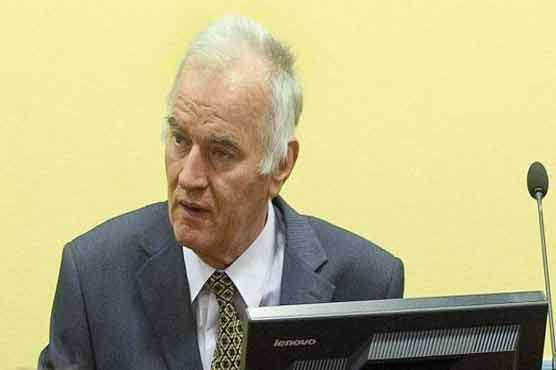
Twenty years after the opening shots of the Bosnian War, former Bosnian Serb military commander Gen Ratko Mladic went on trial Wednesday at a UN tribunal on 11 charges of genocide, crimes against humanity and war crimes.The ailing 70-year-old Mr Mladic’s appearance at the Yugoslav war crimes tribunal marks the end of a long wait for justice to survivors of the 1992-95 war that left some 100,000 people dead. The trial is also a landmark for the UN court and international justice – Mr Mladic is the last suspect from the Bosnian war to go on trial here.Mr. Mladic, in a suit and tie and looking healthier than at previous pretrial hearings, gave a thumbs-up and clapped to supporters in the court’s public gallery as the trial got under way Wednesday. He occasionally wrote notes and showed no emotion as prosecutors began outlining his alleged crimes.Munira Subasic, who lost 22 family members in the 1995 Srebrenica massacre, was among a group of relatives of war dead heading into the courtroom to face Mr. Mladic.The 65-year-old said she wanted to look him in the eye “and ask him if he will repent for what he did.”One woman in the public gallery called him a “vulture” as prosecutors began two days of laying out their case for judges.Presiding Judge Alphons Orie of the Netherlands said at the outset that the court was considering postponing the presentation of evidence, set to start May 29, due to “errors” by prosecutors in disclosing evidence to the defence. Prosecutor Dermot Groome said he would not oppose a “reasonable adjournment.”Mr. Groome began his opening statement by focusing on the plight of a 14-year-old boy whose father and uncle were among 150 men murdered by Bosnian Serb forces in November 1992, part of a pattern of atrocities that characterized the start of the war.“The world watched in disbelief that in neighbourhoods and villages within Europe a genocide appeared to be in progress,” he said.Mr. Groome said Mr. Mladic’s forces continued such killings through to 1995, when they massacred some 8,000 Muslim men in the Srebrenica enclave, the worst mass murder in Europe since the Second World War.“By the time Mladic and his troops murdered thousands in Srebrenica ... they were well-rehearsed in the craft of murder,” Mr. Groome told the court.He then showed judges video of the aftermath of a notorious shelling of a market in Markale, in the Bosnian capital Sarajevo, that killed dozens of people.He said all the attacks were part of an “overarching” plan to ethnically cleanse parts of Bosnia of non-Serbs.Prosecutors will present evidence, including Mr. Mladic’s own wartime diaries, that demonstrate, “beyond reasonable doubt the hand of Mr. Mladic in each of these crimes,” Mr. Groome said.Mr. Mladic has refused to enter pleas, but he denies wrongdoing, saying he acted to defend Serbs in Bosnia. If he is convicted, he faces a maximum sentence of life imprisonment.He suffered a stroke while in hiding and has had other health problems since arriving in The Hague. He now looks little like the burly, swaggering general who marshalled his troops as the world watched during the Bosnian war.His lawyer, Branko Lukic, said Mr. Mladic’s spirits were up ahead of the trial.“He’s feeling better,” he said. “But for a man in the state he is – he’s a man in generally bad shape – he’s feeling pretty good,” Mr. Lukic said.Mr. Mladic’s trial opened as the case against his former political master, Radovan Karadzic, has reached its halfway stage at the same court. Both men face virtually identical 11-count indictments alleging they masterminded the ethnic cleansing of Bosnia.Mr. Karadzic and Mr. Mladic were indicted together 17 years ago, but their cases were split when Mr. Karadzic was captured in Serbia in 2008 and transferred to The Hague. It was another three years before Mr. Mladic was finally arrested in a village near Belgrade, ending 15 years as one of the world’s most-wanted fugitives.Izudin Alic, a Muslim boy made famous in 1995 by images of Mr. Mladic patting his face and handing him chocolate, said he wants swift justice after waiting for so long. He planned to watch the opening of the trial on television.“Just like everyone else, I want him to be tried and sentenced as fast as possible. I hope that the trial will not drag on,” he said as he visited his father’s grave in Potocari, near Srebrenica. “I want him to be sentenced as soon as possible.”