Updated on
Summary The policy change announced this year is being tested at nine brigades before going Army-wide.
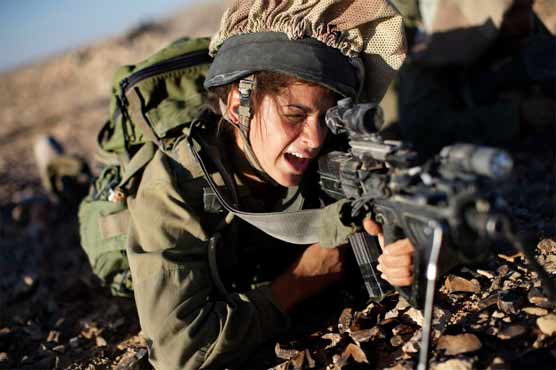
Female soldiers this week are moving into new jobs closer to the battlefield in once all-male units, as the U.S. Army breaks down formal barriers in recognition of whats already happening in Iraq and Afghanistan.The policy change announced earlier this year is being tested at nine brigades before going Army-wide. It opens thousands of noncombat jobs to female soldiers after experience over the past decade showed women were fighting and dying alongside male soldiers anyway.More than 250,000 jobs still remain closed to women. The new jobs within combat battalions are in personnel, intelligence, logistics, signal corps, medical and chaplaincy. The Army is also opening jobs that were once entirely closed to women, such as mechanics for tanks and artillery and rocket launcher crew members.Col. Val Keaveny Jr., the commander of the 4th Brigade Combat Team that is testing the change, said it has been common to have women temporarily attached to combat units and serve alongside them.Women have served in our Army since the Revolutionary War, and they have done phenomenal work and continue to do so today. There is great talent, and now we can have it in the headquarters of infantry, armor and cavalry, he said.Capt. Elizabeth Evans, a 44-year-old mother of five, is one of the first women assigned to the combat battalions. She will oversee personnel issues including casualties, human resources and other administrative responsibilities.Evans, who has deployed to Afghanistan, noted that women have been serving in dangerous jobs in Iraq and Afghanistan for 10 years.With the fluidity of the battlefield and how there are no front lines, it just makes more sense to me to allow women to come into those roles, those noncombat staff roles, she said.Kayla Williams, author of Love My Rifle More Than You: Young and Female in the US Army, served with the 3rd Brigade Combat Team under the 101st Airborne Division during the initial invasion into Iraq as an enlisted soldier in military intelligence.Early in the war, she wasnt even issued plates for her ballistic vest because females cant serve in combat, she said.As an Arabic translator, she was doing the same things as her male infantry counterparts, including going on foot patrols and living in remote combat outposts.Women have been serving in very forward-deployed roles, and women have been serving side-by-side with combat arms personnel, just not in a formalized assigned method, said Williams, who is a fellow at the Truman National Security Project.She acknowledged that the military still has a long way to go in leveling the field for women. It is my personal opinion that the institutionalization of women as not being able to serve in combat arms has a way of subtly allowing sexism within the military, she said.