Updated on
Summary A panel Monday rejected a contested French study linking transgenic corn to cancer in rats.
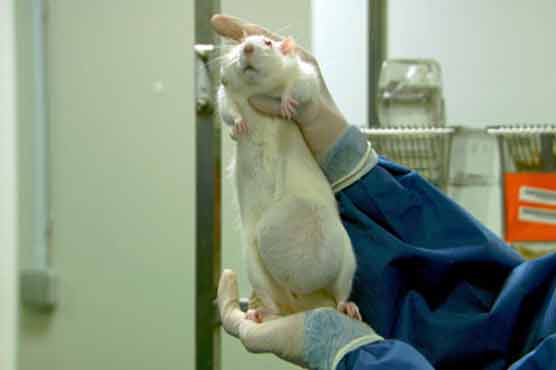
The Higher Biotechnologies Council (HCB) said it found no causal relationship between the rats tumours and consumption of Monsantos NK603 corn or the Roundup herbicide that was part of the experiment.The experiments methods were also unsuitable, it said in a report made at the governments request.The study provides no scientific information regarding the detection of any health risk linked to NK603 corn, whether it was treated with Roundup or not, it said.But the HCB also called for a wider investigation under government auspices to inform a public bewildered by the controversy.It recommended a long-term, independent, transparent study, with adversarial views, into the safety for health of NK603.In September, researchers led by Gilles-Eric Seralini at the University of Caen in Normandy said rats fed with the genetically-modified corn and/or doses of Roundup developed cancer.The paper unleashed a storm in environmentally-sensitive Europe, where GM crops face many restrictions.NK603 has been engineered to make it resistant to agricultural biotechnology company Monsantos herbicide Roundup. This way, farmers can douse fields with the weedkiller in a single go, offering savings.Seralini said his experiment was the first to test GM corn on rodents normal lifespan of two years, as opposed to the standard 90 days. He said NK603 and Roundup both caused tumours, whether they were consumed together or on their own.But critics faulted the experimental methods and data and accused him of manipulating the media to gain scary headlines. On Friday, six French science academies joined the accusers, saying that the work does not enable any reliable conclusion to be drawn and had spread fear among the public.The joint statement, an exceptional event, was issued by the national academies of agriculture, medicine, pharmacy, sciences, technology and veterinary studies.In a reaction, Monsanto said at its French headquarters in Lyon that it took note of the HCBs findings and said the recommended probe does not change risk assessments for NK603.The chair of the HCBs economic and ethics panel, Christine Noiville, said the Seralini study had led to doubt in the publics mind.The aim (of the recommended inquiry) is to reassure public opinion, which doesnt who or what to believe, she told a press conference.Seralini should take part in the recommended probe, the HCB said.