Updated on
Summary An iPad application promises images of Albert Einstein's brain more accessible than before.
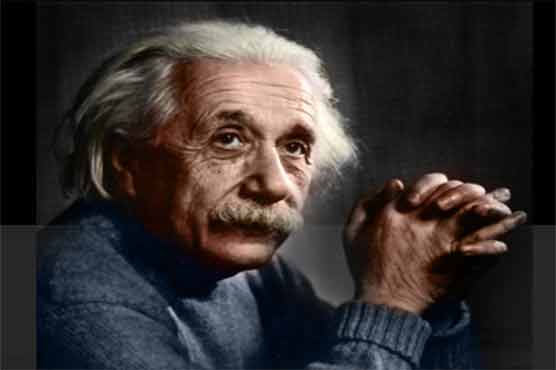
The application will allow researchers and novices to peer into the eccentric Nobel winners brain as if they were looking through a microscope. A medical museum under development in Chicago obtained funding to scan and digitize nearly 350 fragile and priceless slides made from slices of Einsteins brain after his death in 1955.I cant wait to find out what theyll discover, said Steve Landers, a consultant for the National Museum of Health and Medicine Chicago who designed the app. Id like to think Einstein would have been excited.After Einstein died, a pathologist named Thomas Harvey performed an autopsy, removing his brain in hopes that future researchers could discover the secrets behind his genius.Harvey gave samples to researchers and collaborated on a 1999 study published in the Lancet. That study showed a region of Einsteins brain the parietal lobe was 15 percent wider than normal. The parietal lobe is important to the understanding of math, language and spatial relationships.The new iPad app may allow researchers to dig even deeper by looking for brain regions where the neurons are more densely connected than normal, said Dr. Phillip Epstein, a Chicago-area neuroscientist and consultant for the museum.But because the tissue was preserved before modern imaging technology, it may be difficult for scientists to figure out exactly where in Einsteins brain each slide originated. Although the new app organizes the slides into general brain regions, it doesnt map them with precision to an anatomical model.They didnt have MRI. We dont have a three-dimensional model of the brain of Einstein, so we dont know where the samples were taken from, said researcher Jacopo Annese of the Brain Observatory at the University of California, San Diego. Whats more, the slides on the app represent only a fraction of the entire brain, Annese said.Annese has preserved and digitized another famous brain, that of Henry Molaison, who died in 2008 after living for decades with profound amnesia. Known as H.M. in scientific studies, Molaison participated during his life in research that revealed new insights on learning and memory.A searchable website with images of more than 2,400 slides of Molaisons entire brain will be available to the public in December, Annese said.There will be another Einstein and well do it like H.M., Annese predicted. For now, he said, its exciting that the Einstein brain tissue has been preserved digitally before the slides deteriorate or become damaged.Some may question whether Einstein would have wanted images of his remains sold to non-scientists for $9.99.Theres been a lot of debate over what Einsteins intentions were, museum board member Jim Paglia said. We know he didnt want a circus made of his remains. But he understood the value to research and science to study his brain, and we think weve addressed that in a respectful manner.Paglia said the app could inspire a whole new generation of neuroscientists.Proceeds from sales will go to the U.S. Department of Defenses National Museum of Health and Medicine in Silver Spring, Maryland, and to the Chicago satellite museum, which is set to open in 2015 with interactive exhibits and the museums digital collections.