Updated on
Summary Nasa has reported its first setback in the Curiosity rover mission to Mars.
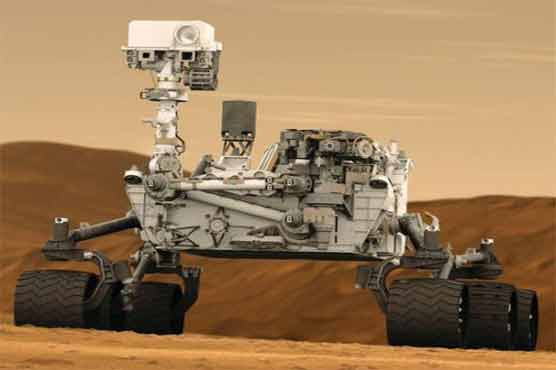
Damage has been sustained by sensor circuits on the robots weather station that take wind readings.The mission team stresses this is not a major problem and will merely degrade some measurements - not prevent them.It is not certain how the damage occurred but engineers suspect surface stones thrown up during Curiositys rocket-powered landing may have struck the circuits and broken their wiring.Nasa is describing the news as an isolated disappointment in what has otherwise been a spectacular start to the mission.Javier Gomez-Elvira, the principal investigator on the broken instrument - the Rover Environmental Monitoring Station (Rems) - said he was hopeful of finding a good way to get past the issue.We are working to recover as much functionality as possible, he told reporters.Curiosity - also known as the Mars Science Laboratory - touched down in the equatorial Gale Crater two weeks ago.It will operate on Mars for at least two Earth years, looking for evidence that the planet may once have had the conditions suitable to host microbial life.Engineers are close to completing their programme of post-landing check-outs on Curiosity.This has involved powering up all of the machines instruments, and it was during this testing that the problem was found on Rems.The weather station is a Spanish contribution to the rover project. It records air and ground temperature, air pressure and humidity, wind speed and direction, as well the amount ultraviolet radiation falling on the surface.These parameters are measured from sensors distributed around the rover, but a number are held on two finger-like mini-booms positioned halfway up the vehicles camera mast. This is where the wind sensors are located.The Rems team first noticed there was something wrong when readings from the side-facing boom where being returned saturated at high and low values.Further investigation suggested small wires exposed on the sensor circuits were open, probably severed. It is permanent damage.No-one can say for sure how this happened, but engineers are working on the theory that grit thrown on to the rover by the descent cranes exhaust plume cut the small wires.It degrades our ability to detect wind speed and direction when the wind is blowing from a particular direction, but we think we can work around that, said Curiositys deputy project scientist, Ashwin Vasavada.