Updated on
Summary Documents give detailed of telecom help Western companies have been providing Syria regime.
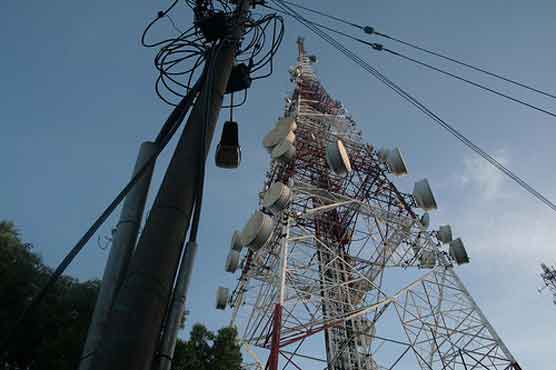
Documents give detailed of telecom help Western companies have been providing Syria regime.As violence began racing through Syria last year, two European contractors were putting the finishing touches on an encrypted radio system that Syrian officials intended for their security forces, according to leaked company emails and three senior employees involved in the project.The documents — made available to The Associated Press and other media organizations by the WikiLeaks organization — show that Greeces Intracom S.A. and Italys Selex Elsag spent years building a Syria-wide communications network and equipped the government with thousands of walkie-talkies, motorcycle-mounted radio units and avionic transceivers used in helicopters.The leaked documents give an unusually detailed look at the communications help Western companies have been providing Syrias regime — something activists find disturbing.This kind of technological assistance is highly undesirable because it is used to repress people, said European parliamentarian Marietje Schaake, who has pushed for tighter export controls on authoritarian governments. The fact that these are EU-based companies doing all this hurts our credibility.Most sanctions-watchers interviewed by the AP say that Selex and Intracom likely acted lawfully, and the companies themselves denied wrongdoing.Intracom said in a statement that it had supplied the Syrians with a civilian telecommunications system in full respect of relevant export regulations, adding that it was no longer involved in operating the system and therefore had no control over how it was used. It said that its work in Syria had since been suspended due to the situation there.Selex owner Finmeccanica S.p.A. echoed Intracoms statement, saying its communications system was intended exclusively for civil, and not military use. The Rome-based defense contractor also claimed that the project was completed prior to the outbreak of the countrys internal conflicts.Both statements seemed hard to square with evidence that elements of the communication system were designed with the military in mind, or emails showing that Selex and Intracom had been providing technical support to Syrian officials as recently as February — a time when government forces were using artillery to pound rebel-held areas of the Syrian city of Homs.Intracom spokesman Alexandros Tarnaris refused to answer a series of detailed questions about the apparent discrepancies between his companys statement and the evidence seen by the AP; Selex spokesman Carlo Maria Fenu also declined to answer questions.The companies role in Syria is difficult to disentangle. In 2008 they jointly announced a €40 million deal to build a mobile radio system for the Syrian Wireless Organization, an arm of Syrias Ministry of Communication and Technology. Selex supplied the radio terminals; Intracom built much of the networks infrastructure.The type of system they were building is called a terrestrial trunked radio, or TETRA, a technology employed the world over to provide resilient, long-range communication for emergency workers, transport services and private industry. In Britain, its used everywhere from the countrys coast guard agency to Londons Heathrow Airport and the capitals sprawling subway.But the technology — considered more secure than conventional cell phone networks — has law enforcement and military applications as well. Police agencies across Europe use the standard to communicate, while Israel uses a Motorola-built TETRA network for its army.Like any technologies it can be used for good or evil, said Marcus Carey, a researcher with Boston-based security company Rapid7. While an emergency organization can save lives with . TETRA networks, an oppressive regime can coordinate violent actions against dissidents.The leaked documents provide a partial picture of how the companies saw TETRA being used in Syria, but they make clear that a large chunk of their equipment was earmarked for the countrys police force — much of it shipped even as revolt against Damascus was gathering steam.This is going to Muadamia Police warehouse, says an Intracom email dated May 7, 2011 — the same month that New York-based Human Rights Watch warned that officers were subjecting political opponents to a campaign of arbitrary arrests, intimidation, and torture.The email, which refers obliquely to the current situation, itemizes what appear to be several hundred radios destined for the Damascus suburb. Among them are shock-resistant Selex VS3000s, which a company brochure advertises as being compliant with most military-standard environmental conditions.Although theres ample evidence that Intracom knew much of the companies material was destined for the security forces, the AP has not seen any direct evidence that Selex knew where its equipment was going.Itemized bills give a feel for the scope of the construction work involved in building the TETRA network — although crucial details such as timing are hard to work out.One bill sent by an Intracom employee and dated May 10, 2011, lists more than €100,000 worth of equipment installed at two separate Damascus police sites, including antennae, microwave radio equipment and air-conditioning systems.Another itemized list — this one attached to an Intracom email sent Feb. 2, 2012 — notes €300,000 worth of costs associated with a Police Administration Center in the Syrian city of Aleppo, as well as references to work carried out at a police academy in Damascus, two further traffic police sites in the capital and a fourth police site in the Damascus suburb of Barzeh.Also in that sloppily-spelled list — and highlighted in red — is a Damascus-based site labeled Militiry.That note was one of a handful of references to the military in the leaked documents. One senior manager who worked with Intracom to set up the network said that the armys needs played a major role in the project.Its used by the military, he told AP, adding that many of the projects mobile radio terminals were intended for installation in army vehicles.He spoke on condition of anonymity, saying he didnt want to draw attention to himself.The notion of an army link to Intracoms work is backed by the leaked emails.A May 19, 2011, email to Intracom employees from a subcontractor refers to the drafting of a report for the Installation of the radio Terminal in military Car. A July 2011 survey document notes the contact details for a radio repeater simply as: Army. In another email, sent in March 2011, Intracom employee Ghassan Nakoul tells co-workers that we are going to connect the network with military exchange.Nakoul, who spoke briefly when reached by phone, confirmed having been told one or two times by the Syrian Wireless Organization that Intracom was doing work for the military but said he had honestly no idea for whom the TETRA network was really meant.Nakoul suggested that officials at the organization may have been exaggerating the seriousness of the project in order to get it finished more quickly.They sometimes raise (their) importance, he said. Sometimes they say this is (for) police, this is (for) the military.One Intracom employee, who spoke on condition of anonymity because he did not want to make his role in the project known, confirmed the broad outlines of the work in Syria, acknowledging that it had a public safety aspect.Its not clear what role, if any, Selex played in discussions over the technologys military applications.The nature of the Syrian Wireless Organization — whose website couldnt be located — is obscure. Emails sent to Maamoun Haj Ibrahim and Riad Naouf — men listed by the U.N. as directors of the organization — were not returned. Calls to the group rang unanswered for days.Syrian Foreign Ministry spokesman Jihad Makdissi said he didnt know anything about the matter and didnt respond to an email requesting comment from someone who did.