Updated on
Summary The mission will be the last docking with the Tiangong-1, which was put into orbit in September.
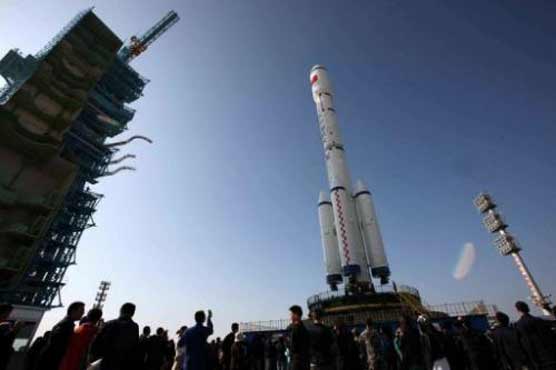
China will deploy bigger spacecraft for longer missions following the success of its Shenzhou 9 voyage, allowing it to build a manned space station and potentially put a man on the moon, experts said.The 13-day voyage of Shenzhou-9, which returned to Earth on Friday, was Chinas longest-ever space mission and included the nations first woman astronaut among its three crew members.In another first for Chinas 20-year space programme, which has cost more than $6 billion, the crew also achieved the countrys first-ever manual docking with an orbital module, the Tiangong-1, a high-speed and high-risk manoeuvre.In the next mission that will occur at the end of this year or in 2013, Shenzhou-10s astronauts will link up with Tiangong 1 in a similar flight, said Morris Jones, an Australian space expert focusing on Chinas programme.Morris said no more astronauts would go on Tiangong-1 after the next mission. Then, in a few years, China will launch a more sophisticated version, the Tiangong-2.When that comes into play, the dimensions of Chinas space programme will grow significantly, said Isabelle Sourbes-Verger, a specialist on Chinas space programme at Frances National Centre for Scientific Research. She said future vehicles would allow for larger space modules, longer missions and more powerful launch vehicles,.Longer periods in space -- one to three months -- cannot take place unless there is a vehicle bigger than the 8.5 tonne Tiangong-1, which also did not appear to have a resupply system, she told AFP.Tiangong-1... will be followed by two other versions with more powerful life support systems... and will possibly be capable of docking with a second vehicle.China is also developing the Long March 5, a next-generation booster rocket that will be needed if the nation hopes to place a bigger space station in orbit, said Joan Johnson-Freese, a professor at the US Naval War College.Launching that space station... depends on the successful development of a new heavy launch vehicle, the Long March 5, she told AFP.I would expect to see this large space station in orbit within the next 10 years -- which could make it the de facto replacement for the now orbiting International Space Station (ISS), said Johnson-Freese. She was referring to the life expectancy of the ISS -- run by the American, Russian, Japanese, European and Canadian space agencies -- which is likely to function only to around 2020.