Updated on
Summary World is expecting China to escalate its space program, a UN official.
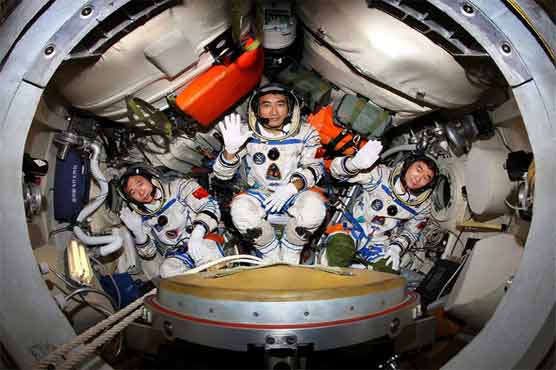
Chinas space station will be an ideal international cooperation platform and the world is expecting China to escalate its space program, said a senior official of the United Nations after watching the launch of the Shenzhou-9 spacecraft in the Gobi desert on Saturday.Dr. Mazlan Othman, director of the Vienna-headquartered United Nations Office for Outer Space Affairs (UNOOSA), told Xinhua at northwest Chinas Jiuquan Satellite Launch Center that the world is waiting very anxiously for Chinas space station to be completed, which will give another opportunity for international cooperation.She said she hopes to see a great involvement of developing countries through Chinas space program.The world is watching China, said the Malaysian astrophysicist.China launched the Shenzhou-9 spacecraft on Saturday to test the countrys manual space docking technology. Aboard the craft are three astronauts, including Chinas first female astronaut.Im excited as Im also a female, said Othman, also deputy director-general of the United Nations Office at Vienna. She added that the United Nations promotes gender equality. By 2020, Chinas space station could be the only space station, and Chinas role is even more important, she said, adding that the world is looking to China for international cooperation in the space sector.Aboard the Shenzhou-8 spacecraft that was launched last November to conduct the countrys first space docking, there was an experiment box containing 17 life science experiments jointly conducted by Chinese and German scientists. It was the first time that China had allowed foreign experiments operated in the Chinese space vessel.Othman said her office aims to ensure such experiment is widened and deepened, and countries together benefit from being in space.Chinas space station in the future offers UN opportunities to conduct space experiments, she said, adding, Medical research in space has benefit people on Earth, which can be improved further when we have the Chinese space station (around 2020).Countries, such as Russia, the United States, Japan and China should work together to give human kind all the benefit obtained from space, said Othman.China is able to leapfrog because the technology has changed so much, such as computers, which is very helpful for China to escalate its space program, she said.We hope there is the first female astronaut landing on the moon, maybe China can do this. We also hope there is woman as well as man landing on Mars, she said.In an era of international cooperation, the more countries embark on space activities, the better it is for the world, as no one country can do everything today, Othman said.The UNOOSA promotes peaceful uses of outer space and ensures that developing countries have a great participation in space activities, she said, adding that China has been particular active with the office.Chinas space program gives an example that China can lead in certain areas, she said.If you talk to people in China about Denmark, one of the first ideas on their minds will definitely be the Little Mermaid, the popular fairy tale that influenced generations of Chinese people.Visitors watch the Little Mermaid during the opening ceremony of the Danish Pavilion of the Shanghai Expo on April 25, 2010. Gao Erqiang / China DailyThe fairy tale by Danish writer Hans Christian Andersen tells the story of a young mermaid willing to give up her life in the sea and her identity to be a human being and pursue the love of a prince.Some of the most memorable moments in my childhood were when my parents read the Little Mermaid to me before I went to bed when I was very little. Thats why I chose to go to Denmark for my master degree, said Li Huijie, a 27-year old in Shanghai who now works at a PR company and studied in Denmark for two years.Li added that she made her dream come true by studying at the University of Copenhagen where she eventually saw the statue of the Little Mermaid, the character she had loved for years.The statue - a Copenhagen icon and a major tourist attraction - has been in the citys Langelini Pier for nearly 100 years.During Expo 2010, the statue was taken from Denmark to the Danish Pavilion in Shanghai, which enabled Chinese people to see the fairy tale character in real life.It was the first time the statue left her hometown.The Danish Pavilion at the expo featured the statue at the center of an artificial pond and was visited by more than 5.55 million tourists.Every day, visitors queued for hours outside the Danish Pavilion just to see and take photos with the Little Mermaid, said Jing Ipland, the former deputy director of the Danish Pavilion who married the former deputy consul-general of the Danish Consulate General in Shanghai.Ipland added that the organizers from Denmark knew that Andersens fairy tales are very popular in China - especially the Little Mermaid - so they tried to offer Chinese tourists the opportunity to see the statue.For some grown-ups in China, the fairy tale also led them to learn about Andersens literature and Danish culture.The Little Mermaid is always the favorite character among female students who are interested in Andersens fairy tales about love and life, said Sun Jian, director of the Nordic Literature Research Institute at Fudan University.Sun added that his students take the courses in order to learn more about the Nordic countries culture, especially Denmark, and to expand their understanding of the fairy tales from their childhood.Ipland and her family moved to Denmark after the closure of Expo 2010 but she is still working on building bridges between Denmark and China. She now owns a consulting company.Im trying to help companies in Denmark to launch offices in China and I also offer advice to Chinese businesses on how to make investments or find partnerships in Denmark to enhance the relationship between the two countries, Ipland said.Ipland added that she had witnessed more frequent cultural exchanges between the two countries after Expo 2010 in all fields, such as trading, green technology, culture and education.