Updated on
Summary China on Saturday sent its first women astronaut into space.
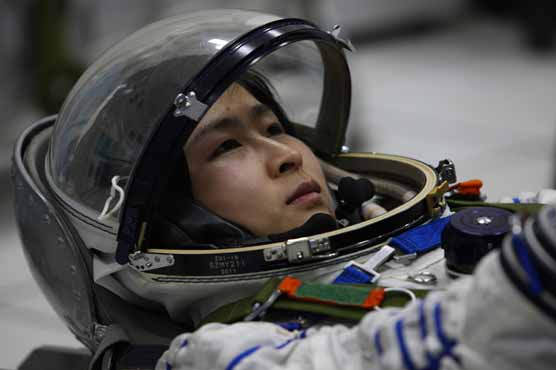
China launched its most ambitious space mission to date, sending its first female astronaut into orbit and bidding to achieve the countrys first manual space docking.Shenzhou-9 -- Chinas fourth manned space mission -- blasted off on schedule at 6:37 pm (1037 GMT) from the remote Gobi desert in the nations northwest, state television pictures showed.Chang Wanquan, commander-in-chief of Chinas manned space programme, said the craft had entered orbit, and declared the launch a complete success. The crew was headed by Jing Haipeng, a veteran astronaut who had gone to space twice already. Liu Wang, who has been in the space programme for 14 years, will be in charge of manual docking manoeuvres.Meanwhile Liu Yang, 33, who has created a stir in the media and online for becoming Chinas first woman to travel to space, will conduct aerospace medical experiments and other space tests.In a nod to the symbolic significance of Lius presence, one of the countrys most senior female leaders, State Councillor Liu Yandong, read a message of congratulation from President Hu Jintao from the launch site.I would like to extend warm congratulations and sincere regards to all those participating, said Hu, adding the docking operation would mark a major breakthrough in the countrys manned space programme.The mission will last 13 days, during which the crew will perform experiments and the manual space docking -- a highly technical procedure that brings two vessels together in high speed orbit.Successful completion of the rendezvous between the Shenzhou-9 (Divine Vessel) and the Tiangong-1 (Heavenly Palace) module already in orbit will take China a step closer to setting up its own space station in 2020.China sent its first person into space in 2003 and has since conducted several manned missions, the latest in 2008, but had never yet included a woman.Lius mission made China the third country after the Soviet Union and United States to send a woman into space using its own technology.China sees its space programme as a symbol of its global stature, growing technical expertise, and the Communist Partys success in turning around the fortunes of the once poverty-stricken nation.