Updated on
Summary Liu Yang will be on board the Shenzhou-9 when it takes off for China's fourth manned space launch.
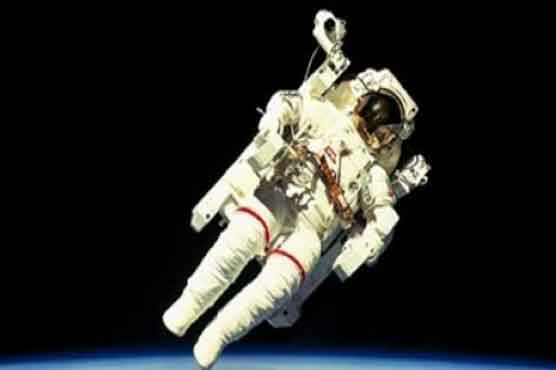
China said Friday a female astronaut will be among the three-person team on board the Shenzhou-9 spacecraft when it launches on Saturday ahead of the countrys first manned space docking.Liu Yang, a 33-year-old major in the Peoples Liberation Army, will be on board the Shenzhou-9 when it takes off for Chinas fourth manned space launch, a spokesman for the countrys manned space progamme said.From day one I have been told I am no different from the male astronauts, Liu, a trained fighter pilot who is married but has no children, told the state broadcaster CCTV in an interview broadcast after Fridays announcement.I believe in persevering. If you persevere, success lies ahead of you, added Liu, interviewed wearing her blue astronauts uniform.Liu and her two male colleagues, Jing Haipeng and Liu Wang, will take off at 6.37 pm (1037 GMT) from the Jiuquan space base in north Chinas Gobi desert.They will perform Chinas first manned space docking -- a highly technical procedure that brings together two vessels in high speed orbit.The mission to dock with the Tiangong-1 module currently orbiting Earth is the latest step in a plan aimed at giving the country a permanent space station by 2020.China sent its first person into space in 2003 and has since conducted several manned missions, the latest in 2008, but has never yet included a woman.Lius mission, which has been heavily trailed in the Chinese media, will make China the third country after the Soviet Union and United States to send a woman into space using its own technology, and represent another propaganda coup for the one-party communist state.Relatively little is known about her life, although she initially trained as a cargo pilot. She has been praised for her cool handling of an incident when her jet hit a flock of pigeons but she was still able to land the heavily damaged aircraft.China sees its space programme as a symbol of its global stature, growing technical expertise, and the Communist Partys success in turning around the fortunes of the once poverty-stricken nation.The current programme aims to provide China with a space station in which a crew can live independently for several months, as at the old Russian Mir facility or the International Space Station.China was the third country to send humans into space after Russia and America, and it is now also looking into sending astronauts to the moon, although nothing has been set in stone.A white paper released last December outlining Chinas ambitious space programme said the country will conduct studies on the preliminary plan for a human lunar landing.No one has been back to the moon since the last US Apollo landing in December 1972.