Updated on
Summary Scientists in Switzerland have restored full movement to rats paralyzed by spinal cord injuries.
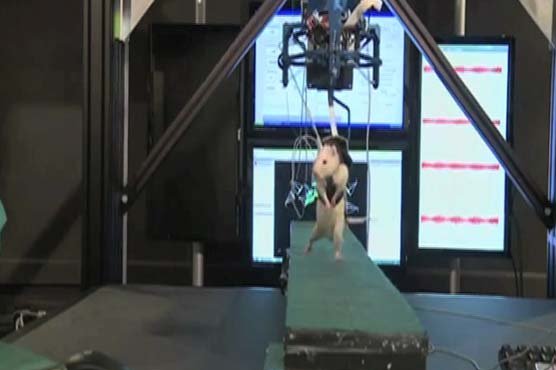
Rats with spinal cord injuries and severe paralysis are walking and running again, after undergoing groundbreaking treatment by Swiss scientists that opens up the possibilities of severely disabled using their legs independently.Published in the new issue of Science, the results show that a severed section of the spinal cord can regain its use when a rats innate intelligence and regenerative capacity -- what lead author Grégoire Courtine (pronounced: Greg-war Cor-teen) calls the spinal brain -- is awakened with a treatment of chemicals,Courtine holds the International Paraplegic Foundation (IRP) Chair in Spinal Cord Repair at École Polytechnique Fédérale de Lausanne (EPFL) in Lausanne. He began working on the study five years ago alongside colleagues from the University of Zurich.Their research points to a profound change in our understanding of the central nervous system.Its already well known that the brain and spinal cord can adapt and recover from moderate injury, a quality known as neuroplasticity, but until now the spinal cord expressed so little plasticity after severe injury that this degree of recovery was impossible.Courtines research proves that, under certain conditions, plasticity and recovery can return if the dormant spinal column is first woken up.To do this Courtine and his team injected a chemical solution of cell binding chemicals called monoamine agonists into the rats. Courtine explained:To transform the circuit below the injury from dormant to highly functional state we administered a cocktail of pharmalogical agents and applied electrical stimulation on the docile aspect of the spinal cord.These chemicals trigger cell responses by binding to specific dopamine, adrenaline, and serotonin receptors located on the spinal neurons. This cocktail replaces neurotransmitters released by brainstem pathways in healthy subjects and acts to excite neurons and prepare them to coordinate lower body movementWithin ten minutes of the injection, the scientists electrically stimulated the spinal cord with electrodes implanted in the outermost layer of the spinal canal, called the epidural space.Courtine and his team reported that a stimulated rat spinal column, physically isolated from the brain, developed in a surprising way. It started taking over the task of modulating leg movement, allowing previously paralysed rats to walk, albeit involuntarily, over treadmills. These experiments revealed that the movement of the treadmill created sensory feedback that initiated walking. The spinal brain took over and walking occurred without any input from the rats actual brain.This surprised the researchers and led them to believe that only a very weak signal from the brain was needed for the animals to initiate movement of their own volition.To test this theory, Courtine replaced the treadmill with a robotic device that supported the subjects and only came into play when they lost balance, giving them the impression of having a healthy and working spinal column. This encouraged the rats to will themselves toward a chocolate reward on the other end of the platform.The team are optimistic that human, phase two, trials will begin within two years at Balgrist University Hospital Spinal Cord Injury Centre in Zurich.