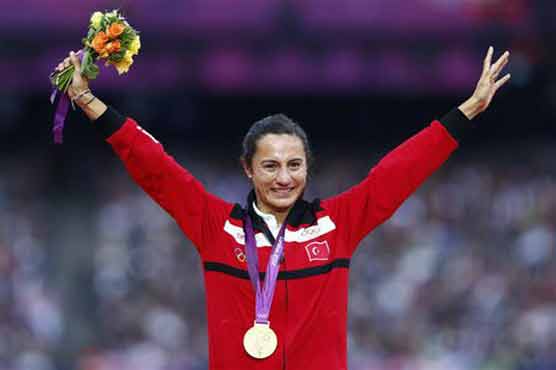
Summary The latest in a string of doping cases means another setback for Turkey's bid for the 2020 Olympics
ISTANBUL (AP) - Turkey s Olympic committee announced its full cooperation with doping authorities on Friday after eight more athletes were caught using banned substances.
Anadolu news agency reported the latest group included 2004 Olympic silver medalist hammer thrower Esref Apak among seven other mainly hammer throwers and runners. They were allegedly caught doping just days after eight weightlifters were pulled out of the Mediterranean Games for failing drug tests at a training camp.
The NOCT said it "will cooperate fully with all relevant investigations to resolve these cases as quickly and decisively as possible," and athletes found guilty "will be punished to the full extent of Turkey s comprehensive and rigorously enforced anti-doping legislation."
Officials called on the track and field athletes to pull out if taking part in the Mediterranean Games, which end on Sunday in Mersin, Turkey, Anadolu said.
The latest in a string of doping cases means another setback for Turkey s bid for the 2020 Olympics, as Istanbul rivals Tokyo and Madrid.
In May, Olympic 1,500-meter champion Asli Cakir Alptekin and European indoor hurdles champion Nevin Yanit were charged with doping violations.
"The recent doping discoveries by Turkish authorities are testament to the hard work of the Turkish Anti-Doping Agency (TADA)," the NOCT said.
According to the Olympic committee, TADA "is dramatically stepping up its fight against drug cheats. ... We have a clear message for drug cheats: There is nowhere to hide, and there is no place for you in our Olympic story."
WADA science director, Olivier Rabin, visited a doping lab in Ankara on Wednesday to talk about the procedures for re-accreditation of the facility.
"This will add significant firepower in our anti-doping campaign," the NOCT said. "In parallel, the NOCT is working hard with education authorities, athletes and their representatives to educate and inform young people from the earliest possible age about the dangers and illegality of doping."