
Updated on
Summary Germany captain Philipp Lahm honoured Holocaust victims in visit to a Nazi German death camp.
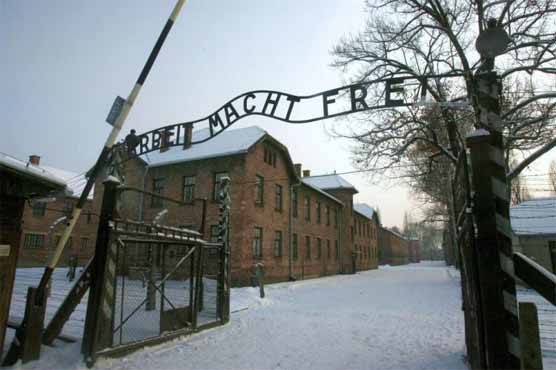
An AFP reporter saw the delegation from the German Football Federation arrive at the World War II site on the edge of the southern Polish city of Oswiecim.The visit came a day after Germany beat Israel 2-0 in a friendly in the German city of Leipzig and three days before the squad arrives in Poland ahead of the European championship.Besides Lahm, the delegation members also included head coach Joachim Loew, Poland-born Germany stars Miroslav Klose and Lukas Podolski, and team manager Oliver Bierhoff.They walked under the Arbeit Macht Frei gateway sign. A notorious symbol of the Nazis cynicism, it translates as work makes you free, even though few survived.They visited the barracks, the wall where prisoners were shot and the crematorium where the victims bodies were burned.The delegation then headed to Birkenau, the site three kilometres away where the Nazis gassed the bulk of the Jews they sent to the camp.On Thursday, Lahm had underlined how important it was to visit the site of Nazi atrocities, having personally visited the Dachau concentration camp near Munich in Germany.This is an important symbol from our side, he said.We need to show that we know our history and we must take ownership of our past responsibilities, even if our generation is not responsible.Bierhoff, meanwhile, had underlined that the planned visit was not a PR event.The subject of the Holocaust and Auschwitz has occupied us again and again and has been discussed with the players, he said.The squad has already attended lectures on modern German history ahead of Euro 2012 in Poland and Ukraine -- the first ever edition of the tournament to be held in Eastern Europe, a region which was home to most of the Jews killed in the Holocaust.England and Italy have also said their players will visit the Auschwitz site during the tournament, which runs from June 8 to July 1.The Nazis set up Auschwitz in a former army base, shortly after invading Poland in 1939, initially to detain and kill Poles seen as a pool of resistance to their occupation.They gradually expanded the site at Birkenau, turning it into a hub for the Holocaust.Of the camps 1.3 million victims, 1.1 million were Jews from across Nazi-occupied Europe.The few survivors were liberated by Soviet troops in January 1945, and the site was turned into a Polish state-funded memorial and museum.