Summary Supreme Court identifies eight grounds for cancelling bail, including misuse of liberty, witness intimidation, interference with investigations and emergence of fresh evidence.
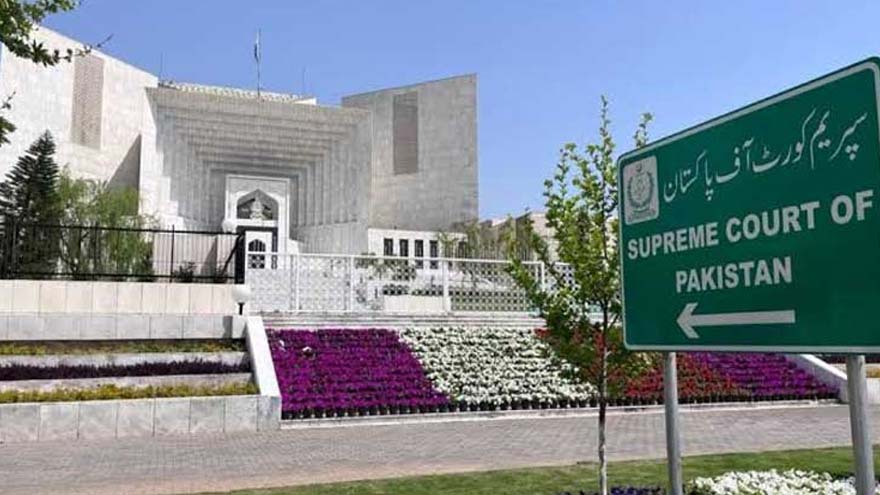
ISLAMABAD (Dunya News) - The Supreme Court has laid down eight principles for cancelling an accused person's bail, ruling that bail may be revoked if the order granting it is prima facie illegal or unjust.
According to the court's judgment, bail may be cancelled if an accused misuses the concession, attempts to influence prosecution witnesses, tampers with evidence or obstructs the judicial process.
The court said bail could also be revoked if the accused is likely to abscond beyond the court's jurisdiction, interfere with a fair investigation or misuse his freedom to commit another offence of a similar nature.
The judgment further stated that fresh facts or evidence emerging during an investigation, indicating the accused's involvement in the offence, could also constitute grounds for cancellation of bail.
The Supreme Court upheld the Sindh High Court's decision in a case concerning a petition for cancellation of an accused person's bail. It observed that a nine-month delay in registering the FIR and the accused's alleged role required further investigation.
According to the case record, the incident occurred on March 3, 2024, within the jurisdiction of Rahmatpur Police Station in Larkana. Noor Hussain died after an electricity wire broke while power was being supplied to shops through an illegally drawn connection from a disposal phase's special line.
On January 30, 2025, the Larkana sessions court rejected the pre-arrest bail application of accused Ali Asghar Khokhar.
However, on October 20, 2025, the Sindh High Court's Larkana circuit bench granted him bail, citing the nine-month delay in registration of the FIR and other grounds. The decision was subsequently challenged before the Supreme Court.
Justice Muhammad Ali Mazhar authored the judgment. The Supreme Court also directed that a copy of the decision be sent to the WAPDA chairman for information.
The court observed that WAPDA and the relevant utility company should examine the role of individuals involved in illegal electricity supply, power theft and private siphoning.