Summary Expanded tournament format could open doors for hundreds of emerging players
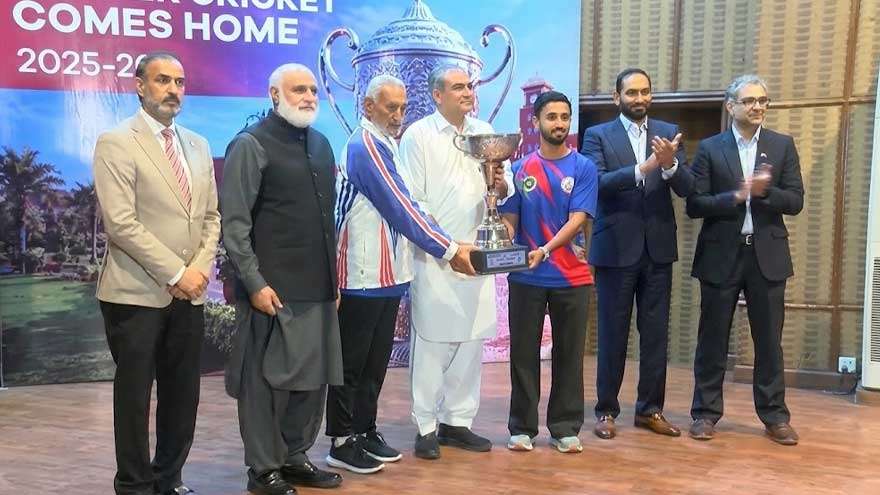
LAHORE (Dunya News) – The University of Central Punjab (UCP) has offered its facilities and nationwide educational network to the Pakistan Cricket Board (PCB) and the Higher Education Commission (HEC) for a joint cricket talent hunt programme, as calls grow for university cricket to become a permanent part of Pakistan’s domestic structure.
Punjab Group Chairman Mian Amer has proposed a partnership to identify promising young players, expand training opportunities and establish a clearer route from university competitions to first-class cricket. Speaking at UCP’s annual sports prize distribution ceremony in Lahore, attended by PCB Chairman Mohsin Naqvi and HEC Chairman Dr Niaz Ahmad, he also urged the authorities to ensure that financial constraints do not prevent talented students from pursuing sporting careers.
Mian Amer welcomed the initiative introduced under the leadership of the PCB and HEC, which allows universities to send their teams to compete rather than relying on a small group of players selected to represent the wider university sector. He said the previous arrangement, under which a single HEC team represented approximately 280 universities through just 11 players, could not provide opportunities to the full pool of available talent.
Under the revised approach described at the ceremony, every university can send its team to participate in the tournament. Mian Amer said this broader participation could help uncover hundreds of additional players, giving the PCB a larger pool from which to identify cricketers capable of representing Pakistan.
He also praised Mohsin Naqvi and Dr Niaz Ahmad for creating new opportunities for university athletes, adding that the initiative could help universities establish a more direct connection with the national cricket system.
Nationwide talent hunt
Mian Amer offered UCP’s cricket grounds, facilities and sporting expertise for joint training camps organised with the PCB and HEC. He also proposed using the Punjab Group’s network of more than 1,000 campuses across Pakistan to identify talented players, extending the search beyond major cities into smaller towns and rural communities.
The proposed partnership would include a shared database of university cricketers, PCB certification for campus coaches and specialised cricket scholarships for promising players. These measures could help identify emerging talent, improve coaching standards and create a more organised system for monitoring players as they progress through university competitions.
Mian Amer emphasised that Pakistan had no shortage of sporting talent, but that young athletes needed the right opportunities and support to develop their abilities. He said UCP had worked to polish the talent available to it and expressed confidence that the university’s sporting leadership would continue identifying promising players from across Punjab.
Women’s cricket was another priority highlighted by Mian Amer, who called for female players to be included from the outset of the talent development programme. He urged the authorities to create opportunities for women athletes to access structured training, compete at higher levels and progress through the sporting system.
He also called for university cricket to become a permanent part of Pakistan’s domestic structure, arguing that development required continuity rather than decisions limited to individual seasons. Sustained funding, scholarships, coaching, recognition and educational opportunities were essential, he said, warning that interruptions could scatter talent and make it difficult to rebuild a strong player base.
Referring to changes in Pakistan’s domestic cricket structure, Mian Amer said the discontinuation of departmental cricket had disrupted the flow of talent. Players had been removed from departmental teams, creating a gap of around four years before efforts to bring the talent pool back together gained momentum.
He credited Mohsin Naqvi with maintaining his commitment to restoring opportunities for cricketers and said Pakistan’s national team had started winning matches as players received renewed opportunities to develop and compete.
Equal opportunities
Mian Amer urged the HEC to provide support to public-sector universities that struggle to participate in competitions because of limited budgets. He said financial constraints should not prevent students from competing, developing their abilities or pursuing places in national teams.
He called for greater assistance to institutions that cannot afford the costs associated with university tournaments, stressing that students from all backgrounds should have a fair chance to succeed. No player, he said, should be denied the opportunity to progress because their university lacks funding.
His appeal extended to the wider sporting system, with a call for an environment in which young athletes could develop their abilities without unnecessary restrictions or financial barriers. He said every student should have an opportunity to compete for medals and contribute to Pakistan’s sporting achievements at national and international levels.
The proposed HEC-PCB collaboration is intended to widen participation in university cricket and give the PCB access to a larger pool of emerging players. By allowing individual universities to compete, the format could create more opportunities for talent identification and help promising cricketers progress towards domestic and international representation.
UCP has already made progress in domestic cricket, with its team qualifying for the Grade-II Gold League. Under the pathway outlined at the ceremony, maintaining Gold Category status for two years could open the way for a university to play first-class cricket.
Mian Amer said UCP hoped to retain its championship position in the following season and secure a place in first-class cricket through the revised pathway. The proposal places university competitions at the centre of a more structured progression system, linking campus-level performance with opportunities in the domestic game.
Sports at UCP
Mian Amer said the Punjab Group of Colleges and UCP had maintained a commitment to sports for three decades, with student athletes encouraged to pursue academic qualifications alongside their sporting careers.
He highlighted UCP’s specialised degree programmes for students involved in sports, developed with HEC guidance to help athletes continue their education while competing. The institutions’ sporting model also includes coaching facilities, nutrition, travel arrangements, scholarships and long-term investment in athletes’ development.
According to Mian Amer, the Punjab Group of Colleges had won overall champions’ trophy competitions organised by educational boards in Punjab for 30 consecutive years. UCP had secured the HEC men’s General Trophy for 15 consecutive years while competing against approximately 280 universities.
He also highlighted the institutions’ links with Pakistan’s national cricket team, naming captain Salman Ali Agha alongside Abdul Samad, Tayyab Tahir, Hussain Talat, Khurram Shahzad, Hasan Ali, Faheem Ashraf and Wahab Riaz as players associated with the Punjab Group of Colleges.
Mian Amer also referred to Pakistan hockey, saying the national team had faced significant difficulties before receiving support under Mohsin Naqvi’s leadership at the PCB. He claimed that nine of the 11 players in the Pakistan hockey team were associated with the Punjab Group of Colleges.
The institution’s sporting links extend beyond cricket and hockey. Mian Amer cited wrestler Inam Butt, a world champion associated with the Punjab Group of Colleges, and highlighted the achievements of its students at the Commonwealth Games, where they won one gold, two silver and one bronze medal.
Students associated with the group have participated in 22 international sports, while its female athletes have continued to win trophy competitions organised by educational boards for 30 consecutive years. The institutions have also drawn athletes from across Punjab, including rural communities where sports such as kabaddi provide a route into organised competition. Mian Amer said players from rural areas regularly joined the Punjab Group’s programme and competed successfully for HEC trophies.
According to UCP, around 100 current and former students of the Punjab Group of Colleges and UCP have represented Pakistan internationally across 22 sports.
During the ceremony, UCP reiterated its willingness to contribute its grounds, facilities, coaching resources and institutional network to the proposed PCB-HEC collaboration. The plans include a wider talent identification process, specialist coaching, scholarships and improved opportunities for women cricketers, while calls for financial assistance aim to ensure that public-sector universities can also take part.
The initiative is intended to connect university competitions with a more consistent route into domestic cricket, allowing the PCB to assess a broader range of players as universities compete for opportunities to progress towards first-class cricket.