Summary According to the presidential announcement, the provincial government had failed to effectively address terrorism and lawlessness
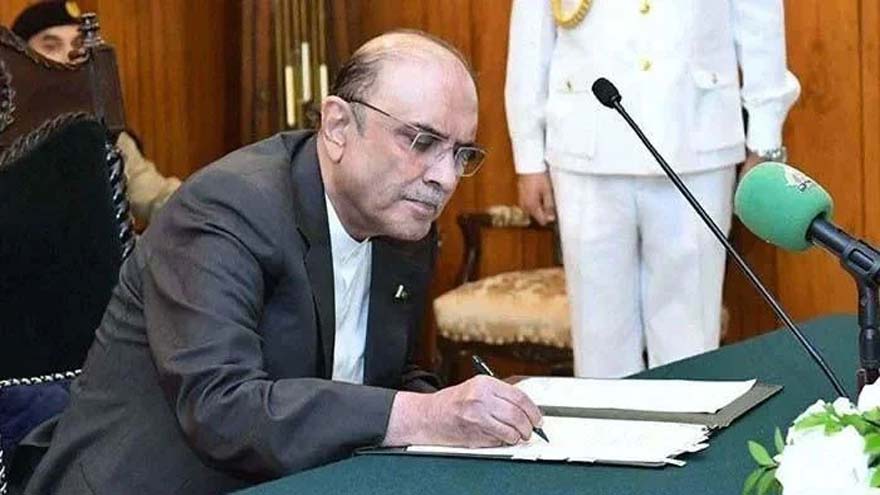
ISLAMABAD (Dunya News) – President Asif Ali Zardari has approved the imposition of an emergency and governor’s rule in Khyber Pakhtunkhwa under Articles 232(1) and 234(1) of the Constitution, according to an announcement issued by the President’s House on Sunday.
According to a proclamation issued by the President’s House on Sunday, the emergency has taken immediate effect.
The presidential announcement said the growing intensity of terrorist incidents had posed serious threats to the lives and property of citizens, while attacks on government installations, infrastructure and law enforcement agencies had increased.
It further stated that the provincial government had failed to demonstrate the required commitment and take effective measures to tackle terrorism and lawlessness.
The proclamation also referred to a report by the KP governor, which highlighted a breakdown in the constitutional system in the province and stated that the provincial government was unable to function in accordance with the Constitution.
صدرِ مملکت آصف علی زرداری نے خیبر پختونخوا میں کی سلامتی کی صورتحال پر وزیراعظم کی ایڈوائس پر دستخط کر دیے ہیں۔ آئینِ پاکستان کے آرٹیکلز 232 اور 234 کے تحت صدرِ مملکت نے وزیراعظم کی ایڈوائس منظور کرتے ہوئے دستخط کیے۔ وفاقی کابینہ کے فیصلے، وزیراعظم کی ایڈوائس، متعلقہ اداروں کی امن و امان کی صورتحال سے متعلق رپورٹس اور حکومتی وفود کے ساتھ مذاکرات کی ناکامی کے بعد صدرِ مملکت نے سمری پر دستخط کیے۔
— The President of Pakistan (@PresOfPakistan) October 11, 2026
In view of the gravity of the situation, the president declared immediate constitutional intervention necessary.
Under the proclamation issued pursuant to Articles 232(1) and 234(1) of the Constitution, the federal government may direct the KP governor to assume some or all functions of the provincial government.
The governor will be able to exercise provincial government powers assigned by the federal government. Other provincial authorities and institutions, excluding the provincial assembly, may also have some or all of their powers exercised by the governor under federal directions.
The proclamation further states that the powers of the KP Assembly will be exercised by Parliament or under its authority.
The chief minister, provincial ministers, advisers, special assistants and advocate general will immediately cease to hold their respective offices, according to the announcement.
The presidential proclamation has come into force with immediate effect.
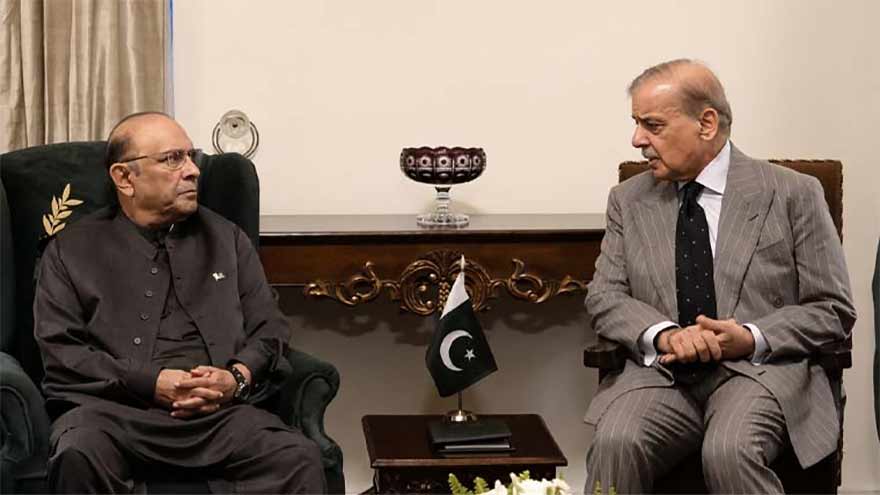
The move follows a crucial federal cabinet meeting chaired by Prime Minister Shehbaz Sharif, during which members reviewed the security situation in KP and approved recommending emergency measures to the president.
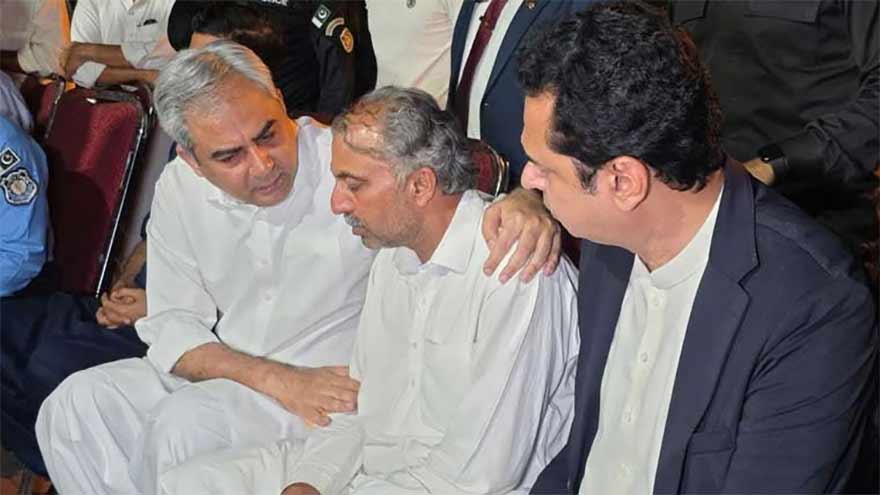
The Prime Minister’s House subsequently sent formal advice to the President’s House. Interior Minister Mohsin Naqvi and Minister of State Talal Chaudhry visited the presidency to brief the president on the cabinet’s decision.
Cabinet cites deteriorating security situation
During the cabinet meeting, members received a briefing on the worsening law and order situation and reviewed what the federal government described as the KP administration’s deliberate disengagement from the fight against terrorism.
The meeting was attended by Deputy Prime Minister Ishaq Dar, Defence Minister Khawaja Asif, Interior Minister Mohsin Naqvi, Adviser Rana Sanaullah, Minister of State Talal Chaudhry, Amir Muqam, Syed Imran Shah, Hanif Abbasi, Moeen Wattoo, Pervez Khattak, Ahad Cheema, Mustafa Kamal and Haroon Akhtar.
Before the final decision, the cabinet had considered making another attempt to secure the provincial government’s cooperation through Jamiat Ulema-e-Islam-Fazl chief Maulana Fazlur Rehman, according to sources.
During the meeting, Ishaq Dar contacted Fazlur Rehman and urged him to persuade the KP government to cooperate with the federal government in combating terrorism.
Security reports highlight surge in terror incidents
Two security reports presented to the cabinet highlighted a significant increase in terrorist activity and identified shortcomings in the operational capacity of the provincial police and Counter Terrorism Department (CTD).
According to the reports, terrorist incidents in KP increased by 195 per cent between March 1, 2024, and September 23, 2026.
The reports attributed the worsening security situation to multiple factors, including militants operating from Afghanistan, local facilitators and what the findings described as shortcomings in provincial policies and counterterrorism measures.
Police and security personnel were the targets of 73 per cent of terrorist attacks recorded in 2026, the reports stated.
They also highlighted the growing use of drones by militants. While no drone attacks targeting police and security forces were reported in 2024, the number reached 170 in 2026, according to the findings, which also cited an approximately 107 per cent year-on-year increase in drone attacks.
The reports recorded 181 improvised explosive device (IED) attacks in 2025 and 159 more through September 2026.
Police and CTD face staffing, equipment shortages
The security assessments identified more than 9,000 vacant positions in the provincial police force, alongside shortages of modern weapons, operational equipment and surveillance and intelligence-gathering tools.
The reports also pointed to inadequate access to night-vision and thermal-imaging equipment, as well as a shortage of armoured and protected vehicles in terrorism-affected southern districts.
The Safe City project remained limited to Peshawar, while police in the merged districts faced gaps in training, resources and operational preparedness, according to the findings.
The CTD was also reported to be short of specially trained personnel and reliant on regular police staff to meet its operational requirements. The reports cited insufficient district offices, operational facilities and specialised infrastructure to address the growing security threat.