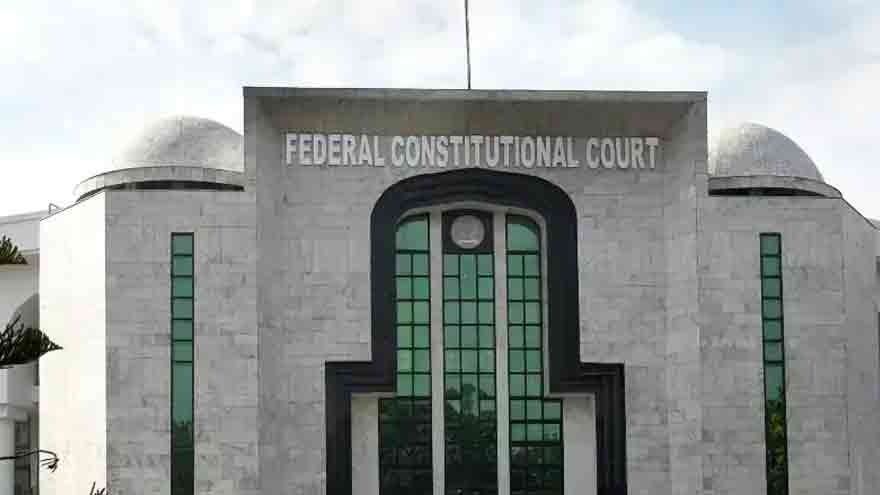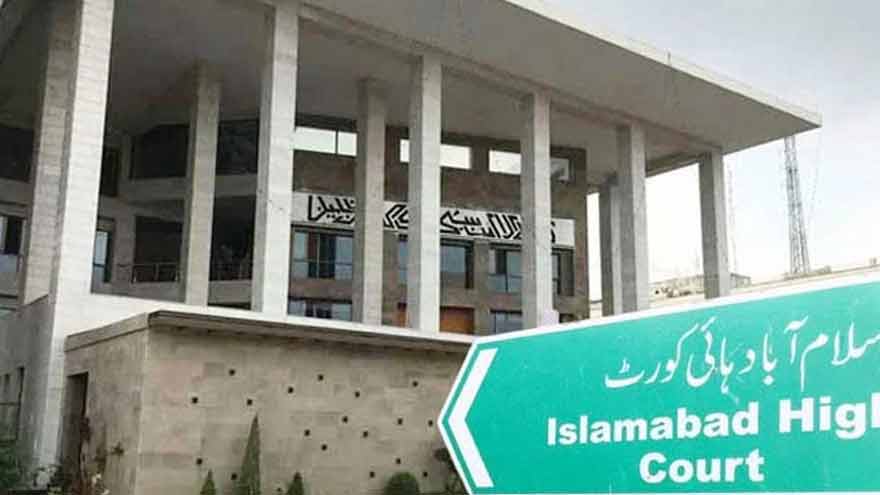
Summary Islamabad High Court rejects KP Advocate General’s request for two days in the PTI September 27 protest case and summons provincial IGPs, secretaries and officials again.
ISLAMABAD (Dunya News) – The Islamabad High Court has rejected the Khyber Pakhtunkhwa Advocate General’s request for two days to present arguments in a case concerning the PTI’s September 27 protest and summoned all inspectors general of police, secretaries and other officials again on Friday.
A three-member bench headed by Chief Justice Mohammad Sarfraz Dogar, comprising Justice Azam Khan and Justice Mohammad Asif, heard the case. Attorney General Mansoor Usman Awan, Islamabad Advocate General Naveed Hayat Malik, Islamabad Inspector General Ali Nasir Rizvi, representatives of Motorway Police and the police forces of Khyber Pakhtunkhwa, Punjab, Sindh and Balochistan, as well as Islamabad Deputy Commissioner Irfan Nawaz Memon, were present in court.
Counsel for the petitioner, Akhtar Chhina, read out the court order from the previous hearing.
Chief Justice Sarfraz Dogar thanked the Attorney General for appearing on short notice due to the sensitive nature of the matter. Mansoor Usman Awan told the court that a clear assurance had been given to the Supreme Court in May 2022, but the court order was subsequently violated. He said court orders issued in 2024 and a clear Islamabad High Court order issued in November 2024 were also violated.
The Attorney General said the two experiences involving PTI protests had provided several lessons and assured the court that he would assist it in determining whether the High Court could issue directions to the provinces under the prevailing circumstances. He also read out the Supreme Court’s 2022 decision and the assurance given by PTI before the court.
IHC forms larger bench to hear plea against PTI's Sept 27 protest
According to Mansoor Usman Awan, PTI founder Imran Khan had called on party workers to reach D-Chowk in 2022, during which public property was damaged and a green belt in Blue Area was set on fire. He said a similar situation emerged in November 2024, while the Khyber Pakhtunkhwa chief minister had also stated at the time that they were coming with greater preparations than in 2024.
The Attorney General said 31 police personnel were injured during the November 2024 events and the army was called in under Article 245 of the Constitution. He added that Chief Justice of Pakistan Yahya Afridi, while serving as a judge, had given a dissenting opinion in favour of contempt proceedings against Imran Khan.
Mansoor Usman Awan told the court that information had also been obtained from the Islamabad Advocate General and that no application had so far been filed by the political party. He said there were reports that the party was planning to come with greater preparations this time, including the Khyber Pakhtunkhwa chief minister.
The Attorney General maintained that the High Court could issue directions to anyone concerning the fundamental rights of citizens within its jurisdiction.
During the hearing, the KP Advocate General questioned why the long march was being considered an attack. He said the court had repeatedly ordered meetings with the head of the political party, but its orders had not been followed. He said dozens of contempt petitions had been filed and requested two days to present his arguments.
The Chief Justice said the court could give him time until the following day and asked him to at least begin his arguments then. He noted that the court’s order from the previous hearing had been widely covered by television channels.
The KP Advocate General said his responsibilities left him with little time to watch television and questioned why the PTI long march was being viewed as an attack. He said the march was in support of the judiciary.
Chief Justice Sarfraz Dogar thanked him for wanting to strengthen the judiciary and asked whether the judiciary was so weak that it needed to be strengthened. He said the judiciary was not so weak that it needed the support of a political party.
Counsel for the petitioner also objected to the KP Advocate General, questioning whether he was representing a convicted prisoner.
The court directed the KP Advocate General to provide by the following day the record of action taken against those who had violated orders in the past. It rejected his request for two days and summoned the inspectors general of police, secretaries and other officials from all provinces again, issuing notices for all officials to appear in court the following day.