Summary LHC issued a 264-page environmental verdict, barring tree cutting for the Yellow Line project and stressing stronger government action on pollution, smog, water and environmental protection.
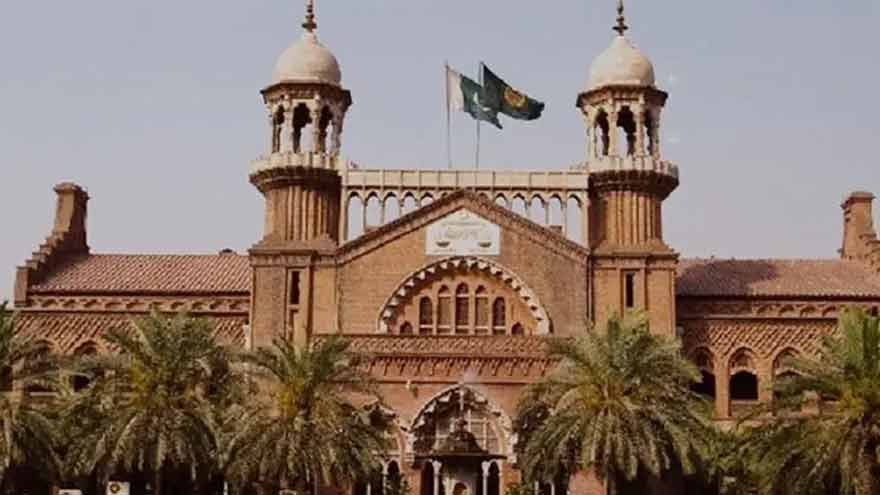
LAHORE (Dunya News) – The Lahore High Court has issued a 264-page detailed verdict on petitions concerning environmental pollution and smog, written by Justice Shahid Karim, stressing that environmental and water protection should become a fundamental part of government decision-making.
The court said governments were responsible for ensuring the protection of citizens’ fundamental, constitutional and legal rights. It observed that a complex issue such as the environmental crisis could not be completely resolved through a single order or judgment, adding that development projects could not be completed at the irreversible cost of the environment and natural resources.
The Lahore High Court maintained its important order regarding the protection of trees along the Lahore Canal, ruling that no tree would be allowed to be cut for the Yellow Line project. The court noted that the Yellow Line project was still at the planning and feasibility stage and that its final feasibility plan or PC-I had not yet been approved.
In the verdict, the court appreciated the services of members of the Water and Environment Commission for environmental protection and recommended that they be given civil awards. The court observed that continuous judicial oversight of environmental matters and obtaining implementation reports from the government had proved highly effective.
The verdict also gave a detailed account of judicial measures taken over the past eight years for the protection of water, air, trees, land and the urban environment. The court said climate change was a human-caused global catastrophe and warned that failure to take immediate action could threaten the existence of civilization and the natural world.
According to the court, a system was introduced in Lahore to conserve water used for ablution and utilize it for irrigation in parks. Several underground tanks were also constructed to store rainwater. Projects to store rainwater were completed at Garhi Shahu, Sheranwala Gate, Lawrence Road and Qaddafi Stadium, where the underground tank has a capacity of four million gallons.
The court said that as a result of judicial measures, Lahore’s groundwater had not deteriorated further over the past five years. Rainwater harvesting was made mandatory in new building plans, while greywater treatment plants were also made compulsory for houses measuring one kanal or more. A system for collecting aquifer charges from groundwater users was also implemented in Punjab.
Regarding air pollution and smog, the court said vehicles accounted for around 83 percent of Lahore’s local air pollution. All brick kilns in Punjab were shifted to zigzag technology, while strict restrictions were imposed on tree cutting and the protection of trees was made mandatory in development projects.
According to the verdict, criminal cases were also registered against those cutting trees, while 52 Miyawaki urban forests have been established in Lahore. These forests have played an important role in improving the city’s green cover and environmental quality.
The court ordered faster implementation of the ban on plastic bags across Punjab, including sealing shops found violating the restrictions and imposing fines ranging from Rs5,000 to Rs20,000. It also declared smog a disaster in Punjab and directed various departments to take emergency measures.
The verdict also highlighted important developments concerning Lahore’s Master Plan 2050. The court observed that the Master Plan 2050 had already been declared void for violating environmental laws.
The Lahore High Court accepted citizen Haroon Farooq’s petition concerning environmental pollution and emphasized that judicial measures taken for environmental protection should continue, while environmental protection should be made a fundamental component of government decision-making.