Summary Issues a detailed assessment of current situation of water flow in rivers, water storage in dams
ISLAMABAD (Dunya News) - The National Emergencies Operation Centre of the National Disaster Management Authority (NDMA) has released a detailed assessment of the current situation of water flow in rivers and water storage in dams.
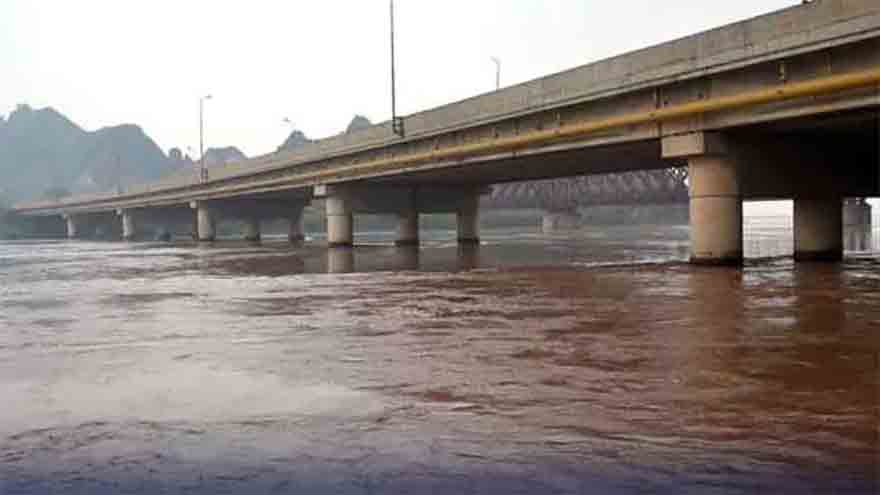
According to the NEOC, there is low-level flooding in the Indus River at Kalabagh, Chashma, Taunsa and Guddu, while the water flow in the Ravi, Chenab, Jhelum, Kabul and Sutlej rivers has been recorded as normal. The flow in the mountain drains of DG Khan and Rajanpur, including Nala Lai, is also normal.
According to the NDMA, there is a possibility of an increase in water flow in the country's major rivers during August 8 and 9. There is a possibility of low-level flood flow at Kalabagh, Chashma, Taunsa, Guddu and Sukkur in the Indus River, Marala in the Chenab River and Baloki in the Ravi River.
According to the report, there is a possibility of low-level flow in the upper areas of the Jhelum River and Mangla Dam and in adjacent rivers, while a low-level flow has been predicted at Adizai in the Kabul River.
The NDMA has warned that there is a risk of low to medium flooding in the rivers and storm drains of Chitral, Upper Dir, Abbottabad, Shangla, Khyber, Orakzai, Kohat, Tank, and North and South Waziristan in Khyber Pakhtunkhwa.
There is a risk of flash flooding in Bagh and Kotli in Azad Kashmir, and there is also a risk of flash flooding in Zhob, Musakhel, Kohlu, Barkhan and Dera Bugti in Balochistan.
In Punjab, low to medium flood risk has been indicated in the urban areas of Rawalpindi, Gujranwala, Sialkot, Narowal, Faisalabad, Okara and Lahore, in addition to the mountain rain drains of DG Khan and Rajanpur.
According to NDMA, the water level in Tarbela Dam was recorded at 1,548 feet and the water storage was 97.94 percent, compared to 95.98 percent in the same period last year. The water level in Mangla Dam was recorded at 1,205.2 feet and the storage was 62.99 percent, compared to 62.80 percent last year.
Local administrations have been instructed to move necessary resources to sensitive areas in advance and ensure safe evacuation arrangements are in place.
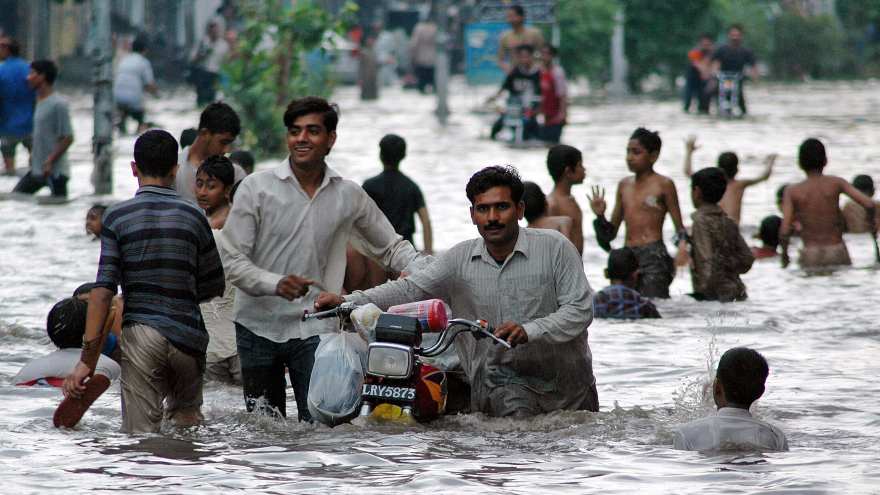
The NDMA has directed the public to avoid crossing flood drains, flooded roads, bridges and fast flowing water and to follow the issued traffic instructions. Residents, tourists and travelers in flood-prone areas have also been instructed to stay away from the banks of rivers and drains.
According to the NDMA, the risk of landslides, debris flows and flash floods increases in mountainous areas during the monsoon. The public should be aware of the latest weather forecast and road conditions before traveling and avoid unnecessary travel in case of heavy rain or any potential hazard warning.
The public has been warned not to cross floodwaters or fast flowing water on foot or by vehicle, as even shallow fast flowing water can be extremely dangerous to humans and vehicles.
The NDMA says that during the monsoon, the flow of rainwater streams and rivers may suddenly increase, so special precautions should be taken during tourist activities and stay away from fast-flowing water.
Instructions have been issued to follow the instructions of the relevant agencies, avoid traveling on roads closed by the administration, and take precautionary measures. The NDMA is providing continuous and timely information and alerts to the relevant agencies regarding potential threats.
The public has also been instructed to use NDMA's official app "Pak NDMA Disaster Alert" to obtain timely information.