Summary Says the Pakistan-China relationship remains strong because it is built on mutual trust, shared strategic interests, and a joint vision for peace and development.
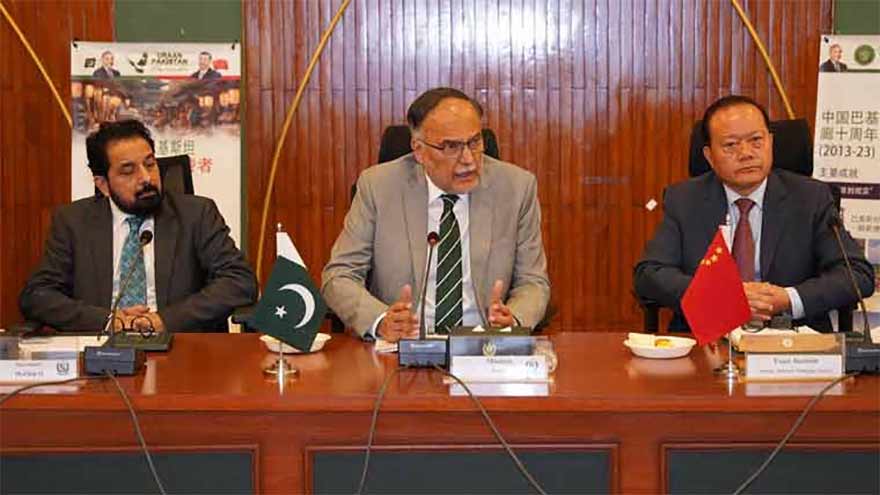
BEIJING (Web Desk) – Federal Minister for Planning, Development and Special Initiatives Ahsan Iqbal has said that Pakistan-China relations enjoy rare and strong national consensus in Pakistan, with support across the entire political spectrum.
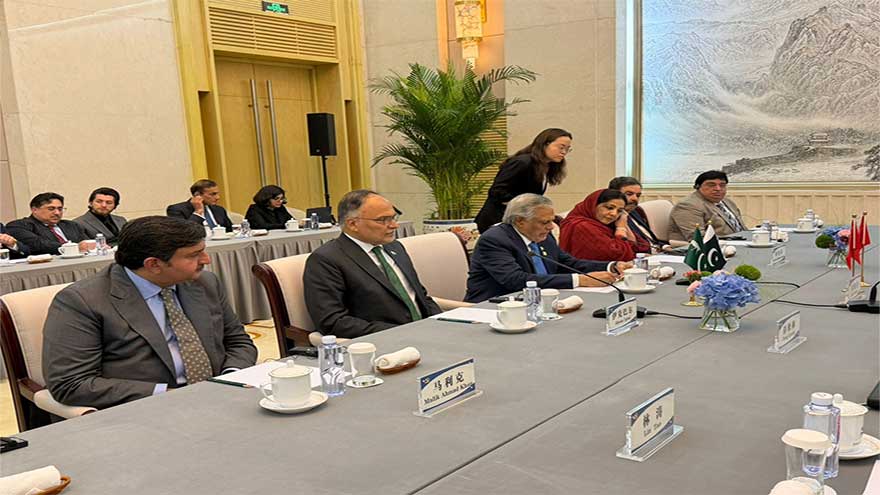
Addressing the China-Pakistan Political Parties Forum and the meeting of the CPEC Political Parties Consultation Mechanism, held on the 75th anniversary of diplomatic ties between Pakistan and China, he said that despite political differences on domestic issues, all political parties remain united on strengthening relations with China.
Ahsan Iqbal thanked the International Department of the Communist Party of China (IDCPC) for organizing the forum and praised its role in fostering dialogue, trust, and long-term cooperation between the two countries’ political parties. He said the platform has evolved into an important bridge of political trust beyond formal diplomacy.
He noted that Pakistan attaches great importance to its institutional ties with the Communist Party of China and highlighted broad-based political support as a key factor behind the continuity of the China-Pakistan Economic Corridor (CPEC), assuring that Pakistan’s commitment to the partnership remains above political changes.
Referring to the Action Plan for building a China-Pakistan community with a shared future, he said it has elevated bilateral relations to a new strategic level, reflecting shared goals of development, connectivity, and prosperity. He also quoted Chinese President Xi Jinping, saying China will always stand firmly with Pakistan, describing it as a message that has strengthened mutual trust.
Highlighting CPEC as a flagship project of the Belt and Road Initiative, he said it has transformed Pakistan’s economic landscape by addressing energy shortages, improving infrastructure, reviving Gwadar as a connectivity hub, and boosting investor confidence.
He said Pakistan and China are now entering the CPEC 2.0 phase, focusing on industrialization, innovation, agriculture modernization, sustainability, and technology-driven development. He outlined the “Five Corridors” framework—Growth, Livelihood, Innovation, Green, and Inclusive Regional Development—as guiding pillars for future cooperation.
Ahsan Iqbal said these align with Pakistan’s economic transformation plan, URAAN Pakistan, which prioritizes exports, digitization, energy transition, and human development.
He also proposed the establishment of “Five Political Corridors” between the IDCPC and Pakistani political parties to ensure long-term political support and continuity for CPEC 2.0, covering political dialogue, governance learning, youth leadership, cultural exchange, and regional cooperation.
He stressed that such mechanisms would help Pakistan learn from China’s development experience in areas like poverty alleviation, industrialization, digital governance, and long-term planning.
The minister further emphasized strengthening youth engagement, education, innovation, and research cooperation to secure the future of Pakistan-China friendship.
Reaffirming Pakistan’s commitment, Ahsan Iqbal said all ongoing and future CPEC projects will be completed on time, and full security will be ensured for Chinese nationals and companies working in Pakistan.
He concluded that the Pakistan-China relationship remains strong because it is built on mutual trust, shared strategic interests, and a joint vision for peace and development.