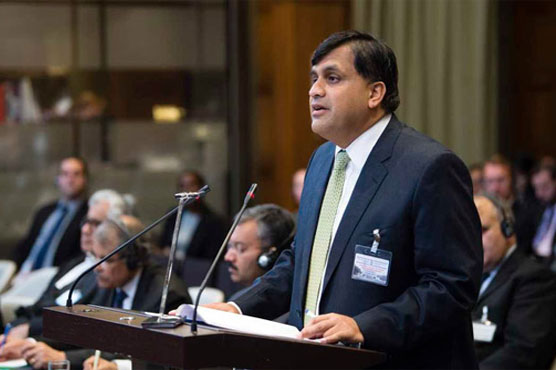
Summary FO spokesperson was responding to questions at the weekly news briefing in Islamabad.
ISLAMABAD (Web Desk) - Foreign Office spokesperson Dr. Muhammad Faisal said on Wednesday that Pakistan’s name has been placed in FATF’s grey list but faces no threat of being included in the black category.
The global money-laundering watchdog has decided to place Pakistan back on its terrorist financing watchlist, in a likely blow to both Pakistan’s economy and its strained relations with the United States. Pakistan will be included in the list in June this year, sources told.
Responding to questions at the weekly news briefing in Islamabad, he said that Pakistan and the United States desire to move forward and find common ground for continued cooperation.
The FO spokesperson maintained that the latest visit of senior Director at the US National Security Council Lisa Curtis was an indication of this desire.
He asserted that during the visit both sides expressed the desire to work together to pursue the common objective of stabilizing Afghanistan.
Dr. Muhammad Faisal said Pakistan has always maintained that the only solution of Afghan conflict lies in politically negotiated settlement, which is Afghan led and Afghan-owned. He pointed out that military approach of seventeen years has failed to render desired results and increased miseries of Afghan civilians.
To a question about belligerent statements by Indian Army Chief, the spokesman said these reflect the unfortunate jingoistic mindset in India. He said as a responsible member of the international community, Pakistan exercises restraint but our armed forces are fully capable of responding to any threat.
About development of drone technology by India, he said its use should be consistent with the principles of UN Charter and international human rights law and established norms of a responsible state. He, however, said development of drone technology by India is worrying in the context of its expanding military capabilities in conventional and non-conventional domains.