Updated on
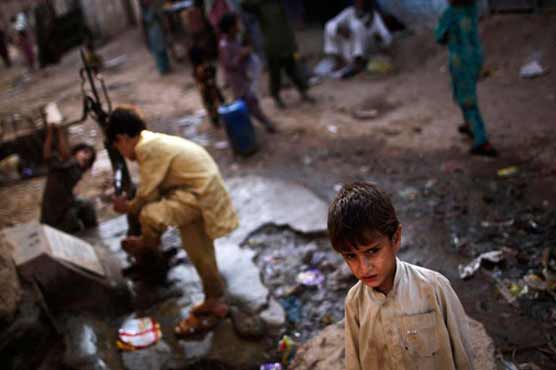
Summary The World Bank has said that around 25 million people live in extreme poverty in Pakistan.
The World Bank report says that from 2008 onwards, the adverse impacts of global financial, food, and fuel crises posed multiple challenges to Pakistan’s rapidly evolving social protection sector.The militancy crisis, as well as recurring natural disasters, further exacerbated the situation by exposing an even larger number of Pakistan’s vulnerable population to the risk of falling into abject poverty.The nation’s main safety net programs (i.e. Pakistan Bait-ul-Mal, and the Zakat) were hampered by a number of factors. They had limited coverage (reaching only. approximately 5 percent of the total population) and were poorly targeted, as around 25 and 32 percent of resources distributed by these programs, respectively, was going to non-poor households).Additionally, benefit levels were small, payments were infrequent and irregular, administration arrangements were inadequate, and implementation and monitoring and evaluation capacity were both very weak. Consequently, these programs had little impact on addressing the issue of poverty and vulnerability.Supported by IDA’s technical assistance since 2009, Pakistan has established the Benazir Income Support Program (BISP), a flagship national safety net initiative that provides income support in the form of cash transfers of US$12 per month to 3.5 million of the poorest families.To determine eligibility, the program uses an objective ‘poverty scorecard’ that has been rolled out through a door-to-door national census, collecting information on more than 27 million households in Pakistan. The information yielded through this initiative, which was validated through Pakistan’s National Identity Database, has helped the government to set up a National Poverty Data Registry; the first in the South Asia region.