Updated on
Summary WB has finally decided to settle Kishangnaga powerhouse dispute between Pakistan and India.
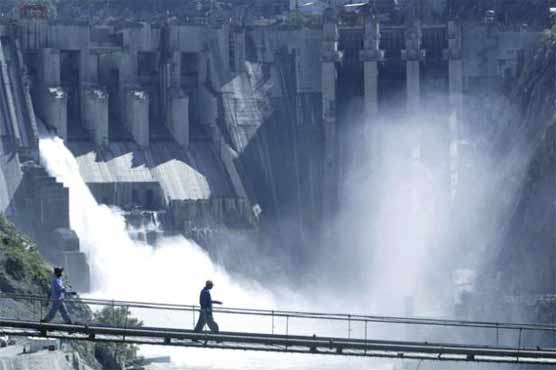
India started building Kishan-Ganga powerhouse in Bandipur area of held Kashmir in 1994 on the River Ganga-Kishan which is tributary to River Jhehlum of Pakistan.It was decided under the Indus Water Treaty between Pakistan and India. However in 2006 India, in violation of the treaty, changed the original design of the powerhouse diverting the river water into underground channels.In 2010 Pakistan raised objections to the changed design and took up the issue with the World Bank.A seven-member team, appointed by UN Secretary General, after surveying the site and listening to the arguments of both sides has now finally decided settle the dispute.According to the sources of Water and Power ministry, the final hearing of the case will be held in Holland in the last week of August 2012. It is hoped that the issue will be now finally resolved one way or the other.Pakistan and India will come face to face in August in the Permanent Court of Arbitration (PCA) over controversial 330MW Kishanganga Hydro-Electric Power Project.A high-level delegation, led by Kamal Majeedullah, would be finalised soon. The team will have technical and legal experts.Top management dealt with 969MW Neelam-Jhelum Hydropower Project costing $2.16 billion and briefed a PCA delegation, which visited both 969MW Neelam-Jhelum and 330MW Kishanganga projects in the light of an environmental impact assessment report. The Indian authorities submitted the report to the PCA.The green and agriculture-rich area of Muzaffarabad would be barren after the diversion of River Neelam towards Wullar Lake, a branch of Indian controversial Kishanganga hydropower project.Water and Power Ministry official revealed that the completion of the Kishanganga dam would lead to a decrease in water inflow up to 21 percent in the river.Judge Stephen M Schwebel (United States), former president of the International Court of Justice (ICJ), chairs the seven-member PCA team. The other members are Franklin Berman, KCMG QC (United Kingdom); Professor Howard S Wheater FREng (UK); Professor Lucius Caflisch (Switzerland); Professor Jan Paulsson (Sweden); Judge Bruno Simma (Germany); and Judge Peter Tomka (Slovakia).The first hearing was held at The Hague on January 14, 2011 when it was decided that Pakistan would submit its case to the ICA in May. In September last year, the ICA in its interim decision had restricted India from any permanent work on the Kishanganga project in response to Pakistan’s appeal for “interim measures” against the dam.The River Kishanganga water is to be diverted through a 24-kilometre tunnel for power production. The remaining water flow would join the Wullar Lake and ultimately run through Jhelum to Muzaffarabad.The Indian power project will result in a shortfall of about 21 percent of River Neelum’s inflow. The catchment area at Kishanganga dam site is roughly 1,820 square kilometres, and annual average flow is 115,900 cusecs.