Updated on
Summary Senator Dianne Feinstein has urged the US administration to apologize from Pakistan.
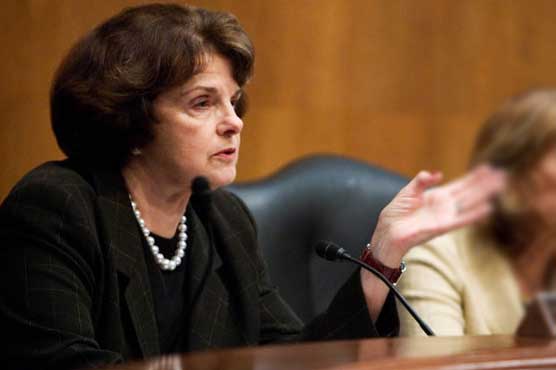
Senator Dianne Feinstein (D-California), Chairperson of the US Senate Intelligence Committee, has called upon the US administration to extend an apology to Pakistan for Salala firing incident on November 26 last year, which resulted in the death of 24 soldiers.She was speaking during a hearing of Senate Appropriations subcommittee on Defense Wednesday, in which US Secretary of Defense, Leon Panetta and Chairman Joint Chiefs of Staff, Gen. Martin Dempsey were testifying.I understand that mistakes were made on both sides in November 26 incident. ISAF commander, Gen. John Allen has identified 6-7 steps to rectify the problem, she recalled while referring to a meeting of US Senators with Gen. Allen, in which the latter took the legislators into confidence with regards to the events that led to the Salala incident.GLOCs problem could be solved with some civilian acceptance of mistakes by the US, she said while referring to the ground supply routes for NATO forces from northwest Pakistan that were suspended as a mark of protest by the host government after the Nov 26 incident.The US administration would do well to apologize for its mistakes in the firing incident, she said adding that this would also help in the reopening of GLOCs. National security of the United States will be better served with a positive relationship with Pakistan, she emphasised in a rare show of positive gesture towards Pakistan on the Capitol Hill.US Secretary of Defense, Leon Panetta, responding to the Senator, termed the US relationship with Pakistan ‘complicated, but important’. Its a complicated relationship but it is a necessary relationship, by virtue of our security needs in that area, he opined.Issue of apology is also one of the points being discussed with Pakistan, although mistakes were made on both sides, he conceded. We offered condolences, but that is not the only issue now, they are asking for something else too, he said hinting at a possible high tariff per truck demanded by Pakistan for such communication in future.GLOCs are still under negotiations, and discussions continue as to how we can resolve it, he said adding that apology was not the only sticking point in the negotiations for ground supply routes. Other elements are also in these negotiations that need to be resolved for reopening of GLOCs, he clarified.Secretary Panetta also revealed that the closure of routes from Pakistan had forced US to reply on expensive northern network. Expensive northern route are being used because closure of ground routes from Pakistan is a problem, he said adding that the US is incurring 100 million dollars per month additional because of closure of GLOCs from Pakistan.When Senator Lindsay Graham (R-South Carolina) asked Secretary Panetta about his views regarding cutting-off aid to Pakistan altogether, the Secretary adopted a cautious approach. Would you recommend shutting-down aid to Pakistan? asked Senator Graham. Ill be very careful about shutting down aid to Pakistan. I would expect them to do what they have to do, Secretary Panetta responded.Senator Dan Coats (R-Indiana) again raised the issue of Pakistan-based Haqqani network during the proceedings. Haqqani network in Pakistan represents a threat, he said while adding that similar groups in Somalia, Yemen and other countries were a similar threat, which required a rapid response force.There are still significant challenges from Al Qaeda, although they are seriously weakened. We continue to have threats from Iran and North Korea, Secretary Panetta said. There are challenges in Asia and Africa as well as Middle East. Nuclear proliferation and cyber attacks are also a threat to global security, he went on to add.- Contributed by Awais Saleem, Dunya News correspondent in Washington, DC