Updated on
Summary NATO needs Pakistani routes for withdrawal of military hardware from Afghanistan.
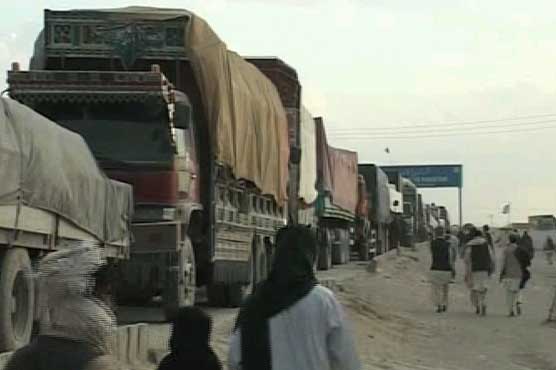
With Pakistan so far unwilling to reopen supply routes to Afghanistan, NATO faces a potential logistical nightmare as it prepares for a costly withdrawal of military hardware over the next two years.In the run-up a NATO summit that opened Sunday, US and Pakistani officials had signaled growing optimism that a deal would be clinched on reopening the routes, which Islamabad had closed in November over a botched American air raid.But negotiations stumbled over Pakistans demand to charge several thousand dollars per truck, instead of the current rate of roughly $250.A senior US official told AFP on Sunday the exponential hike in fees, reportedly as much as $5,000 per truck, was unacceptable and that Pakistan had failed to present a consistent, coherent negotiating position.US officials have so far refused a demand from Islamabad for an explicit apology over the air strike that killed 24 Pakistani soldiers.Since Pakistan shut the northwest border crossing to NATO about six months ago, the US-led force in Afghanistan has managed to endure the closure by relying on cargo flights and a more costly northern route through Russia, Central Asia and the Caucasus.The shift has carried a price, costing two and a half times more per container than the Pakistani route, according to US military officials.But under NATOs plan to withdraw most of the 130,000-strong coalition force in Afghanistan by the end of 2014 -- including a vast fleet of vehicles and equipment -- the Pakistani route is considered crucial.General William Fraser, head of US Transportation Command, told senators in February that the shorter Pakistan route was needed to ensure hardware could be withdrawn on schedule.With the amount of equipment we need to move... we need the Pakistan GLOC (ground line of communication) open, Fraser told the Senate Armed Services Committee in February.Last year, before the Torkham gate border crossing was shut, the United States moved more than 35,000 shipping containers through Pakistan, according to Fraser.In another complication for NATOs exit plan, countries along the northern route have approved the transit of military vehicles and supplies but have prohibited shipping weapons through their territories.German Defense Minister Thomas De Maiziere, speaking to reporters in Chicago, acknowledged using the northern route was a complicated process because it passed through so many countries.The most practical and inexpensive route into Afghanistan runs through Irans port of Chabahar, but that is not an option given the long-running hostility between Iran and the United States.For Pakistan, the border crossing is a valuable source of revenue and leverage that will dry up once NATO completes its planned departure in 2014.