

Iran says oil exports continue despite US sanctions
Iran's oil exports are continuing as usual despite the cancellation last week of a 60-day waiver of U.S. oil sanctions, oil minister Mohsen Paknejad said on his official Telegram account on Tuesday.
Paknejad said the oil ministry had maintained mechanisms for years to neutralize the impact of U.S. sanctions. He added that Iran's oil exports would face no problems despite the restoration of the sanctions.
The U.S. reinstated its sanctions on Iranian oil last week after three tankers reported being struck by unknown projectiles in and near the Strait of Hormuz, according to the British navy-affiliated agency UKMTO.
Iran introduces bill on security of Strait of Hormuz in parliament
Iranian Parliament's National Security Committee head Ebrahim Azizi said on Tuesday the ‘Strategic Action for the Security and Sustainable Progress of the Strait of Hormuz and the Persian Gulf’ bill has formally been introduced in Iran’s Parliament.
In a post on X, he wrote "We remain steadfast in defending our red lines, particularly regarding the management of the strait of Hormuz".
"This is the first step; subsequent measures are forthcoming," Azizi added.
Last night, coinciding with the downing of U.S. drones, the ‘Strategic Action for the Security and Sustainable Progress of the Strait of Hormuz and the Persian Gulf’ bill was formally introduced in Iran’s Parliament.
— ??????? ????? (@Ebrahimazizi33) July 14, 2026
We remain steadfast in defending our red lines, particularly…
Iran rescues bulk carrier crew after collision in Strait of Hormuz, Fars news says
Iran rescued 23 foreign crew members after a bulk carrier collided with another vessel north of Qeshm Island in the Strait of Hormuz, the semi-official Fars news agency has reported.
The bulk carrier suffered serious damage to its hull and began taking on water, prompting the captain to order an emergency evacuation, Fars said, adding that all crew members were safely transferred to Qeshm Island.
Iran says it targeted US air base in Jordan, Fars news reports
Iran said it targeted a US air base in Jordan with ballistic missiles on Tuesday, the in a statement published by Fars News, that called on the Jordanian people to dismantle American bases in their country.
US diplomatic missions in UAE cancel appointments
The US Embassy in Abu Dhabi and U.S. Consulate General in Dubai have cancelled consular appointments through Wednesday due to the regional security situation, the embassy said in a security alert.
The statement came after the United Arab Emirates said two Emirati-flagged oil tankers were hit by Iranian missiles in the Strait of Hormuz, killing one sailor.
Brazilian president calls US plan to charge fees in Hormuz 'piracy'
Brazilian President Lula da Silva slammed the US plan to charge the transit fees in the Strait of Hormuz, calling it “piracy”.
He said we oppose the US attack on Iran and warn that it will drive up the prices of essential goods and food, Press TV reports.
Pakistan urges dialogue and diplomacy amid rising regional tensions
Statement by Ambassador Usman Jadoon,
— Permanent Mission of Pakistan to the UN (@PakistanUN_NY) July 14, 2026
Deputy Permanent Representative of Pakistan to the UN,
At the UN Security Council Emergency Briefing on the Situation in Middle East (Yemen)
(13 July 2026)
****
We thank ASG Khaled Khiari and acting ASG Indrika Ratwatte for their… pic.twitter.com/AzYbr4Vr01
UAE warns of response after tanker attacks, pledges to defend vovereignty
The Ministry of Defence announces that the national tankers Mombasa and Al Bahiyah were targeted by two Iranian cruise missiles while transiting the southern shipping lane of the Strait of Hormuz, within Omani territorial waters.
— ????? ?????? |MOD UAE (@modgovae) July 13, 2026
The attack resulted in the death of one Indian… pic.twitter.com/i1HrXY0fKP
Asia markets choppy after Trump talk of Hormuz fees
Stocks swung between gains and losses and oil hit a one-month high in early Asian trading.
In a volatile start to the session, MSCI's broadest index of Asia-Pacific shares outside Japan rose 0.4%, led by a 2.2% gain for Korean shares.
Japan's Nikkei 225 was up 0.2%, while S&P 500 e-mini futures nudged 0.1% lower.
"While the risk had been building in the system over the past week, markets reacted aggressively" to the latest headlines from the Iran conflict, said Chris Weston, head of research at Pepperstone Group Ltd in ?Melbourne.
'Iran has always been the guardian of the Strait and will remain so forever'
POTUS is absolutely right. Whoever provides secure and safe passage of commercial vessels through the Strait of Hormuz should be compensated for this service.
— Seyed Abbas Araghchi (@araghchi) July 13, 2026
Iran has always been the GUARDIAN of the Strait and will remain so FOREVER.
20% is of course too much. We will be fair
US military says it concludes its latest strikes on Iran
The US military said late on Monday its forces have completed their latest wave of strikes on Iran.
"During the five-hour mission, U.S. forces successfully struck military targets across Iran including Bushehr, Chah Bahar, Jask, Konarak, Abu Musa, and Bandar Abbas," the US Central Command said in a statement on X.
— U.S. Central Command (@CENTCOM) July 14, 2026
US to begin enforcing maritime blockade on Iran on Tuesday
The US military will begin enforcing a maritime blockade on Iran on Tuesday, the US Navy-led Joint Maritime Information Center (JMIC) said on Monday.
The blockade, covering all of Iran's ports, oil terminals and coastal areas, will be enforced for all vessel traffic - regardless of flag - from 2000 GMT on July 14, the center said in an advisory.
"Any vessel suspected of entering or departing the blockaded area without authorization is subject to interception, diversion, and capture. Non-compliant vessels may be legally compelled with force," the statement said.
The center said neutral transit through the Strait of Hormuz heading to or from non-Iranian destinations will not be impeded.
Death toll from US strikes on Iran rises to 24: Iranian media
The death toll from recent US strikes on Iran has risen to 24, with several others injured in attacks across the country, according to Iranian media.
Reports said four more people were killed and seven wounded in strikes carried out on Monday.
In Abadan, two people were killed and three injured after US missiles struck the city.
Another person was killed in a strike on a military base in Naein, while one person died and four others were injured after a water pumping station was reportedly targeted in Mahshahr.
Authorities are continuing to assess the damage as further details emerge.
Trump announces reinstatement of US naval blockade on Iranian ports
US President Donald Trump has announced that the United States will reinstate its naval blockade targeting Iranian ports in the Strait of Hormuz.
In a post on Truth Social, Trump said the strategic waterway would remain open for international shipping.
"The Hormuz Strait is open, and will remain open, with or without Iran," he wrote.
Trump added that the renewed blockade would only apply to Iranian ships and vessels trading with Iran, while all other countries would continue to enjoy unrestricted access to the Strait.
US says sea drones struck Iranian naval facility at Bandar Abbas
The US military said it targeted an Iranian submarine and ship maintenance facility using unmanned surface drones, marking what it described as the first combat use of sea drones by American forces.
In a post on X, the United States Central Command (CENTCOM) said three Corsair unmanned surface vessels struck the port at Bandar Abbas Naval Base.
CENTCOM said the overnight operation had degraded Iran's ability to continue attacks on commercial shipping.
Yesterday, using multiple one-way attack surface drones, CENTCOM forces successfully struck a submarine and ship maintenance facility in Iran. Three Corsair unmanned surface vessels hit the port at Bandar Abbas Naval Base, marking the first time American forces have employed sea… pic.twitter.com/bOM2kmgRxz
— U.S. Central Command (@CENTCOM) July 13, 2026
Oil gains over 3pc as fresh military strikes threaten Hormuz shipments
Oil prices have surged more than 3 per cent after renewed military strikes between the United States and Iran reignite concerns over energy shipments through the Strait of Hormuz, Reuters reports.
Brent crude futures are up $2.39, or 3.14pc, to $78.40 at 1321 GMT (6:21pm PKT), while US West Texas Intermediate crude is up $2.17, or 3.04pc, to $73.58 a barrel.
Both contracts rose more than 4pc earlier in the session.
UK proscribes Iran's IRGC as a terrorist organisation: local media
The United Kingdom has proscribed Iran’s Islamic Revolutionary Guard Corps (IRGC) as a terrorist organisation, Reuters reports citing Sky News.
According to the British broadcaster, ministers fast-tracked the National Security (State Threats) Bill, promised by Prime Minister Keir Starmer, after a spate of attacks on the Jewish community in the UK.
Under the bill, it is now a punishable offence to “invite support for, or express an opinion or belief that is supportive of, the IRGC; assist the IRGC in carrying out UK-related activities or engage in conduct likely to materially assist it; [or] accept or retain a material benefit provided by or on behalf of the IRGC”.
Trump says the US will control Strait of Hormuz and get paid for it
President Donald Trump says the United States will probably take over the Strait of Hormuz and should be reimbursed for controlling the vital waterway, Reuters reports.
“We’re going to keep the strait, and we’ll probably run it. We’ll become the guardian of the strait. Maybe we’ll call it the guardian angel of the strait. And we should be reimbursed for that,” he says in a phone interview on Fox News’ ‘Fox & Friends’ programme.
“We’re going to guard it. We’re going to get paid for guarding it — a lot of money,” Trump said.
“We’re going to be reimbursed, because the other nations are very wealthy. They’re on our side, and we can’t be expected to do that for nothing,” he said.
Iran says continuing talks with mediators to 'prevent escalation'
Iran said it was continuing talks with mediators from Qatar, Pakistan and Oman in an effort to prevent any further escalation in its war with the United States, AFP reports.
“The role of the mediators is to continue their efforts to prevent an escalation of tensions,” said Iranian foreign ministry spokesman Esmaeil Baqaei.
US strikes kill two in southwest Iran: local media
US strikes have killed in southwestern Iran in an oil-producing region near Kuwait and Iraq, AFP reports citing the Fars and Tasnim news agencies.
“At this time, two people have been reported dead and three wounded,” the agencies report, citing a Khuzestan province official, who mentioned strikes in “three different locations” on the outskirts of the city of Abadan.
Bahrain says it foiled 'treacherous' Iranian missile and drone attacks
Bahrain's military said it intercepted Iranian missiles and drones using its air defence systems, accusing Tehran of deliberately targeting civilians and private property, Al Jazeera reports.
In a statement, the military said all units had been placed on high alert to safeguard the kingdom and urged residents to avoid approaching any suspicious debris, advising them to report it to authorities immediately.
The army condemned what it described as "several treacherous Iranian aerial attacks" carried out against the Gulf state earlier on Monday.
Oil prices surge on US-Iran attacks
World oil prices have surged as a fresh flare-up between the United States and Iran rattles investors, AFP reports.
As of 1100 GMT (4pm PKT) Brent North Sea Crude is 3.4 per cent at $78.55 a barrel, while West Texas Intermediate is up 3.5pc at $73.92 a barrel.
“While (oil) prices are still not at crisis levels, the creep upwards will ignite fresh inflationary worries and concerns about how far higher interest rates could move,” notes Susannah Streeter, chief investment strategist at Wealth Club.
“That’s being reflected in the bond markets, with yields on gilts and US Treasuries rising.”
Free and safe Hormuz passage will serve interests of all nations, says China
Beijing says the Strait of Hormuz is a waterway for international navigation and resuming free and safe passage serves the interests of all nations.
Speaking to reporters in Beijing, Foreign Ministry spokesperson Lin Jian said passage through the strait should be “properly handled”.
Lin’s remarks come after the US and Iran engaged in a week of reciprocal attacks over disagreements on navigation routes in the strait.
One person reported killed in US strike on Isfahan province
Iran's semi-official Iranian Student News Agency (ISNA) has issued a report on a U.S. attack on a target in Isfahan province in central Iran.
ISNA, citing the deputy governor for security affairs of Isfahan province, said one person was killed and seven others wounded in the strike, which it said took place in the early hours of Monday.
Iran has not issued an official death toll since large-scale tit-for-tat attacks resumed last week, but reports by state media and official statements on individual incidents suggest about 20 people have been killed by renewed U.S. strikes.
Earlier in the war, thousands of people were killed, mostly in Iran and Lebanon.
Iran says US hindering efforts to reach Hormuz deal with Oman
Iran is trying to agree on a joint mechanism with Oman for the Strait of Hormuz, but US pressure on Oman has hindered those efforts, a spokesperson for the Iranian Foreign Ministry has said.
Esmaeil Baghaei also said Tehran would not comply with the terms of its interim deal with Washington as long as the U.S. was not fulfilling its own commitments.
He said that Iran's interim deal with the U.S. had, without a doubt, entered a crisis stage, adding that Iran had never been the first to violate its commitments under the deal.
Baghaei said Iran's attacks on Gulf countries were directed solely at U.S. positions and were not attacks on the countries themselves.
Iran had repeatedly asked countries in the region not to allow the United States to use their territories for attacks against it, he said.
Baghaei said recent talks that had taken place in Oman were strictly about the management of the Strait of Hormuz, not wider issues.
Iran's Guards claim strikes against Oman and Bahrain
Iran's Revolutionary Guards claimed strikes against Bahrain and Oman, saying they destroyed radar systems in Oman and targeted US military facilities on the southern edge of Manama.
"In addition to targeting US military facilities and infrastructure in Juffair, Bahrain, where fires are raging, the navy of the Revolutionary Guards has ... targeted and destroyed the long-range airborne FPS radar and the ship-detection radar in the Sultanate of Oman," said a statement from the Guards carried by their Sepah news outlet.
Iran says end to US attacks is only way to open Hormuz
The IRGC statement also said that ending U.S. military interventions in the Strait of Hormuz is the only way to restore vessel passage.
It warned that continued interference could lead to greater incidents in the global oil and gas sector.
Six ships transited the strait on Sunday
Ship-tracking data from Kpler showed six vessels passed through the strait on Sunday. It's the lowest number in five weeks, Reuters reports.
Jordan says it shot down Iranian missiles
Jordan's state news agency reported the military intercepted four missiles from Iran that had entered its airspace.
It said there were no injuries or material damage from the Iranian attack.
Iran earlier had said its attacks had hit a base inside Jordan and set ablaze ammunition depots and a fuel storage tanks.
Explosions heard in Bandar Abbas, says Iranian media
Iranian media reports that at least two heavy blasts were audible in Bandar Abbas a short while ago.
UN chief urges Iran and US to 'urgently resume negotiations'
UN Secretary-General António Guterres said he was “deeply concerned by the serious escalation,” urging an end to all attacks.
A statement issued by his Spokesperson called on all combatants “to exercise maximum restraint, avoid further escalatory action and take immediate steps to deescalate.”
The Secretary-General reiterated that a return to full-scale hostilities would have catastrophic consequences “for the peoples of the region” and beyond, as well as the global economy.
The uptick in fighting and end to the fragile ceasefire negotiated last month have seen energy prices rise while shipping through the strait between Iran and Oman has once again ground to a halt.
Iran's Guards say struck US military bases in Jordan, Bahrain and Kuwait
The Iranian Revolutionary Guards said US military bases were targeted in Jordan, Bahrain and Kuwait.
Meanwhile, Bahrain sounds its missile alert sirens for a second time as Iran retaliates over US airstrikes.
CENTCOM completes another wave of strikes against Iran
— U.S. Central Command (@CENTCOM) July 13, 2026
Iranian media report wider US strikes early Monday
US strikes appear to have expanded early Monday local time compared with previous days, based on reports emerging from Iranian media.
Eskan News' Telegram channel reported that the latest wave of attacks targeted a wider range of locations across southern and western Iran than previous strikes.
.jpg)
According to the report, the targeted areas include Qeshm, Sirik, Bandar Abbas, Jask, Bushehr, Khondab, Bandar Mahshahr, Behbahan, Andimeshk, Dezful, Ahvaz, Abadan and Khorramshahr.
The report could not be independently verified, and neither US nor Iranian authorities have immediately confirmed the full scope of the reported attacks.
Oil jumps as Hormuz tensions rattle global markets
Oil prices climbed sharply and Asian shares slipped on Monday as fighting intensified in the Persian Gulf and Iran claimed to have closed the Strait of Hormuz, renewing fears of supply disruptions and higher global inflation.
Brent crude rose 3.3% to $78.50 a barrel after falling as low as $70.14 in recent weeks, while US crude gained 3.4% to $73.83 a barrel.
US strikes are ongoing after more than three hours, US official says
US strikes against Iran are ongoing, more than three hours after they began, according to a US official, a relatively long time compared with recent strikes.
US Central Command said earlier that forces began launching strikes against Iran at 5 p.m. ET Sunday “to continue degrading their ability to attack civilian mariners and commercial ships freely transiting the Strait of Hormuz.”
Iran launches new wave of strikes toward US bases, IRGC says
Iran has launched a new wave of missile and drone attacks toward US bases, the Islamic Revolutionary Guard Corps said on Telegram.
The announcement comes after the US launched new hourslong strikes targeting central and southern Iran.
Tehran condemns US attacks, warns neighbouring countries
Iran’s Foreign Ministry on Sunday condemned US military attacks on Iran over the previous 24 hours, accusing Washington of violating international law and warning neighboring countries not to assist any military action against the country.
The ministry’s remarks came before the US Central Command announced fresh strikes against Iran.
“Only 25 days after the signing of the agreement to end the war, the United States has openly violated nearly all parts of that agreement. By attacking Iran’s transportation infrastructure, fishing vessels, cargo barges, and meteorological facilities and buildings, the US has committed some of the most heinous acts of war crimes,” the ministry said in a statement.
Mr. Spokesperson,
— Esmaeil Baqaei (@IRIMFA_SPOX) July 12, 2026
This is not a “military confrontation.” It is the continuation of a blatant and unprovoked act of aggression initiated on 28 February by the United States and Israel.
Iran does not “attack.” Iran’s strikes on U.S. military bases and assets stationed in the… pic.twitter.com/KQVkc2DbZL
US says it has begun new strikes on Iran
US Central Command has said it began a fresh round of strikes on Iran, saying the action is aimed at “degrading” Tehran’s ability to disrupt commercial vessels in the Strait of Hormuz.
CENTCOM said the strikes were ordered by President Trump to hold Iranian forces “accountable”.
At 5 p.m. ET today, U.S. Central Command forces began launching more strikes against Iran to continue degrading their ability to attack civilian mariners and commercial ships freely transiting the Strait of Hormuz. The Commander in Chief has directed the strikes to hold Iranian…
— U.S. Central Command (@CENTCOM) July 12, 2026
Witnesses report explosions in Iran's Bandar Abbas
Witness reports from Iran suggest multiple explosions were heard in the southern port city of Bandar Abbas early Monday local time.
The cause of the reported blasts was not immediately clear, and there has been no official confirmation from Iranian authorities.
Bandar Abbas is Iran's largest commercial port and a key hub for shipping through the Strait of Hormuz.
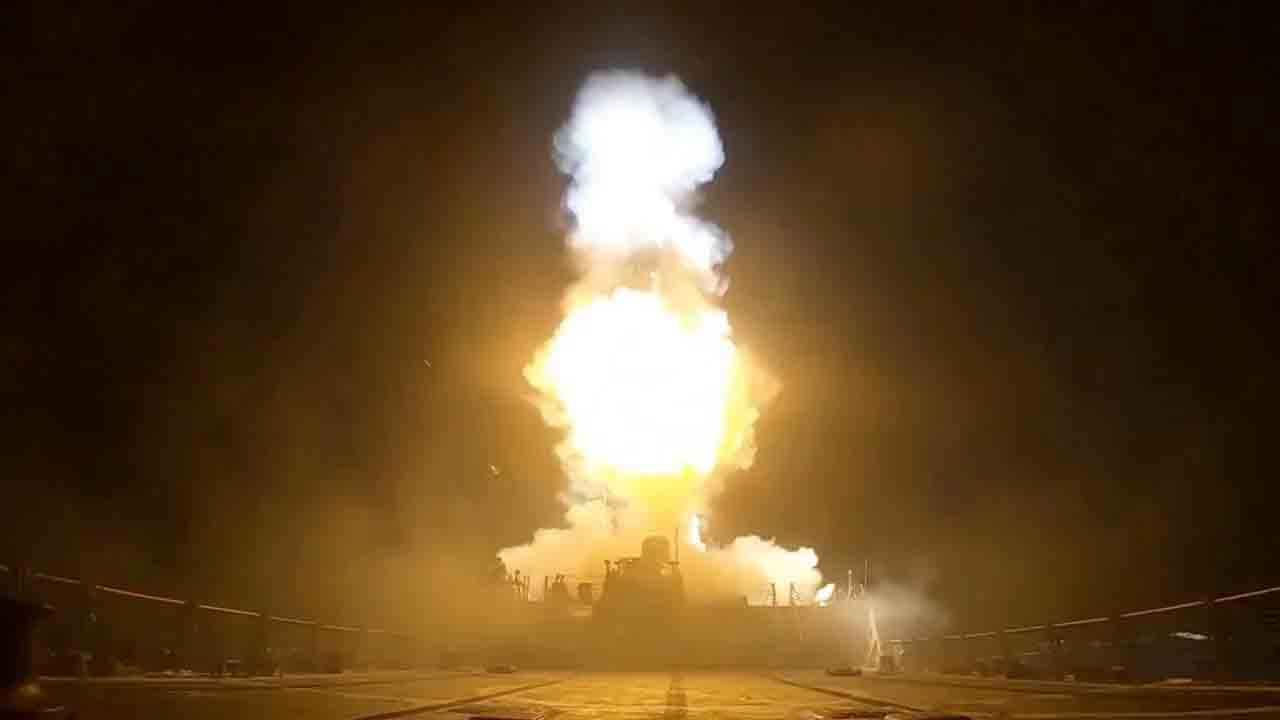
Iran says strikes on US bases lawful self-defence
Iranian Foreign Ministry spokesperson Esmaeil Baghaei said Sunday that Tehran’s strikes on US military bases and assets in the southern Persian Gulf were a lawful exercise of self-defense, rejecting the UN’s characterization of the conflict as a “military confrontation.”
“This is not a ‘military confrontation.’ It is the continuation of a blatant and unprovoked act of aggression initiated on 28 February by the United States and Israel,” Baghaei wrote on X in response to a statement by the UN secretary-general’s spokesperson.
Bushehr's deputy governor denies reports claiming attack on nuclear power plant area
Bushehr’s Deputy Governor for Political, Security, and Social Affairs has denied the reports of claiming an attack on the Bushehr nuclear power plant area, Iran’s ISNA reports.
????? ????? ?????? ? ??????? ???????? ????? ??? ????? ??? ?? ???? ?????? ???? ?? ???? ?? ?????? ??????? ???? ????? ?? ????? ???
— ???????? ????? (@isna_farsi) July 12, 2026
Saudi FM discusses Iranian attacks, Hormuz with regional counterparts
Saudi Foreign Minister Prince Faisal bin Farhan held calls with his counterparts in Qatar, Oman, Bahrain and Jordan to discuss regional developments, efforts to de-escalate tensions and freedom of navigation in the Strait of Hormuz, Saudi state news agency SPA reported Sunday.
The officials reaffirmed their condemnation of repeated Iranian attacks against countries in the region and rejected actions that could undermine state sovereignty or threaten regional security and stability, SPA said.
Western intelligence had warned US of Iran plot to kill Trump in Turkiye: media
A Western intelligence service warned the United States that Iran intended to assassinate President Donald Trump on Turkish soil, prompting a last-minute switch of his aircraft, Israeli broadcaster Channel 12 reported.
The outlet said senior Iranian officials viewed Trump’s visit as a rare opportunity, but the intelligence service alerted US authorities in advance.
Channel 12 also reported that Israeli officials currently assess Iran does not intend to attack Israel, believing such a move would return the conflict to high-intensity warfare and risk an uncontrolled escalation.
UN chief calls on US and Iran to halt new outbreak of fighting
UN Secretary-General Antonio Guterres urged the United States and Iran Sunday to halt their new outbreak of fighting in the Mideast war and resume talks to end it.
Guterres specifically mentioned US attacks on Iran and the latter´s strikes on ships in the Strait of Hormuz and US allies in the Gulf region. "These attacks must stop," Guterres spokesman Stephane Dujarric said in a statement.
Oil company worker injured after drone attack: Kuwait army
Kuwait's army said one worker was injured on Sunday after a drilling platform owned by Kuwait Oil Company was targeted by a "hostile" drone.
The army also said on X that three border posts in the north were subjected to an attack, resulting in material damage.
Iran says Strait of Hormuz more important than 'dozens of nuclear bombs'
A senior adviser to Iran's Supreme Leader has described the Strait of Hormuz as more important than dozens of nuclear bombs, pledging that Tehran will safeguard the strategic waterway at all costs.
Mohsen Rezaei said the narrow maritime passage plays a critical role in deterring Iran's adversaries and remains a key pillar of the country's national security. He stressed that the Strait of Hormuz is a strategic asset whose importance exceeds that of "dozens of nuclear bombs".
Rezaei also maintained that US President Donald Trump and Israeli Prime Minister Benjamin Netanyahu crossed Iran's "red lines", warning they would face the consequences of their actions. He added that, after what he described as repeated criminal acts, any discussion of friendship with the United States had become meaningless, while urging the Iranian people to firmly defend their rights and national dignity.
Explosions reported near Iran's Bandar Abbas, Qeshm: state media
Explosions were heard east of Iran's Bandar Abbas and in the coastal area of Qeshm, the country's Fars news agency reported on Sunday.
However, the cause of the explosions has not yet been determined, it said.
Trump says US hit Iran 'very hard' in latest attacks
President Donald Trump said Sunday the United States hit Iran hard in response to its latest attacks on shipping in the Strait of Hormuz.
"We hit them very hard last night," Trump told CNN by telephone in an interview centring mainly on the death of Senator Lindsey Graham.
Trump said the United States and Iran had been close to "a deal" on Saturday. "They were giving up everything, and then all of a sudden two hours after that they hit a ship with a drone. These people, there is something wrong with them," he said.
Pakistan urges restraint as US-Iran tensions escalate
Pakistan has expressed deep concern over escalating tensions in the Middle East, saying recent developments have further heightened regional instability.
In a statement, the Foreign Office reaffirmed Pakistan's support for the sovereignty and territorial integrity of all brotherly countries and urged all sides to exercise restraint, take immediate steps to reduce tensions and honour their commitments under the Islamabad Memorandum of Understanding (MoU).
The Foreign Office said Pakistan remains committed to supporting lasting regional peace and stability through dialogue and diplomacy.
PR No.
— Ministry of Foreign Affairs - Pakistan (@ForeignOfficePk) July 12, 2026
Pakistan expresses deep concern at escalation in regional tensions
pic.twitter.com/yr27qSYQ9E
Trump says Strait of Hormuz open to commercial traffic
US President Donald Trump said on Sunday that the Strait of Hormuz is open to commercial traffic, though the US and Iran continue to trade attacks that have raised concerns over safety on one of the world’s most important oil shipping routes.
Trump's comments were made during an interview on NBC's Meet the Press.
Iranian FM offers condolences over former Qatari emir's death amid regional tensions
As tensions continue to rise between Iran and the United States in the Middle East, Iranian Foreign Minister Abbas Araghchi has expressed condolences over the death of Qatar’s former emir, Sheikh Hamad bin Khalifa Al Thani.
“With profound sadness and sorrow, we mourn the passing of His Highness the Father Amir Sheikh Hamad bin Khalifa Al Thani,” Araghchi wrote in a post on X.
He also conveyed Iran’s “deepest condolences,” adding, “May God have mercy on the deceased, and grant everyone patience and solace.”
????? ????? ??????? ???? ???? ???? ????? ?????? ?????? ????? ??? ?? ????? ?? ????.
— Seyed Abbas Araghchi (@araghchi) July 12, 2026
???? ??????? ??? ???? ???? ????? ????? ???? ?? ??? ?? ????? ????? ?? ???? ???????? ?????? ?????? ??????.
??? ???? ??????? ????? ?????? ????? ????????. pic.twitter.com/8mRJt7sU5B
Pakistan, Saudi Arabia underscore need to promote dialogue, diplomacy: FO
Saudi Ambassador to Pakistan Nawaf bin Saeed Ahmad Al-Malkiy and Deputy Prime Minister Ishaq Dar have exchanged views on the latest regional developments, Foreign Office says in a post on X.
They have “underscored the need to strengthen collective efforts aimed at promoting dialogue and diplomacy”.
H.E. Mr. Nawaf bin Saeed Ahmad Al-Malkiy, Ambassador of the Kingdom of Saudi Arabia to Pakistan @AmbassadorNawaf, called on the Deputy Prime Minister/Foreign Minister, Senator Mohammad Ishaq Dar @MIshaqDar50.
— Ministry of Foreign Affairs - Pakistan (@ForeignOfficePk) July 12, 2026
They exchanged views on the latest regional developments and… pic.twitter.com/Qk2PGU8c5p
Jordan condemns 'brutal' Iranian attacks
Jordan has described Iranian attacks on its Gulf neighbours as a “blatant violation of their sovereignty, a threat to their security, stability, and territorial integrity, a dangerous escalation, and a flagrant breach of international law and the Charter of the United Nations”, Al Jazeera reports.
Doha advises all marine vessels to cease sailing after Iran attack
Qatar has urged all vessel owners to “temporarily suspend navigation and marine activities” until further notice, Al Jazeera reported.
The Transport Ministry said the move was taken in the interest of public safety and includes recreational boats, fishing vessels, and jet skis.
Qatar was attacked by Iranian ballistic missiles early Sunday with at least three people wounded and hospitalized by falling debris after interceptions.
UAE says Iranian missiles 'detected outside its borders'
The United Arab Emirates says “monitoring and tracking systems are operating with high efficiency around the clock at the highest levels of readiness” after Iran launched strikes throughout the Middle East, Al Jazeera reports.
The Defence Ministry said on X “missile threats detected this morning were outside the country’s borders”.
UKMTO says security threat level in Hormuz 'remains severe'
The maritime security threat level in the Strait of Hormuz remains at the highest degree of danger, classified as “severe”, says the United Kingdom Maritime Trade Operations (UKMTO).
“Despite the July 12, 2026 Iranian proclamation that the [Strait of Hormuz] is closed, the southern route remains available and has now been expanded to accommodate two-way traffic,” it has said.
JMIC Advisory Note: 014-26
— UKMTO Operations Centre (@UK_MTO) July 12, 2026
Click here to view the full advisory note?? https://t.co/8GmvndmpTA#MaritimeSecurity #MarSec pic.twitter.com/TXe0hiIKun
Lebanon PM expresses support for nations targeted in Iranian attacks
Lebanese Prime Minister Nawaf Salam has condemned Iran’s attacks on Jordan, Bahrain, Kuwait, Oman and Qatar, Al Jazeera reports.
“We reiterate our full solidarity with our brothers in these countries, and our unwavering support for them,” he has said in a statement carried by the National News Agency.
Saudi Arabia denounces Iran's 'destabilising behaviour'
Saudi Arabia is the latest Middle Eastern nation to condemn the Iranian attacks throughout the region.
The Foreign Ministry denounced Iran’s “violation of the principles of international law, the Charter of the United Nations, the Charter of the Organisation of Islamic Cooperation, and the rules of good neighbourliness, through repeated Iranian attacks on commercial vessels that threaten the security and freedom of navigation”.
The kingdom was not targeted in the latest round of Iranian strikes, but a Saudi oil tanker was damaged while transiting the Strait of Hormuz last week.
Oman condemns attack on its territory: state media
The Omani government has condemned an attack on its territory, according to state media, with Iran’s Guards saying they targeted it during a barrage aimed at countries across the Gulf, AFP reports.
The Oman News Agency has said on X that “the Sultanate of Oman affirms its condemnation and denunciation of this attack”, which came just hours after the country hosted Iran’s foreign minister to address security issues in the Strait of Hormuz.
At least 2 people wounded in US attack on Iran's Kerman
A communications tower in southern Iran has been targeted in the latest wave of US attacks.
The tower was located in Kerman province, according to ISNA.
Quoting local official Rahman Jalali, the news agency reported two people were injured in the attack and transported to hospital by helicopter.
The US Central Command said earlier its forces hit 140 Iranian military targets on Saturday after the IRGC announced the Strait of Hormuz was closed “until further notice”.
Baqaei says future arrangements for Hormuz 'should be made in consultation' with Iran and Oman
Talks between Iran and Oman that took place in Muscat on Saturday were about arrangements for managing shipping in the Strait of Hormuz, Iran’s Foreign Ministry spokesman says, as reported by Al Jazeera.
Esmaeil Baqaei has said in a statement quoted by Iranian state media that the talks were attended by legal and technical delegations from the two countries.
The statement adds that the governments exchanged views on ensuring security and safety in the Strait of Hormuz in compliance with the sovereign rights of the two countries and in line with international law and the MoU between the US and Iran.
“The Islamic Republic of Iran emphasises that the future arrangements for managing traffic in the Strait of Hormuz should be made in consultation between the two coastal countries and considering the developments of the past few months, especially the imposed war between the US and the Zionist regime and its security consequences for shipping in the Strait of Hormuz,” the statement says.
'Highly dangerous escalation': Kuwait condemns Iranian attacks
Kuwait has denounced “heinous Iranian attacks” that targeted the Gulf country.
“The continuation of these attacks constitutes a highly dangerous escalation that will exacerbate tension and instability in the region, threaten regional peace and security, and undermine diplomatic efforts aimed at de-escalation and resolving crises by peaceful means,” the Foreign Ministry said in a statement.
Kuwait “reserves all its rights to take whatever measures are necessary to protect its security and preserve its sovereignty in accordance with the provisions of international law and the United Nations Charter”, it added.
Military facility in Iran's Yasuj hit in US strikes: report
Iranian security officials have told the IRIB news agency US forces attacked a military installation on the outskirts of Yasuj, in southwestern Kohgiluyeh Boyer-Ahmad province, Al Jazeera reports.
Jordan army says three Iranian missiles fell inside country
Jordan’s army has said that three Iranian missiles fell on the kingdom’s territory at dawn amid renewed hostilities between Iran and the United States, reports AFP.
“Three missiles fired from Iranian territory fell at dawn in several locations across the kingdom, without causing any casualties. The damage is limited to minor material losses,” said a military source quoted in an army statement.
India says 10 rescued, one missing after vessel attacked off Oman
India says that 11 of its nationals were on a vessel that was struck in waters east of Oman, as Iran and United States traded fresh fire, reports AFP.
“Of the 11 Indian nationals on board, 10 have been rescued so far, while one Indian national is reportedly missing,” New Delhi’s foreign ministry said in a statement.
Iranian official says Iran has 'taken control of Hormuz with power'
Ebrahim Rezaei, spokesman for Iran’s Foreign Policy and National Security Committee of the Iranian Parliament, says in a post on X: “We have taken control of the Strait of Hormuz with power, and we will preserve it with power as well.”
Omani state media says drones targeted sites in Musandam
The Omani government has condemned Iran’s attacks on the country, with a security source telling the Oman News agency that “sites in the Musandam Governorate were targeted by drones”.
The Omani government condemned the attack and said it is taking “all necessary measures to deal with the developments to preserve the safety of the country and its residents”, the Oman News Agency reported.
Iran’s IRGC earlier claimed it carried out a “heavy and surprise” attack on logistics support centres and refuelling platforms used by US aircraft carriers at the Port of Duqm in Oman. Duqm is located in southeastern Oman in Al Wusta Governorate.
Iran also claimed attacks on targets in Bahrain, Kuwait, Jordan and Qatar, while the UAE also reported intercepting missiles and drones.
Dar holds phone call with Araghchi as Mideast tensions flare up
Deputy Prime Minister and Foreign Minister Ishaq Dar held a telephone conversation with Iranian Foreign Minister Abbas Araghchi today (Sunday).
Both leaders exchanged views on the evolving regional situation. DPM stressed upon the parties to follow the path of de-escalation and show restraint, as agreed in the Islamabad MOU in June 2026. He further underscored that dialogue and diplomacy remain the only viable path to resolving disputes and achieving lasting peace and stability in the region.
Dar reiterated Pakistan’s readiness to continue playing a constructive role in promoting and maintaining regional peace and stability.
Deputy Prime Minister/Foreign Minister Senator Mohammad Ishaq Dar @MIshaqDar50 held a telephone conversation today with His Excellency Seyyed Abbas Araghchi, Foreign Minister of the Islamic Republic of Iran. @araghchi
— Ministry of Foreign Affairs - Pakistan (@ForeignOfficePk) July 12, 2026
Both leaders exchanged views on the evolving regional… pic.twitter.com/WuRxnROwwp
Three injured, including a child, in Qatar following interception
Qatar’s Interior Ministry has confirmed that falling debris from interception operations has injured three people, including a child.
“The injured are receiving the necessary care,” it said in a statement.
The ministry said following the Iranian attacks, security authorities and civil defence teams had initiated response procedures in accordance with approved emergency plans.
Statement from the Ministry of Interior regarding operational developments following the Iranian attacks. #MOIQatar pic.twitter.com/9CZoipLNtc
— Ministry of Interior - Qatar (@MOI_QatarEn) July 12, 2026
Kuwait armed forces responding to air attacks: statement
Kuwait's military on Sunday said its air defence forces were working to intercept an ongoing attack on its territory, as countries across the Gulf were targeted by drones and missiles, AFP reported.
"The General Staff of the Army notes that any explosion sounds heard are the result of air defence systems intercepting hostile attacks," the military said in a statement posted on social media.
????? ?????? ?????? ??????? ?????? ???? ?????? ???? ?????? ????? ???????.
— KUWAIT ARMY - ????? ??????? (@KuwaitArmyGHQ) July 12, 2026
???? ????? ??????? ?????? ????? ?? ????? ?????????? ?? ???? ??? ????? ?????? ??????? ?????? ????? ??????? ????????.
???? ?? ?????? ?????? ???????? ????? ???????? ??????? ?? ?????? ???????.#?????_??????? pic.twitter.com/p5o4B3Q1cG
Attack hits military base in Iran's Khondab: IRNA
The base in the western Iranian city has been hit by “enemy projectiles”, according to Iran’s official news agency, quoting a local senior official.
The attack took place in the morning, and the exact estimate of the human and financial losses is under review, IRNA added.
Iran's army says US must comply with MoU terms
Brigadier General Mohammad Akraminia is once again urging the US to comply with the terms of the MoU signed between Tehran and Washington on June 16.
He told the IRIB broadcaster that the US’s intervention to create what he called an “illegal route” through the Strait of Hormuz had caused insecurity in the area.
He said Iran’s armed forces would “firmly” defend the rights of the Iranian people in the strait.
Akraminia added that the army was constantly updating its “bank of targets”.
Iran's IRGC says it struck US aircraft carrier support and refueling platforms in Oman's Duqm port
Iran’s Islamic Revolutionary Guard Corps has said that its aerospace forces carried out a heavy attack on US aircraft carrier support and refueling platforms in the port of Duqm, in Oman, in the third stage of its response to what it called US military “aggression”.
The IRGC added that the operation targeted logistical support centres for US naval vessels.
Sirens blare in Bahrain again
Bahrain’s Interior Ministry says “the siren has been sounded” and is urging residents to “head to the nearest safe place”.
This is the second time the Gulf state has activated sirens this morning.
Qatar issues a second security alert
Qatar’s Ministry of Interior has raised the country’s security threat level to high for the second time this morning, urging residents to remain inside their homes or in safe places.
Ghalibaf says 'the era of one-sided deals is over'
Iran’s top negotiator Mohammad Bagher Ghalibaf has issued a statement on X.
“The era of one-sided deals is OVER. We told you: keep your word or pay the price,” he wrote.
“Reality is knocking,” he added.
The post was accompanied by an image of Article 5 of the MoU, which concerns the reopening of the Strait of Hormuz, with the words “the Islamic Republic of Iran will make arrangements” highlighted.
The era of one-sided deals is OVER. We told you: keep your word or pay the price. Reality is knocking. pic.twitter.com/B97ogCYGaj
— ???????? ??????? | MB Ghalibaf (@mb_ghalibaf) July 12, 2026
UAE accuses Iran of launching missiles, drones towards it
?????? ?????? ???????? ?????? ?????????? ?? ???????? ??????? ??????? ????? ????? ?? ????? ????? ????? ?????? ?? ??????? ???????? ?? ????? ?????? ?? ?????? ?? ????? ????? ??????? ???????? ?????? ?????????? ???????? ??????????? ???????? ????????? ???????.
— ????? ?????? |MOD UAE (@modgovae) July 12, 2026
UAE Air Defences system… pic.twitter.com/0zyczbxaTq
Centcom says it struck over 300 targets against Iran
The US Central Command has said during three nights of strikes this week, it struck “more than 300 targets at the direction of the Commander in Chief to degrade Iran’s ability to attack civilian mariners and commercial vessels freely transiting the strait”.
It claimed that commercial vessel transits through the Strait of Hormuz continue, and since early May, US forces have “helped facilitate the successful transit of more than 800 commercial vessels and 400 million barrels of crude oil”.
— U.S. Central Command (@CENTCOM) July 12, 2026
Iran claims drone attacks on Kuwait and Bahrain
Iran’s army says it launched waves of drone attacks on US military sites in Kuwait and Bahrain, according to IRIB, Iran’s state broadcaster.
In a statement, the army said it used explosive drones to target a Patriot air defence system, an ammunition depot and a radar site belonging to the US military in Kuwait.
It said another wave of drone attacks targeted a US communications system and radar site in Bahrain.
The army said the attacks were in response to continued US strikes on areas in southern Iran.
IRGC claims attack on Jordan's Prince Hassan airbase
Iran’s Islamic Revolutionary Guard Corps says it has targeted US military facilities at Prince Hassan airbase in Jordan with several ballistic missiles, Al Jazeera reported.
In a statement carried by the IRIB state broadcaster, the IRGC said its aerospace forces destroyed a command-and-control centre at the base, as well as hangars housing MQ-9 drones.
IRGC says US struck coastal bases, communication towers
Iran's Revolutionary Guards said on Sunday that the United States launched airstrikes against a number of coastal bases and communication towers along Iran's southern coastline, Reuters reported.
Sirens ring out in Bahrain, interior ministry says
Sirens have been sounded in Bahrain, the country’s ministry of interior said Sunday morning local time.
“Citizens and residents are asked to remain calm, proceed to the nearest safe location, and follow updates through official channels,” it said on X.
UAE says air defence intercepting Iranian missiles, drones
The United Arab Emirates' Ministry of Defense said on Saturday its air defense systems were actively engaging Iranian missile and drone attacks, adding that sounds heard across parts of the country were the result of intercepting ballistic missiles, cruise missiles and unmanned aerial vehicles.
?????? ?????? ???????? ?????? ?????????? ?? ???????? ??????? ??????? ????? ????? ?? ????? ????? ????? ?????? ?? ??????? ???????? ?? ????? ?????? ?? ?????? ?? ????? ????? ??????? ???????? ?????? ?????????? ???????? ??????????? ???????? ????????? ???????.
— ????? ?????? |MOD UAE (@modgovae) July 12, 2026
UAE Air Defences system… pic.twitter.com/0zyczbxaTq
Explosions reported further inland in Iran
Explosions rocked several areas in the south of Iran, including in Kerman, a city about 300 miles from the coast, the country’s Islamic Revolutionary Guard Corps (IRGC) reported early Sunday local time.
Explosions reported on Sunday were mainly along Iran’s southern coast, near the Strait of Hormuz.
Blasts were also reported in Chabahar, according to the IRGC. The coastal city is near Iran’s border with Pakistan.
Crew abandon vessel reportedly struck by IRGC: UKMTO
The United Kingdom Maritime Trade Operations (UKMTO) said on Saturday it had been informed by military authorities and the vessel's company security officer that the crew had abandoned a ship following an incident 9 nautical miles east of Oman and were now aboard a lifeboat.
UKMTO WARNING 083-26 UPDATE 001
— UKMTO Operations Centre (@UK_MTO) July 12, 2026
Click here to view the full warning.??https://t.co/ELsJDxjcRz#MaritimeSecurity #MarSec pic.twitter.com/kJpEjBPdfQ
US official says strikes hit Iranian missile, drone and radar sites
A senior US official said American strikes targeted Iranian air surveillance radars, missile and drone storage facilities, missile and UAV launch sites, maritime surveillance radars and surface-to-air missile launchers, Axios reported.
Iran made a poor choice. Now they pay, Hegseth says
US Secretary of War Pete Hegseth said on Saturday on X that Iran had "made a poor choice" and would now face consequences, following US military strikes against Iranian targets.
Iran made a poor choice. Now they pay. https://t.co/8m4fEfgrXv
— Pete Hegseth (@PeteHegseth) July 11, 2026
Explosions reported in southern Iran: state media
Explosions were reported in the southern Iranian cities of Bushehr and Asaluyeh in the early hours of Sunday, according to Iran’s state-run Press TV.
The reports come as the US says it targeted Iran after Islamic Revolutionary Guard Corps (IRGC) forces struck a Cyprus-flagged container ship transiting the Strait of Hormuz.
The IRGC claimed that the vessel had been crossing the strait through an unauthorized route.
US military launches third round of strikes against Iran this week
The US military said Saturday night it began launching strikes against Iran — the third round this week — in response to an attack on a ship passing through the Strait of Hormuz.
US Central Command said Islamic Revolutionary Guard Corps forces “blatantly attacked” a Cyprus-flagged container ship transiting the Strait of Hormuz, and one crew member is missing.
“Iran was provided yet another opportunity to demonstrate adherence to the Memorandum of Understanding after being held accountable for earlier attacks on commercial vessels but has again failed,” CENTCOM said in a post on X.
At 7:15 p.m. ET today, U.S. Central Command forces began launching the third round of strikes this week against Iran after Islamic Revolutionary Guard Corps forces blatantly attacked M/V GFS Galaxy, a Cyprus-flagged container ship transiting the Strait of Hormuz. A civilian crew…
— U.S. Central Command (@CENTCOM) July 11, 2026
IRGC announces closure of Strait of Hormuz after firing warning shot at vessel
The Islamic Revolutionary Guard Corps Navy announced the closure of the Strait of Hormuz, after firing a warning shot at a commercial vessel that allegedly failed to follow prescribed shipping routes.
The narrow waterway, which typically handles 20-25% of global oil shipments, is now effectively shut to maritime traffic until further notice.
The IRGC said one vessel was struck by a warning shot after ignoring orders to change course, adding that any further US or allied action in response would face a "severe" retaliation.
Oman proposes a deal for Strait of Hormuz shipping routes
Oman has drafted a proposal to manage traffic in the Strait of Hormuz through two separately controlled routes, a source with knowledge of the talks told CNN.
Under the agreement, which is yet to be finalized, both corridors would remain open. The Southern Corridor, through Omani territorial waters, would allow free navigation under pre-war conditions.
Vessels transiting the Northern Corridor, through Iranian territorial waters, would require prior approval from Iran, although no tolls would be imposed under the deal.
Iran’s Foreign Minister Abbas Araghchi met with his Omani counterpart, Sayyid Badr Albusaidi, in Muscat on Saturday, during which both officials discussed mechanisms to ensure the safe passage of vessels in the waterway.
Iran says military capabilities strengthened after recent conflict
Iran's Acting Defence Minister Brig Gen Seyed Majid Ibn Reza said the country's military capabilities have been significantly strengthened following the recent conflict, emphasizing the need for higher defence spending and greater investment in advanced technologies.
He said Iran substantially increased the production of missiles and drones during the war, with drone output tripling over the course of the fighting.
The acting minister also claimed the armed forces had successfully identified the enemy's strategic vulnerabilities and critical targets.
According to him, Iran's military now has a clearer understanding of when, how, and to what extent force should be applied in any future confrontation.
Iran, Oman discuss Strait of Hormuz security amid regional tensions
Iranian Foreign Minister Abbas Araghchi met with his Omani counterpart, Badr Albusaidi, to discuss regional developments and maritime security, with a particular focus on the Strait of Hormuz.
During the meeting, the two ministers exchanged views on ensuring the safety of navigation through the strategic waterway, a vital route for global energy supplies and international trade.
They also reviewed the broader regional security situation and emphasized the importance of protecting key maritime routes amid ongoing tensions.
In addition, the discussions covered issues of mutual interest, reflecting the continued diplomatic engagement between Iran and Oman on regional stability and security cooperation.
Dar seeks 'necessary time and space' for US-Iran peace efforts in call with Saudi FM
(Web Desk) – Deputy Prime Minister and Foreign Minister Ishaq Dar and Saudi Foreign Minister Faisal bin Farhan express concern over escalating tensions between Iran and the US, particularly after the signing of the Islamabad Memorandum of Understanding, the FO says.
The pair “agreed that the renewed conflict serves no one’s interest and undermines efforts toward regional peace and stability” during a phone call, the FO writes on X.
“The Saudi foreign minister shared the kingdom’s perspective on ongoing diplomatic efforts and emphasised the importance of de-escalation and continued dialogue,” the statement reads.
“DPM/FM reaffirmed Pakistan’s call on all parties to exercise maximum restraint and allow mediation efforts the necessary time and space to achieve a peaceful and meaningful outcome.”
Deputy Prime Minister and Foreign Minister, Senator Mohammad Ishaq Dar @MIshaqDar50, held a telephonic conversation today with His Highness Prince Faisal bin Farhan Al Saud, Foreign Minister of the Kingdom of Saudi Arabia. @FaisalbinFarhan
— Ministry of Foreign Affairs - Pakistan (@ForeignOfficePk) July 11, 2026
The two leaders exchanged views on the… pic.twitter.com/t3GIB46LPD
Two soldiers killed in attack in Iran's Mashhad
(Web Desk) – Two members of Iran’s security forces were killed in an attack in the northeast city of Mashhad, where the funeral of late supreme leader Ali Khamenei was held, AFP reports, citing Iran’s Tasnim news agency.
The two people killed were “members of the Basij forces”, a paramilitary force affiliated with the Revolutionary Guards, the ideological arm of the Iranian military, Tasnim said.
Tasnim did not specify the date of the incident or the identity of the attackers, but said that “the perpetrator or perpetrators of this act will be punished”. According to the agency, the two men were killed while “patrolling in the city of Mashhad, about fifteen kilometres (nine miles) from the shrine” of Imam Reza, where Ali Khamenei was buried. “A pedestrian was also wounded by the attackers and taken to hospital,” the Iranian agency added.
Iran's Supreme Leader pledges revenge for slain father and predecessor
(Reuters) – Iran's Supreme Leader Ayatollah Mojtaba Khamenei said on Saturday that avenging his slain predecessor and father was "the demand of the nation" and "must certainly" take place, according to a written message released on his Telegram account.
Khamenei issued the message on the occasion of funeral ceremonies for his father, Ayatollah Ali Khamenei, held months after he was killed in the US-Israeli airstrikes on February 28.
"We pledge to avenge the blood of the martyred leader and all the martyrs of these two wars from the criminal and disgraced killers," Khamenei said in the message.
Iran reopens railway bridge less than 24 hours after US strike
(Web Desk) – Iranian authorities have announced that a railway bridge in Aqqala County, Golestan province, has reopened for operations less than 24 hours after it was damaged in a US strike, according to Al Jazeera, citing Iran's Radio and Television News Agency.
Ali-Asghar Tahmasbi, the governor of Golestan, said the rapid restoration of the bridge was "the province's practical response to the threats and actions of the enemies".
Iranian state media had earlier reported that the railway bridge near Aqqala was struck early on Wednesday, causing damage to the Gorgan-Incheh Borun railway line. The route forms part of Iran's northern rail network, linking the country with Turkmenistan and broader Central Asian transport corridors.
Authorities have not provided further details on the extent of the damage or the repair work, but said rail operations have now resumed across the affected section.
US, Israel must be punished and pay damages for their 'war crimes': Iran judiciary chief
(Web Desk) – Iranian judiciary’s head Mohseni-Eje’i has said a “war crime has been committed against our country and our people by the United States and the Zionist regime”, ISNA reports.
“We are determined to prosecute and punish the war criminals. The criminals must be both punished and paid compensation commensurate with the crime they committed,” he was quoted as saying.
ISNA, citing the judiciary, said Mohseni Ejei met with a group of experienced and prominent international and foreign lawyers and jurists in order to diligently pursue the case of war crimes allegedly committed by the US and Israel against Iran.
He said: “The Zionists have been engaged in crimes, massacres, genocide, and infanticide in Palestine and Lebanon for nearly eight decades; we will fight the savage and savage Zionists with all our might, and wherever the flag of the fight against these anthropomorphs is raised, we will not hesitate to accompany and assist.”
He asserted that the “criminals should also be sure that we will recover from them the damages they have inflicted on the Iranian nation”.
?????: ????????? ?? ?? ????? ?? ???? ??????? ?? ???? ???????
— ???????? ????? (@isna_farsi) July 11, 2026
-????? ????? ??????? ? ????? ?????? ?? ????? ???? ??? ? ??????? ????? ??? ???https://t.co/cAkIeXqiOn pic.twitter.com/tXVwipNWKF
Iran files complaint with global body over US strikes on railway infrastructure
Iran’s ambassador to the United Nations in Geneva has filed a formal complaint with the International Intergovernmental Organization for International Carriage by Rail (OTIF), demanding urgent action over US attacks on the country’s railway infrastructure, including a strike on a railway bridge in Golestan province, Press TV reports.
“The attack is yet another example of strikes against facilities serving public transport, economic activities and regional connectivity,” the letter stated, urging OTIF to pursue the matter seriously through its legal and institutional mechanisms.
Iran files complaint with global rail body over US strikes on railway infrastructurehttps://t.co/EMApjFu5xO
— PressTV Extra (@PresstvExtra) July 11, 2026
Negotiations valuable if they lead to stability and stronger national power, says Iranian official
Saeed Jalili, the Supreme Leader’s Representative to the Supreme National Security Council’s Secretariat, has said that negotiations should be viewed as a tool rather than an objective in themselves.
In a post on X, Jalili wrote: “Negotiation is a tool, not a goal. It may be effective at one point and not at another. One should not attribute independent significance to the tool; what matters is the type, manner, and timing of its use”.
“If it leads to the stability and stronger national power, it is valuable. If it leads to the weakening of the country's power, it is harmful.”
?????? ?? ????? ???? ?? ?? ???. ???? ??? ?? ????? ?????? ???? ? ?? ????? ???? ??.
— Saeed Jalili | ???? ????? (@DrSaeedJalili) July 11, 2026
????? ?? ????? ??????? ???? ???? ????? ????? ???? ?????? ? ???? ??????? ?? ?? ???.
??? ???? ????? ? ?????? ???? ???? ??????? ???.
??? ???? ????? ???? ???? ???? ??? ???.
MBS, Trump discuss US-Iran talks, regional stability and Strait of Hormuz security
Saudi Crown Prince and Prime Minister Mohammed bin Salman received a phone call from US President Donald Trump on Friday, during which the two leaders reviewed bilateral cooperation and explored ways to strengthen Saudi-US ties across a range of sectors.
According to the Saudi Press Agency, the talks covered regional and international developments, including ongoing US-Iran negotiations. The leaders stressed the importance of safeguarding maritime security, protecting vital shipping routes and supporting efforts to enhance regional stability.
??? #???_????? ????? ??????? ??????? ?? ???? ???????? ??????? ?????????? ??? ????? ??????? ?????? ??????? ??? ??????? ???? ????? ?? ??? ?? ????????? ???? ??? ?? ??????? ????????? ???????? ?????? ????? ????? ??????.https://t.co/d1LUgTaqGE#??? pic.twitter.com/vM5GbyVnXi
— ??? ??????? ??????? (@spagov) July 10, 2026
Iran's FM Araghchi arrives in Oman for talks
(Web Desk) – Iranian Foreign Minister Abbas Araghchi arrived in Muscat on Saturday for talks with his Omani counterpart on developments related to the Strait of Hormuz, the semi-official Tasnim news agency has reported.
According to CNN, Iran’s Foreign Ministry spokesperson Esmaeil Baghaei said the visit is part of ongoing consultations between Tehran and Muscat on regional developments, with a particular focus on security and stability in the Strait of Hormuz.
The two foreign ministers are expected to discuss mechanisms to ensure the safe passage of ships through the Strait of Hormuz, Baghaei said.
Araghchi’s visit comes as diplomatic efforts continue to revive negotiations following recent strikes involving the US and Iran, which have heightened regional tensions.
Iranian Foreign Minister @araghchi was officially welcomed by Omani officials upon his arrival in Muscat on Saturday. pic.twitter.com/XP8LDUhM6N
— IRNA News Agency (@IrnaEnglish) July 11, 2026
Iran state media says explosion in eastern Tehran province was controlled ammunition disposal
An explosion heard in the eastern part of Tehran province was caused by the controlled disposal of ammunition remaining from the war, Iranian state media, citing a local official, said on Saturday.
The official said the operation posed no threat to citizens and that no incident had occurred.
Earlier on Saturday, Iranian state media reported that an explosion was heard in the eastern part of Tehran province, with residents of Pakdasht and Qiyamdasht reporting the blast while its source and exact location were not immediately known.
Iranian Foreign Minister Araghchi to visit Oman for Hormuz talks
Iranian Foreign Minister Abbas Araghchi is set to visit Oman today, leading a high-level delegation for discussions focused on regional developments and diplomatic issues.
During the visit, Araghchi is expected to participate in talks related to the Strait of Hormuz. The discussions are also likely to cover bilateral relations between Iran and Oman, along with the broader security situation in the region.
The visit comes as diplomatic efforts continue over matters affecting regional stability and maritime security. Officials from both sides are expected to exchange views on strengthening cooperation and addressing shared concerns.
US sanctions Iran's alleged financial network linked to Mojtaba Khamenei
The United States has announced a new round of sanctions targeting an alleged Iranian financial network, accusing it of helping senior figures in Tehran move and conceal billions of dollars through overseas assets and exchange houses.
In a statement, the U.S. Department of the Treasury's Office of Foreign Assets Control (OFAC) said it had imposed sanctions on Iranian financial facilitator Ali Ansari, alleging that he manages a global network of assets that benefits Mojtaba Khamenei and other influential members of Iran's leadership.
According to the Treasury Department, Ansari oversaw a portfolio of international real estate and commercial holdings that allegedly diverted public wealth for the benefit of regime elites, including senior officials associated with the Supreme Leader's Office and the Islamic Revolutionary Guard Corps (IRGC).
The department also announced sanctions against several Iranian exchange houses, accusing them of processing billions of dollars in transactions each year on behalf of sanctioned Iranian banks through complex networks of shell companies designed to conceal financial activity.
The sanctions were announced following what the Treasury described as Iran's renewed attacks on international shipping in the Strait of Hormuz. Iran has not immediately responded to the latest U.S. measures.
Iranian official highlights military surveillance of enemy movements
The spokesperson for Iran’s Ministry of Foreign Affairs, Esmaeil Baghaei, highlights the continuous surveillance of enemy movements by the nation’s armed forces, AlJazeera reproted.
In a post on X, he said: “The valiant defenders of the noble homeland in the armed forces of the Islamic Republic of Iran, on the coasts, islands, borders and other sensitive points of the country, with vigilant and watchful eyes, keep the enemy’s movements under surveillance.”
?? ??? ?????? ??? ???????? ??????? ?????? ???? ?? ??????? ???? ?????? ?????? ?????? ?? ?????? ?????? ????? ? ???? ???? ???? ????? ?? ?????? ????? ? ??????? ?????? ???? ?? ??? ??? ????? ? ?????? ????? ? ????? ????? ???? ?????.
— Esmaeil Baqaei (@IRIMFA_SPOX) July 11, 2026
?? ??? ???????? ? ??????? ???? ??? ? ??????? ???…
Pakistan urges all sides to uphold respective commitments under Islamabad MoU
Statement by Ambassador Asim Iftikhar Ahmad
— Permanent Mission of Pakistan to the UN (@PakistanUN_NY) July 10, 2026
Permanent Representative of Pakistan
At Security Council Briefing on the “Implementation of Security Council resolution 2231 (2015): Twenty-first report of the Secretary-General”
(10 July 2026)
****
Mr. President,
Pakistan expresses… pic.twitter.com/5XdBIyEqYN
Trump claims US missiles ready as stark warning issued to Iran
US President Donald Trump has issued a strongly worded warning to Iran, claiming the United States is prepared to launch a devastating military response if Tehran attempts to carry out or support any assassination plot against him.
In a post shared on his social media platform, Trump alleged that "1,000 missiles are locked and loaded" and aimed at Iran, adding that thousands more could be deployed if the Iranian government acted on what he described as repeated threats against the sitting US president. He also claimed that military orders had already been issued and that U.S. forces were ready to sustain operations for up to a year, with the option of extending them if necessary.
— Rapid Response 47 (@RapidResponse47) July 11, 2026
Iranian FM calls for mutual compliance with MoU
Iran has so far kept its word, unlike the so-called U.S. Treasury Secretary who is violating Para 9 of the MoU.
— Seyed Abbas Araghchi (@araghchi) July 11, 2026
That violation follows other violations and missteps by the United States.
Reality check: There can only be mutual compliance.
PM Shehbaz, President Pezeshkian call for restraint, reaffirm commitment to regional peace
Prime Minister Shehbaz Sharif and Iranian President Dr Masoud Pezeshkian held a telephone conversation to discuss the evolving regional situation, stressing the need for restraint and renewed efforts to preserve peace and stability.
Shehbaz urged Iran and all concerned parties to avoid actions that could jeopardize recent diplomatic progress and emphasized implementing the commitments made under the Islamabad Memorandum of Understanding.
Reaffirming Pakistan's commitment to regional stability, he pledged continued constructive engagement.
President Pezeshkian thanked Pakistan's leadership for attending the funeral of the late Ayatollah Ali Khamenei and appreciated Islamabad's diplomatic support.
Both leaders agreed to accelerate bilateral cooperation and remain in close contact on regional issues.
France condemns Iran over regional attacks, urges implementation of US-Iran MoU
France has condemned Iran over its recent attacks on neighbouring countries and commercial vessels in the Strait of Hormuz during an emergency session of the UN Security Council, according to Al Jazeera.
France's envoy to the United Nations, Jerome Bonnafont, said Iran had violated the US-Iran memorandum of understanding despite mediation efforts by Pakistan and Qatar.
Bonnafont accused Tehran of carrying out what he described as "unacceptable attacks" on Bahrain, Qatar and Jordan, adding that Iran bears responsibility for the current escalation.
He called on Iran to end the violence during the 60-day ceasefire period outlined in the memorandum of understanding and urged the immediate implementation of the agreement.
Trump says US-Iran talks to continue, declares ceasefire is over
US President Donald Trump said Iran has requested the continuation of negotiations with the United States, adding that Washington has agreed to resume talks despite declaring that the ceasefire has ended.
In a statement, Trump said, "The Islamic Republic of Iran has asked us to continue talks. We have agreed to do so, but the United States has stated to them, in no uncertain terms, that the ceasefire is over."
The remarks come amid heightened tensions between Washington and Tehran, with uncertainty continuing over the future of diplomatic efforts between the two countries.
Qatari PM, Egyptian FM discuss implementing US-Iran Memorandum of Understanding
Qatari Prime Minister Mohammed bin Abdulrahman bin Jassim Al Thani and Egyptian Foreign Minister Badr Abdelatty discussed ways to implement the framework of the US-Iran memorandum of understanding during a telephone conversation.
The two officials also reaffirmed their support for ensuring freedom of navigation through the Strait of Hormuz and strengthening regional security amid ongoing efforts to maintain stability in the Gulf.
Prime Minister and Minister of Foreign Affairs @MBA_AlThani_ Receives Phone Call from Egyptian Foreign Minister
— Ministry of Foreign Affairs - Qatar (@MofaQatar_EN) July 10, 2026
Doha | July 10, 2026
HE Prime Minister and Minister of Foreign Affairs Sheikh Mohammed bin Abdulrahman bin Jassim Al-Thani received a phone call from HE Minister of… pic.twitter.com/NkrT5HNtC6
Amnesty calls for war crimes probe into Israeli strikes that killed 24 civilians in Lebanon
Amnesty International has called for war crimes investigations into three Israeli air strikes in southern Lebanon that killed 24 civilians, including 12 children, in March.
According to Al Jazeera, the strikes targeted residential homes in the Tyre, Saida, and Nabatieh districts on March 6, 12, and 13. The victims included six women, one of whom was pregnant, and six men, while at least 18 other people were injured.
Following its investigation, Amnesty International said there were reasonable grounds to believe Israeli forces violated international humanitarian law by attacking civilians or civilian property, failing to distinguish between military and civilian targets, or failing to take sufficient measures to minimize civilian casualties.
Oil heads for weekly gain as Middle East supply risks persist
Oil prices have eased but remain on track for weekly gains as renewed US-Iran fighting disrupts shipping in the Strait of Hormuz, stoking concerns over supply disruptions, Reuters reports.
Brent futures are down 68 cents, or 0.9 per cent, at $75.62 a barrel, as of Friday afternoon.
US West Texas Intermediate (WTI) crude dropped 64 cents, or 0.9pc, to $71.44.
Previously, Brent was set for a gain of about 5pc and WTI was on track for an increase of about 4pc.
“Prices have backed off the midweek highs, but there is still a substantial risk premium as Hormuz transits are back to a near-standstill with no clear signs of when normal reopening might resume,” Vandana Hari at oil market analysis provider Vanda Insights says.
China temporarily bans helium exports as US-Iran tensions flare again
China announced on Friday a temporary export ban on helium, effective immediately, as resumption of military conflict in the Middle East threatens to trigger new shortages of the gas critical for chip manufacturing.
Earlier this year, the U.S.-Israeli war on Iran led to helium shortages, disrupting companies globally, including in China, where the AI industry increasingly relies on domestic chips for training and running AI models. Helium is essential for heat management in semiconductor production.
The helium ban is the latest example of Beijing seeking to prevent domestic shortages of critical materials by curbing exports. Previously, it imposed similar measures on fuel, fertilisers and sulphuric acid.
China is also looking to boost domestic chip manufacturing capacity and reduce the industry's dependence on cutting-edge Nvidia semiconductors that fall under U.S. export controls.
IRGC chief vows revenge over Supreme Leader Khamenei's killing
Brigadier General Ahmad Vahidi, the top commander of Iran’s Islamic Revolutionary Guard Corps, has vowed retaliation against the United States and Israel following the killing of Supreme Leader Ali Khamenei.
According to remarks reported by Al Jazeera, Vahidi said Khamenei’s assassination “will not be erased from the historical memory” and called for “the full realisation of justice and a fitting response” against those he blamed, particularly the United States.
In a statement carried by Sepah News Agency, Vahidi said the “criminal leaders of America” and other opponents of Iran’s Islamic Revolution should not expect Khamenei’s killing to weaken the “Resistance Front” or bring its movement to an end.
ECB is back to square one as US-Iran war resumes
The European Central Bank (ECB) is back to square one in its fight against high inflation in the euro zone after new hostilities between the US and Iran caused energy prices to rise again, ECB policymaker Yannis Stournaras has said, Reuters reports.
The ECB raised rates at its June 10-11 meeting and investors expect it to do so twice more over the next year to contain the fallout from the Iran war on fuel costs.
“Hostilities started again,” Stournaras, the Greek central bank governor, has said at an event in Greece.
IEA warns US-Iran escalation could derail 2027 global oil surplus forecast
The International Energy Agency has warned that renewed tensions between the United States and Iran could disrupt its forecast for a global oil market surplus in 2027.
The agency said global oil supply increased by 4.1 million barrels per day (bpd) in June after shipping through the Strait of Hormuz resumed. However, output remained 9.4 million bpd below pre-conflict levels.
The IEA expects global oil supply to expand by 7.5 million bpd next year, but said the projection depends on continued improvements in transit through the Strait of Hormuz.
The agency cautioned that the renewed escalation in hostilities on July 7–8 has clouded the outlook and could overturn expectations of an oil market surplus in 2027.
Lebanese president, army chief discuss Israeli strikes, Israel-Lebanon framework deal
Lebanese President Joseph Aoun met Army Commander Rodolphe Haykal to review the country's security situation, with a particular focus on southern Lebanon amid continued Israeli attacks on villages and towns.
According to a statement from the presidency, the two also discussed preparations for implementing the Israel-Lebanon framework agreement in designated pilot areas, where the Lebanese Army is expected to deploy alongside a phased Israeli withdrawal.
???? ????????? ?????? ????? ??? ??? ?? ???? ????? ?????? ?????? ???? ??????? ??????? ?? ?????? ????? ??? ?????? ????? ?? ??? ??????? ?????????? ??????????? ??? ??? ?? ????? ???????? ????????.
— Lebanese Presidency (@LBpresidency) July 10, 2026
??? ???? ????? ??? ????????? ??????? ?????? ?? ??? ?? ???? ?????? ?? ??????? ?????????… pic.twitter.com/zKUZhzAiSI
More LNG, Japan-linked vessels resume transit through Hormuz
More liquefied natural gas tankers have resumed transiting the Strait of Hormuz in recent days, ship-tracking data showed, and 22 Japan-linked vessels have left the Gulf since Tuesday, Tokyo said, despite renewed fighting in the Middle East.
The Strait of Hormuz, a key route for global oil and LNG shipments, has been closely watched by shipping companies and governments following Iranian attacks this week on commercial vessels and US retaliatory strikes on Iran that have reduced traffic through the waterway.
But at least five ballast LNG tankers have entered the strait in recent days, according to data from Kpler and LSEG.
Meanwhile, 22 Japan-linked vessels, including six large crude oil tankers, transited the strait to exit between July 7 and 9, leaving only four vessels in the Gulf, Japan transport minister Yasushi Kaneko told a news conference on Friday.
Bangladeshi interior minister appreciates Pakistan's constructive role for peace establishment
????? ?????? ?????? ??? ???? ???? ?? ?????? ??????? ?? ?????? ?????? ????
— Ministry of Interior GoP (@MOIofficialGoP) July 10, 2026
????? ???? ???? ????? ?? ???? ??? ????? ??????? ?? ?????? ????? ?? ?????
???? ?????? ?? ??? ? ??? ?? ???? ???? ??? ???? ????? ?? ??? ?? ??? ?????? ?????? ????? ??? ???? ???? ????
Pakistan and Qatar push for US-Iran de-escalation
According to Axios, Qatar, Pakistan, and other regional mediators are working to de-escalate tensions between the United States and Iran and revive negotiations over a nuclear deal, citing two sources from the mediating countries and a US official.
Australia urges de-escalation as US-Iran conflict raises global concerns
Australia has called for a reduction in tensions and a return to stability amid the ongoing conflict involving the United States and Iran.
Australian Foreign Minister Penny Wong said the government has consistently supported efforts toward de-escalation and a ceasefire, highlighting the impact of the conflict on Australians and global energy markets.
Speaking in an interview, Wong said rising tensions had affected economies around the world and that restoring stability remained a priority.
She said the situation had been concerning for some time, adding that the weakening of the ceasefire was a matter of concern for countries affected by the conflict.
Wong said Australia wanted to see negotiations continue and called for Iran to take steps toward restoring stability in the region.
She also referred to concerns regarding Iran’s actions, saying Australia remained aware of security risks linked to the Iranian government. She noted that Australia had previously taken measures, including asking Iran’s ambassador to leave and designating the Islamic Revolutionary Guard Corps as a terrorist organisation.
The foreign minister said the conflict had disrupted global markets and affected Australians through higher costs. She added that the Australian government was working to secure fuel supplies, maintain imports, and diversify supply chains.
Wong said developments around the Strait of Hormuz remained a major concern, as disruptions in the region continue to affect global energy markets and economies.
Trump updates Israeli PM on American moves in Gulf
The Prime Minister’s Office:
— Prime Minister of Israel (@IsraeliPM) July 9, 2026
As part of the continuous contact between Prime Minister Benjamin Netanyahu and US President Donald Trump, an additional conversation took place this evening between the two, during which the continued coordination between the countries in various…
Iran says defence HQ hit
Iranian state media reported that a US-Israeli projectile hit a military headquarters on the outskirts of Bushehr, where its only civilian nuclear plant is located.
A US defence official however said that Washington was not currently carrying out any strikes on Iran.
Oil heads for weekly gain as Middle East supply risks persist
Oil prices rose on Friday and were set for weekly gains because of renewed fears of supply disruptions from the key Middle East producing region after renewed fighting between the U.S. and Iran this week curtailed shipping in the Strait of Hormuz.
Brent futures were up 19 cents, or 0.25%, to $76.49 a barrel by 0319 GMT. U.S. West Texas Intermediate (WTI) crude gained 19 cents, or 0.26%, to $72.27.
Israel shared intel about 'new' Iran plot to kill Trump, reports
Israel shared intelligence with the United States this week about a new and "specific" plan by Iran to assassinate President Donald Trump, US media reported Thursday.
The reports come as renewed US and Iranian attacks raised fears of a return to all-out war, and after Trump's puzzling use of an old plane to depart from Turkey after the NATO summit.
Washington has monitored "a steady drumbeat" of intelligence about possible plans to assassinate Trump, "but the warning from Israel was new and concerned a specific plot," CNN reported, citing unnamed sources familiar with the matter.
The Wall Street Journal, also citing unidentified sources, said the intelligence described a "fresh" plot.
Tehran has for years vowed to hit back at Trump for ordering the assassination of Iranian general Qassem Soleimani in January 2020, during his first term.
When AFP contacted the White House about the reports, an unidentified official pointed to Trump's remarks from Wednesday.
"They want to take out the US leader - me. I'm on whatever list. I saw this morning I'm on every single one of their lists," Trump told reporters aboard Air Force One as he flew home from a NATO summit.
Washington committed to finding resolution with Iran
Washington was still committed to finding a resolution with Iran and "technical talks continue", Reuters reported quoting a US official.
Iran FM Abbas Araghchi discusses regional tensions with Field Marshal Asim Munir
Iranian Foreign Minister Abbas Araghchi on Thursday held a telephone conversation with Pakistan's Chief of Defence Forces and Chief of Army Staff, Field Marshal Syed Asim Munir, to discuss the latest regional situation.
According to an official Iranian statement, Araghchi condemned recent US military strikes on Iran, describing them as violations of the United Nations Charter and the Islamabad Memorandum of Understanding. He said Iran would firmly defend its sovereignty, territorial integrity and national security against any further aggression.
The Iranian foreign minister also warned against further US military action, saying Tehran reserved the right to respond to any future attacks.
Ayatollah Ali Khamenei: Iran lays slain leader to rest
(Reuters) – Iran has buried its slain Supreme Leader Ayatollah Ali Khamenei at a shrine in Mashhad, culminating a week of mass funeral processions and rallies.
Khamenei was killed in a US airstrike on the first day of the war on February 28.
Khamenei's body was carried by truck slowly through crammed streets towards the Shrine of Imam Reza. Black-clad mourners waved Iranian flags, photographs of the late leader and red placards with revolutionary slogans.
Iranian, Turkish foreign ministers discuss US-Iran ceasefire
Iranian Foreign Minister Abbas Araghchi held a phone call with his Turkish counterpart, Hakan Fidan, to discuss the US-Iran ceasefire and the latest regional developments, according to Turkish state media.
Al Jazeera, citing Türkiye's state broadcaster TRT, reported that the two top diplomats reviewed the current ceasefire situation between the United States and Iran, along with broader developments across the region.
Iran fires 10 ballistic missiles at Jordan's Azraq base, warns of more attacks
Iran fired 10 ballistic missiles at Jordan's Azraq military base, the Islamic Revolutionary Guard Corps (IRGC) said on Thursday.
According to a statement carried by Fars News Agency, the strike targeted what the IRGC described as a "US command-and-control centre" at the base.
The IRGC warned that if the United States launched further attacks against Iran, additional US military bases across the Middle East would be targeted.
"If the terrorist American army repeats its aggression, other American bases in the region will not be safe from our heavy fire," the statement said.
Earlier, Jordan said it had intercepted eight missiles fired from Iran, adding that no casualties or damage were reported.
Iran launches 10 missiles at Jordan's Azraq air base: State media
Iran has launched 10 ballistic missiles at the Azraq military air base in Jordan, according to the country's state-run ISNA news agency.
ISNA quoted the Islamic Revolutionary Guard Corps (IRGC) as saying the strike targeted the "enemy's command and control centre in West Asia" and the Al-Azraq Air Base at 2:20pm local time.
The IRGC also warned that if what it described as aggression against Iran continues, other US military bases across the region would "not be safe" from further missile attacks.
Qatar condemns Iranian strikes on Jordan, Kuwait and Bahrain
Qatar has strongly condemned Iran's missile and drone attacks on Jordan, Kuwait and Bahrain, describing them as a "flagrant violation" of the sovereignty of the three countries and international law.
According to Al Jazeera, Qatar's foreign ministry called on all parties to exercise restraint, de-escalate tensions and return to diplomatic dialogue. It stressed the importance of protecting the Gulf region from "unjustified attacks" and preserving the progress achieved through existing agreements.
The ministry also said Qatar supports any defensive measures taken by Jordan, Kuwait and Bahrain to safeguard their security.
Statement | Qatar Strongly Condemns Repeated Iranian Attacks on Jordan, Bahrain, Kuwait
— Ministry of Foreign Affairs - Qatar (@MofaQatar_EN) July 9, 2026
Doha | July 09, 2026
The State of Qatar strongly condemns the repeated Iranian attacks on the Hashemite Kingdom of Jordan, the Kingdom of Bahrain, and the State of Kuwait, considering them a… pic.twitter.com/XR1jvw8llT
US strike hits key China-Iran rail bridge, halting Tehran-Mashhad train service
(Web Desk) – A key railway bridge on the China-Iran rail corridor in Iran's Golestan province was reportedly damaged in a US strike, disrupting rail traffic.
The Aq Taqeh Khan bridge forms part of a strategic route linking Iran with China via Turkmenistan and Kazakhstan, and has also been used by Russia for cargo shipments.
Following the attack, Tehran-Mashhad train services were suspended, while replacement bus services were arranged.
Iran condemned the strikes as a "war crime" and accused Washington of violating international law and bilateral agreements.
Iran says US strikes hit two railway bridges
Iran's foreign ministry said the US strikes targeted several locations in southern coastal provinces and two railway bridges in eastern Iran, including on the route to Mashhad.
The ministry also said the attacks killed Iranian citizens, including members of the country's naval forces, and vowed to defend Iran's sovereignty and territorial integrity and hold those responsible accountable.
"The foreign ministry emphasizes the resolute determination of the brave Iranian nation to defend its territorial integrity, sovereignty, and national security," the statement said.
Khamenei's coffin arrives in Mashhad ahead of burial: State media
Iranian state media reported that a plane carrying the coffin of late Supreme Leader Ali Khamenei landed in the eastern holy city of Mashhad on Wednesday ahead of his burial.
According to AFP, citing the official IRNA news agency, footage showed a Mahan Air aircraft taxiing after landing at the airport in Khamenei's hometown. His body was flown from Iraq, where funeral ceremonies were held in the holy cities of Najaf and Karbala.
One injured in latest Iran attack on Kuwait: ministry
At least one person was injured, Kuwait’s defence ministry said, following the latest Iranian attack on the country, AFP reports.
“The injured individual is receiving the necessary medical care and is in stable condition,” defence ministry spokesman Colonel Staff Saud Abdulaziz Al-Atwan said, adding that four missiles and 10 drones had been “successfully intercepted and neutralised” at dawn.
Qatar says Iran's foreign minister called
Qatar's prime minister, Sheikh Mohammed bin Abdulrahman al-Thani, received a phone call from the Iranian foreign minister, Abbas Araqchi, and the two discussed the latest escalation in attacks between the US and Iran, Reuters reports.
The prime minister told Araqchi he condemns attacks on ships in the Strait of Hormuz.
He also said on the call that all parties should commit to diplomacy and should implement the signed Memorandum of Understanding intended to bring a negotiated end to the four-month war.
Iran summons British ambassador over 'baseless' security allegations: reports
Iran's Foreign Ministry summoned Britain's ambassador in Tehran on Thursday to protest against what it called "baseless accusations" that Tehran was involved in security-related activities in Britain, state media reported.
The move follows Britain's decision to summon Iran's charge d'affaires in London on Tuesday after two Romanian nationals were jailed over the 2024 stabbing of a British-Iranian journalist. Britain said the attack was carried out on behalf of the Iranian state, an assertion Tehran has rejected.
The ministry's Director General for Western Europe, Alireza Yousefi, handed the ambassador a written protest note, accusing London of "deflection" and urging it to stop hosting what Tehran described as "terrorist networks" targeting Iran.
Iran's health ministry says two days of US air strikes have killed at least 14 people, wounded 78
Two days of US strikes against Iran have killed 14 people and left 78 injured, Tehran's health ministry said on Thursday.
"Of the injured, 47 are still hospitalised and the rest have been discharged after receiving medical care," Hossein Kermanpour, the ministry's head of public relations posted on X.
Iran now says it also attacked US targets in Qatar
Iranian state TV has reported that the military launched drone attacks targeting a satellite antenna in Qatar. The report also elaborated on the specific targets in Kuwait and Bahrain.
It said the strikes targeted Patriot anti-missile systems in Kuwait. In Bahrain, the attack was aimed at a U.S. army fuel storage.
Any damage or casualties caused by the attacks is still unclear.
Iran's Tehran-Mashhad railway suspended after US strikes: state TV
The train service between Tehran and Mashhad has been suspended after US strikes, state TV reported, hours before late supreme leader Ali Khamenei was due to be buried in the eastern Iranian holy city.
The Islamic Republic of Iran Railways blamed "a criminal attack by the US-Israeli enemy" on the route and said it had dispatched teams to repair the damage, the state broadcaster reported, adding that road transport was being arranged for stranded passengers.
Ali Khamenei's coffin being transported from Iraq to Iran
The coffin of the assassinated supreme leader Ali Khamenei is being transported from Iraq’s Najaf to Mashhad in Iran before his burial today, according to Al Jazeera.
The transfer is the last of the funeral ceremonies that have continued for six days across Iran and Iraq, including in the holy cities of Najaf and Karbala.
Mohammad Mohammadi Golpayegani, the head of Khamenei’s office, said the late leader had requested to be buried in Mashhad.
Oil rises after US launches fresh strikes on Iran
Oil prices rose more than 1% on Thursday after the U.S. carried out fresh strikes on Iran, denting hopes for talks to end their war and for the full reopening of the Strait of Hormuz, a chokepoint for one-fifth of pre-war global oil supplies, Reuters reported.
Brent crude futures rose 86 cents, or 1.1%, to $78.88 a barrel by 0352 GMT. U.S. West Texas Intermediate crude futures were up 85 cents, or 1.2%, at $74.37 a barrel.
Iran blasts NATO chief's 'willful complicity in the US-Israeli war of aggression'
Mark Rutte’s repeated admissions of Europe’s willful complicity in the US-Israeli war of aggression against Iran only confirms, once again, that they were not impartial in this brutal unlawful aggression. Those who provided their territories, military bases, and infrastructure to…
— Esmaeil Baqaei (@IRIMFA_SPOX) July 9, 2026
Three people killed in US strikes, Iranian media report
Iranian state media said on Thursday that three people were killed and several others were injured in the new US attacks overnight on the outskirts of Ahvaz in the southwest.
US forces hit approximately 90 Iranian military targets in another round of strikes
— U.S. Central Command (@CENTCOM) July 9, 2026
Trump claims Iran wants to 'make a deal so badly'
US President Donald Trump said Iran had recently reached out seeking a deal but questioned whether Tehran could be trusted to uphold any future agreement.
Speaking in a statement, Trump said, “They [Iran] called a little while ago. They want to make a deal so badly — I just don't know if they're worthy of making a deal. I don't know that they're going to honor the deal. That's the problem.”
Trump also warned that the United States would respond with overwhelming force to any attack by Iran.
“We just hit them very hard, and I say we hit them 20-to-1 — every time they hit us, we're going to hit them 20... When they hit, we hit back much harder,” he said.
Ghalibaf warns Strait of Hormuz will open on Iran's terms
Iran’s Parliament Speaker Mohammad Bagher Ghalibaf said the Strait of Hormuz would only open under “Iranian arrangements,” warning that American threats would not determine the strategic waterway’s future.
In a post on X, Ghalibaf said, “America still hasn’t learned that bullying and breaking promises are no longer cost-free. Let me put it plainly: if you strike, you’ll get hit.”
He also warned against what he described as continued pressure from the United States, adding, “Don’t flail around pointlessly, or you’ll sink even deeper: the Strait of Hormuz will only open with ‘Iranian arrangements,’ not American threats.”
?????? ???? ??? ?????? ??? ?? ??????? ? ?????? ???? ??????? ????. ???? ?????: ?????? ???????.
— ???????? ??????? | MB Ghalibaf (@mb_ghalibaf) July 9, 2026
??? ? ??? ?????? ????? ?? ????? ??? ?????? ???: ???? ????? ??? ?? «??????? ??????» ??? ????? ?? ?? ??????? ????????.
IRGC says missile and drone strikes hit US bases in Kuwait and Bahrain
Iran’s Islamic Revolutionary Guard Corps (IRGC) said on Wednesday its naval and aerospace forces carried out a joint missile and drone operation targeting US bases in Kuwait and Bahrain, adding that "key infrastructure and facilities at the bases were hit."
The statement said the strikes targeted Arifjan and Ali Al Salem bases in Kuwait, as well as Juffair and Sheikh Isa bases in Bahrain. The IRGC warned that further US attacks would lead to additional responses against American bases in the region.
????????? ? ??????? ??? ?????? ??? ???????? ?? ???? ? ????? ???? ????? ???? ??????
— ????? ???? ??? (@WarNewsIr) July 9, 2026
?????? ???? ?? ?? ??????? ? ????? ???? ?????? ??????:
??? ???? ?????? ??? ???? ? ????? ????? ????? ?? ??? ?????? ???? ? ???? ? ?????? ?? ?? ????????? ? ????? ?????? ?? ????? ???? ??? ? ?????… pic.twitter.com/3vIRB4045D
Bahrain activates alarm sirens, urges residents to seek shelter
Bahrain’s Interior Ministry said it activated alarm sirens on Wednesday and urged citizens and residents to remain calm, move to the nearest safe location, and follow updates through official channels.
?? ????? ????? ???????? ???? ?? ????????? ????????? ?????? ??????? ????? ???? ??? ??????? ??????? ??? ??????? ???????.
— Ministry of Interior (@moi_bahrain) July 9, 2026
Kuwait says air defence system intercepting missile, drone attacks
Kuwait’s military said on Wednesday that its air defenses were confronting hostile missile and drone attacks. The army’s General Staff said any sounds of explosions heard were the result of air defense systems intercepting the attacks, urging residents to follow safety instructions issued by authorities.
????? ?????? ???????? ?????? ???????? ?????? ??????? ??????? ????? ??????.
— KUWAIT ARMY - ????? ??????? (@KuwaitArmyGHQ) July 9, 2026
???? ????? ??????? ?????? ????? ?? ????? ?????????? ?? ???? ??? ????? ?????? ??????? ?????? ????? ??????? ????????.
???? ?? ?????? ?????? ???????? ????? ???????? ??????? ?? ?????? ???????.… pic.twitter.com/jqR7huoRTO
Qatar raises security threat level, urges residents to stay indoors
Qatar’s Interior Ministry said on Wednesday that the security threat level was elevated and urged everyone to remain at home, avoid going outside, and stay away from windows and exposed areas for their safety.
????? ????????: ????? ??????? ?????? ?????#??? #??? https://t.co/tOcgjRGwkK pic.twitter.com/5ZRHpKp3pM
— ????? ??????? ??????? (@QatarNewsAgency) July 9, 2026
Trump shares a post of US strike on Iranshahr airport
US President Donald Trump on Wednesday shared a post on Truth Social about US strikes targeting Iranshahr Airport in southeastern Iran.
The post cited an OSINT account that said local officials confirmed the strike and that the airport is partially used by the IRGC Aerospace Force.
Posted by President Trump on Truth Social pic.twitter.com/BOWEhknxhs
— Just Trump on Truth (@JustTrumpTruth) July 9, 2026
Ghalibaf says Strait of Hormuz will reopen only on Iran's terms
Iranian parliament speaker Mohammad Bagher Ghalibaf said on Wednesday that the United States had yet to learn that "bullying and breaking promises" no longer came without consequences. In a post on X, he warned that "if you strike, you will be struck," adding that the Strait of Hormuz would reopen only under "Iranian arrangements," not US threats.
"America still hasn’t learned that bullying and breaking promises are no longer cost-free. Let me put it plainly: if you strike, you’ll get hit. Don’t flail around pointlessly, or you’ll sink even deeper: the Strait of Hormuz will only open with “Iranian arrangements,” not American threats," he said.
?????? ???? ??? ?????? ??? ?? ??????? ? ?????? ???? ??????? ????. ???? ?????: ?????? ???????.
— ???????? ??????? | MB Ghalibaf (@mb_ghalibaf) July 9, 2026
??? ? ??? ?????? ????? ?? ????? ??? ?????? ???: ???? ????? ??? ?? «??????? ??????» ??? ????? ?? ?? ??????? ????????.
Sirens in Bahrain, Kuwait after deadly US attacks on Iran
Air raid sirens blare in Bahrain as Kuwait reports “hostile missile and drone” attacks after US bombs Iran for a second consecutive night.
Explosions have been reported in Iranian cities along the Strait of Hormuz, including Bushehr, Chabahar, Bandar Abbas, Sirik, Jask and Abu Musa Island. At least one person is killed in Iranshahr.
US senator says Congress shouldn't allow Trump to continue war on Iran
Democratic Senator Elizabeth Warren has criticised Trump over the ongoing military conflict with Iran, warning that his actions have severe global consequences.
“Donald Trump’s war with Iran has cost American lives, and jacked up prices on gas and groceries for millions across the globe,” she wrote on X.
“Congress voted against this war. Congress shouldn’t allow Donald Trump to continue it.”
Her comments come after both chambers of Congress passed a bipartisan War Powers Resolution last month, directing the president to halt unauthorised military action against Iran unless explicitly granted congressional approval.
Donald Trump's war with Iran has cost American lives, and jacked up prices on gas and groceries for millions across the globe.
— Elizabeth Warren (@SenWarren) July 8, 2026
Congress voted against this war.
Congress shouldn't allow Donald Trump to continue it.
Explosion in northeastern Iran, state media says
An explosion has been heard in Iran’s northeastern Golestan province, according to state broadcaster IRIB.
US strikes hit a railway bridge outside the city of Aqqala, IRIB said.
Firefighter killed in US attack on airport, Iranian media says
A firefighter was killed in a US attack on Iranshahr Airport in southeastern Iran, Iranian media reported.
The attack damaged the airport’s flight operations building and meteorological station, IRNA and the Mehr News Agency reported, citing the deputy governor of Sistan and Baluchestan province and the governor of the city of Iranshahr.
Trump warns Iran attacks will 'get much worse' if it continues striking ships
President Donald Trump warned Iran on Wednesday night that the United States’ retaliatory attacks would “get much worse” if Iranian forces continue targeting ships in the Strait of Hormuz.
“This is in retribution for yesterday’s bombing of ships by Iran. If it happens again, it will get much worse!” Trump said, after CENTCOM announced earlier that the US has begun additional strikes against Iran.
Enemy aggression against Iran will be answered with power and speed: IRGC
The commander of the IRGC Aerospace Force Majid Mousavi said on Wednesday in a post on X retaliation for what he called the enemy's aggression against Iranian territory would be carried out "with power and speed."
??????? ????? ??????? ????:
— ???? ???? (@Sepah____News) July 8, 2026
???? ???? ???? ? ?? ??? ????? ?? ???? ? ?? ???? ???? ???? ????? ??. #??????????_?????? https://t.co/tJQi0GnzJZ
Iranian port city hit by power cuts amid fresh US strikes
Iran’s southern port city of Chabahar has been hit by power cuts after the United States said it launched another round of airstrikes against the country, according to Iranian state media.
Around 10 explosions have been heard in Chabahar and another coastal city, Konarak, Iran’s state-run Islamic Republic News Agency (IRNA) reported.
“Electricity has also been cut in parts of the city of Chabahar,” IRNA said, adding that the incident is being investigated.
US launches new strikes on Iran over Hormuz attacks
US Central Command said it had begun additional strikes against Iran on the orders of President Donald Trump, saying the operation was aimed at degrading Tehran’s ability to threaten freedom of navigation in the Strait of Hormuz.
CENTCOM said the United States was holding Iran accountable for what it called “recent unjustified aggression against commercial shipping and civilian crews” navigating the vital waterway.
The statement comes after a series of attacks on vessels near the Strait of Hormuz, a critical route for global energy shipments.
If Iran shoots at ships, Vance says "we're going to knock the hell out of them"
Vice President JD Vance said the Iranians are not honoring the memorandum of understanding and warned that the United States is entitled to “punch back harder than ever before” if they continue shooting at ships.
“The basic deal that we cut was we’ll lift our blockade if you stop shooting at ships — but if you shoot at ships, we are going to punch back, and we’re going to punch back harder than ever before. That was the deal. They said they would stop shooting at ships, and what happened 24 hours ago? They start shooting at ships again,” Vance said at an event in Milwaukee.
Eight Iranian military personnel killed in overnight US strikes
TEHRAN (Web Desk) – Iran says eight members of its armed forces were killed in overnight US strikes, according to Iranian media reports.
The casualties reportedly included personnel from the Iranian Air Force and Navy stationed in Bandar Abbas and Bushehr.
The reported deaths came hours after the US Central Command (CENTCOM) announced joint military drills involving warships and fighter jets in the Arabian Sea, describing the exercises as a demonstration of combat readiness and military capability.
The developments have heightened concerns over rising tensions and the risk of further escalation in the Middle East.
Israeli fire kills seven people, including two children, in Gaza
(Reuters) - Israeli airstrikes and gunfire killed at least seven Palestinians, including two children, aged 10 and 6, in the Gaza Strip on Wednesday, health officials there said.
Medics said an ?Israeli airstrike killed one person near a school in Gaza City. ?Twelve people were wounded in the two incidents. The Israeli ?military said it struck militants in Gaza City, but was unaware of ?casualties.
Two people killed after Israeli drone strike in southern Lebanon
(Reuters) - Two people ?were killed after an ?Israeli ?drone strike ?near ?a hospital ?in Nabatieh al-Fawqa ?in ?southern Lebanon, the Lebanese ?state news agency ?reported ?on ?Wednesday.
Thousands mourn as Khamenei's coffin reaches Karbala
(Web Desk) – The body of Iran's late Supreme Leader, Ayatollah Ali Khamenei, was transferred from Najaf to the holy city of Karbala, where hundreds of thousands of mourners gathered to pay their final respects at the shrine of Imam Hussein.
Funeral prayers were first offered at the shrine of Ali ibn-e- Abi Talib in Najaf before a solemn procession carried the body to Karbala for further rites.
Iranian President Masoud Pezeshkian, the Iraqi prime minister and senior officials attended the ceremonies. According to the official schedule, Ayatollah Khamenei's body will return to Iran on Thursday for burial in Mashhad.

Trump says he thinks Israel will withdraw troops from southern Lebanon
(Reuters) – US President Donald Trump told reporters at a Nato summit in Ankara on Wednesday that he thought Israel would withdraw troops from southern Lebanon, adding that he felt Israel wanted to take that step.
Brent oil back above $80 per barrel on conflict concerns
The price of Brent crude, the benchmark international oil contract, has jumped back above $80 per barrel after US President Donald Trump said the ceasefire with Iran was over, AFP reports.
The price of Brent crude for delivery in September has soared 8 per cent to $80.12 per barrel around 1520 GMT (8:20pm PKT), while the benchmark US oil contract, WTI for August delivery, gained 7.7pc to $75.83 per barrel.
Iran warns US 'adventurism' will face immediate response
A senior adviser to Iran's Supreme Leader has accused the United States of reigniting tensions in the Gulf region, warning that any "adventurism" by Washington would be met with an immediate response.
According to Al Jazeera, Ali Akbar Velayati said in a post on X that US President Donald Trump's remarks about cancelling the US-Iran memorandum of understanding had once again pushed the region toward conflict.
"We had previously warned that the region is not a place for the political gambling of small countries, and we have repeatedly proven that adventurism is met with an immediate response," Velayati wrote.
He added that Iran has "its finger on the trigger" and would not remain silent in the face of what he described as humiliation and hostile actions.
?) ????? ????? ???? ????? « #?????? ??? ???? ????? ??????? ??? ???? »
— Aliakbar Velayati (@Drvelayati_ir) July 8, 2026
? ????? ???? ????? ?? ????????? ?? ???? ???? ???? ?????.
Airbus trims jet industry demand forecast after Iran war, tariffs
Airbus has revised down its 20-year industry-wide forecast for passenger aircraft demand by 1 per cent after the Iran war and trade tensions slam the brakes on what had been a sharp rebound in airline activity since the Covid-19 pandemic, Reuters reports.
The lowered long-term growth outlook points to a somewhat less buoyant aviation market ahead, as airlines trim their capacity growth plans in the wake of higher oil prices stemming from the Iran war.
One area continuing to come back strongly during a fragile ceasefire in the Iran conflict is the Middle East, whose Gulf hubs have returned towards normal traffic volumes, Airbus says.
Overnight strike damages Iran's Sirik Port, injures four
An overnight military strike on Iran's strategic Sirik Port in the country's south injured four people and caused significant damage to key maritime infrastructure, according to the official Islamic Republic News Agency (IRNA).
Citing Hamidreza Mohammadhosseini Takhti, head of ports and maritime affairs for eastern Hormozgan province, IRNA said the attack occurred in two waves within the port basin, severely damaging one of the facility's main floating piers.
The report added that several commercial vessels docked at the port and nearby telecommunications towers were also damaged in the strike.
Kuwait intercepts two missiles, 13 drones in past 24 hours
Kuwait's Ministry of Defence said its air defence systems intercepted two hostile missiles and 13 hostile drones over the past 24 hours.
According to the Kuwait News Agency (KUNA), the interceptions were carried out successfully as part of the country's efforts to safeguard its airspace amid heightened regional tensions.
Statistics on the number of ballistic missiles and UAVs intercepted and destroyed by #Kuwait's air defenses in the past 24 hourshttps://t.co/qasI9hvPei#KUNA pic.twitter.com/YYMPhEWY4U
— Kuwait News Agency - English Feed (@kuna_en) July 8, 2026
Trump warns of fresh Iran strikes tonight
US President Donald Trump said the United States is preparing to launch another round of strikes against Iran later tonight, following attacks carried out the previous evening.
“We hit them very hard last night, and we’re probably going to hit them hard again tonight,” Trump told reporters during a bilateral meeting with Ukrainian President Volodymyr Zelensky.
“I’ll give them a little warning — we’re going to hit them hard tonight,” the US president added.
Oil prices jump more than 6pc after Trump says ceasefire with Iran is 'over'
Oil prices surged more than 6% after Trump said Wednesday that the interim agreement with Iran is “over,” though he will allow talks to continue.
Trump made the comments following US strikes on Iran in reaction to attacks on three ships in the Strait of Hormuz. The price of Brent crude oil jumped 6.3% to$78.80 a barrel. US benchmark crude surged 6.4% to $75.00 a barrel.
Crude prices had declined recently from spikes well above $100 a barrel to around the levels they were at before the war with Iran began in late February.
Oil prices jump more than 6pc after Trump says ceasefire with Iran is 'over'
Oil prices surged more than 6% after Trump said Wednesday that the interim agreement with Iran is “over,” though he will allow talks to continue.
Trump made the comments following US strikes on Iran in reaction to attacks on three ships in the Strait of Hormuz. The price of Brent crude oil jumped 6.3% to$78.80 a barrel. US benchmark crude surged 6.4% to $75.00 a barrel.
Crude prices had declined recently from spikes well above $100 a barrel to around the levels they were at before the war with Iran began in late February.
UN agency condemns new attacks on ships in the Strait of Hormuz
The International Maritime Organization Secretary-General Arsenio Dominguez condemned new attacks on ships in the Strait of Hormuz and called for maximum restraint and de-escalation, in a statement on Wednesday.
Trump says deal with Iran is over, to cut trade with Spain
US President Donald Trump said on Wednesday that the memorandum of understanding signed with Iran to end the conflict was "over", adding he did not want to engage with Tehran, calling the Iranian leadership "sick people".
Speaking at a summit of NATO leaders in Ankara, Trump also said he had ordered his Treasury Secretary Scott Bessent to cut off trade ties with Spain, calling Madrid a "terrible partner" in NATO.
The US unleashed new military strikes on Iran and revoked a licence allowing Iran to sell oil in response to attacks on three tankers. It was the latest blow to a fragile ceasefire agreement in a war that is deeply unpopular in Europe.
"It's a very interesting question. To me, I think it's over. I don't want to deal with them," Trump said when asked whether the memorandum was over. "They're scum. They're sick people. They're led by sick people."
"As far as I'm concerned, it's just a waste of time dealing with them," he said.
US actions have rendered parts of the current ceasefire 'ineffective,' says Iran
Iran's foreign ministry has released a statement in which it said that US actions - including the revocation of Iran's oil sales license and the new military strikes - have rendered parts of the current ceasefire "ineffective".
Iran said that interference in its arrangements for clearing passage in the Strait of Hormuz are making the interim truce deal unworkable.
The Iranian statement also warned nations in the region - many of which host US military bases and personnel - not to allow their territory to be used for new U.S. attacks on Iran.
The statement came hours after Iran said it had launched missile and drone strikes against U.S. targets in Bahrain and Kuwait.
Recognize new Iranian order in Hormuz, says Ebrahim Azizi
The head of the national security commission of the Iranian parliament, Ebrahim Azizi, has called for “recognize the new Iranian order in the Strait of Hormuz”.
In a post on X, he stressed: “There is no alternative”.
There is no alternative:
(@Ebrahimazizi33) July 8, 2026
Bahrain sounds missile alert sirens a third time as explosions reported
Fresh explosions were heard in Bahrain on Wednesday after air-raid sirens sounded for the third time warning of attacks, an AFP correspondent said.
The latest blasts rang out after Iran said it struck Bahrain in retaliation for the United States' bombing ofIranian targets.
Ali Khamenei's funeral held at shrine of Hazrat Ali in Najaf
Funeral prayers for Iran's late Supreme Leader, Ayatollah Ali Khamenei, were held at the Shrine of Hazrat Ali in the Iraqi city of Najaf as part of the ongoing funeral ceremonies.
Following the prayers, the coffin was taken to the Shrine of Imam Hussein in Karbala, where the next stage of the funeral procession is scheduled to take place.
.jpg)
Kuwait condemns Iranian attacks
Kuwait's foreign ministry has condemned what it called repeated Iranian attacks on its territory, including the latest strike on Wednesday.
The actions violated Kuwait's sovereignty and threatened the safety of citizens and residents, it said.
The ministry added that Kuwait reserves the right to take all necessary measures to protect its security and stability.
There have so far been no damage or casualties confirmed.
As we reported earlier, Iran's Islamic Revolutionary Guard Corps said its forces carried out a joint missile and drone operation targeting 85 key U.S. military assets including bases in Kuwait and Bahrain.
NATO's Rutte says new US strikes were 'absolutely necessary'
NATO Secretary General Mark Rutte at the NATO summit attended by Trump and other leaders in Turkiye said the new US attacks on Iran were "absolutely necessary".
"When you have a ceasefire and Iran is basically violating the ceasefire, I think it is totally crucial that the U.S. forcefully react," Rutte told reporters before the summit began.
He also said he expects the alliance will reconfirm on Wednesday that Iran should completely reopen the Strait of Hormuz.
Funeral procession for Ali Khamenei underway in Iraq's Najaf
The funeral ceremonies for Ayatollah Ali Khamenei, who was assassinated in the opening US and Israeli strikes of the war on February 28, are being held over a week and today are in holy city of Najaf in Iraq, Iran's neighbor.
France and Britain will lay out Hormuz mission at NATO summit
France and Britain will outline plans for a multinational maritime mission in the Strait of Hormuz at talks between NATO and Gulf Arab foreign ministers on Tuesday.
Diplomats, however, say Iran's rejection of the initiative makes it unlikely to break the deadlock over the vital waterway.
The meeting on the sidelines of a NATO summit in Ankara will bring together ministers from Bahrain, Kuwait, Qatar and the United Arab Emirates.
Oil rises as US strikes on Iran raise fears over shaky truce
Oil prices gained more than 2% on Wednesday after the US military launched airstrikes against Iran and reimposed crude sales sanctions, raising fears their fragile truce was unravelling and Middle East supplies could be disrupted again.
Brent crude futures gained $1.92, or 2.6%, at $76.08 a barrel at 0400 GMT. U.S. West Texas Intermediate crude climbed $1.82, or 2.6%, to $72.26 a barrel.
IRGC claims hitting 85 US military targets in Bahrain, Kuwait
The Islamic Revolution Guard Corps (IRGC) launched missile and drone attacks against US military targets in Bahrain and Kuwait in response to the latest American acts of aggression against the country, Tasnim News Agency reports.
In a statement on Wednesday morning, the IRGC said that in an initial response to the enemy’s aggression, it had struck 85 US military targets in Bahrain and Kuwait with missiles and drones.
Following the epic created by the great Iranian nation in the unprecedented and glorious funeral of the martyred Leader of the Islamic Ummah, the aggressive US regime, the dimensions of whose defeat are becoming more apparent day by day, has once again repeated its habit of breaking the agreement, violating the ceasefire and the Islamabad understanding by launching an airstrike on a number of coastal bases and civilian stations on Iran’s southern coasts Wednesday morning, the statement said.
“In the initial response to this aggression, the naval and aerospace forces of the IRGC, through joint missile and drone operations, destroyed 85 major US military installations in Port Salman, (the US) Fifth Naval Base in Bahrain, and Kuwait's Ali Salem Airbase, and shot down an enemy MQ9 drone that attempted to interfere in the operation,” the statement added.
Kuwaiti air defenses confronting missile, drone attacks
Kuwaiti Army said the country's air defenses are currently confronting hostile missile and drone attacks.
The General Staff of the Army notes that if explosion sounds are heard, they are the result of air defense systems intercepting the hostile attacks.
Everyone is requested to adhere to the security and safety instructions issued by the competent authorities.
????? ?????? ???????? ?????? ???????? ?????? ??????? ??????? ????? ??????.
— KUWAIT ARMY - ????? ??????? (@KuwaitArmyGHQ) July 8, 2026
???? ????? ??????? ?????? ????? ?? ????? ?????????? ?? ???? ??? ????? ?????? ??????? ?????? ????? ??????? ????????.
???? ?? ?????? ?????? ???????? ????? ???????? ??????? ?? ?????? ???????.… pic.twitter.com/nhXrpThL4T
US violated MoU after Iran strikes, Ghalibaf says
Iranian Parliament Speaker Mohammad Bagher Ghalibaf said on Tuesday that the United States violated the memorandum of understanding (MOU) between Tehran and Washington, citing what he described as actions in the Strait of Hormuz, renewed oil sanctions, and strikes on southern Iran.
"Major MOU Violations by the US: Violating Iranian adjustments in the Strait Persistent threats of further strikes Reinstating oil sanctions Attacks on southern Iran Continued Zionist aggression on the era of bullying and extortion is over. It leads nowhere. We don’t fold," he posted on X.
Major MOU Violations by the US:
— ???????? ??????? | MB Ghalibaf (@mb_ghalibaf) July 8, 2026
Violating Iranian adjustments in the Strait
Persistent threats of further strikes
Reinstating oil sanctions
Attacks on southern Iran
Continued Zionist aggression on
The era of bullying and extortion is over. It leads nowhere. We don’t fold.
CENTCOM says US strikes hit more than 80 targets across Iran
US Central Command said in a statement that its forces completed a new round of retaliatory strikes against Iran on Tuesday, hitting more than 80 targets in response to recent attacks on commercial vessels transiting the Strait of Hormuz.
— U.S. Central Command (@CENTCOM) July 8, 2026
Bahrain condemns Iranian attacks on Saudi, Qatari tankers
Bahrain has joined the chorus of condemnations in the region, slamming what it said were Iranian attacks on Saudi and Qatari oil tankers transiting the Strait of Hormuz.
Manama called the incidents a “grave violation of international law” and a threat to maritime security and global energy supplies.
The Bahraini Foreign Ministry expressed solidarity with Saudi Arabia and Qatar, and urged the international community to take action to protect freedom of navigation and prevent further incidents in the strategic waterway.
Oil prices surge after US revokes general licence for Iranian oil sales
Brent crude rose more than 3 percent on Tuesday after the US Treasury Department revoked its June 21 general licence allowing for the limited sale of Iranian oil.
The decision to revoke the general licence came after three tankers were attacked in the Strait of Hormuz, drawing condemnation from Qatar, Saudi Arabia and Bahrain.
A barrel of Brent crude climbed $1.87 to $76.03 in post-settlement trade as of Tuesday evening.
Later, following the US strikes on Iran, US crude figures jumped more than 3% to $72.65.
Iran calls on Qatar to avoid actions 'contrary' to MoU
Iran's Foreign Ministry spokesman Esmail Baghaei said on Tuesday that Qatar should avoid any actions that Tehran considers contrary to an Iran-US memorandum of understanding, after Doha summoned Iran's chargé d'affaires to protest the targeting of an oil tanker in the Strait of Hormuz.
“Iran was committed to taking necessary measures to manage future operations in the Strait of Hormuz,” Baghaei said. “Some commercial vessels been using routes not coordinated with Iran while disabling or manipulating their automatic identification systems (AIS) or GPS signals, which could create collision risks, environmental problems, unsafe passage and disruptions to Iran's efforts to facilitate navigation in the waterway.”
Iran deputy FM says US violated Islamabad MoU, warns of response
Iran's Deputy Foreign Minister Kazem Gharibabadi said on Tuesday that the US decision to revoke a waiver allowing Iranian oil sales was a "blatant violation" of Article 10 of the US-Iran memorandum of understanding.
"In the past three weeks, America has also repeatedly violated Articles 1 and 2 of the Memorandum of Understanding due to the actions of the Zionist regime in Lebanon and threatening statements against Iran. Iran, while issuing a serious warning regarding the consequences of America's breach of the agreement, will take decisive actions to safeguard its national interests and security," he posted on X.
????? ?????? ?? ??? ??????? ????? ???? ??? ?????? ????? ??? ???? ??? ?? ? ?????? ??? ????? ???? ??? ???? ???? ????? ??? ????? ??? ??? ?????? ? ? ? ??????? ????? ????? ???? ??????. (?)
— Gharibabadi (@Gharibabadi) July 7, 2026
US revokes Iran oil waiver over ship attacks, targets air defence, missile and drone sites
A US official told Reuters on Tuesday that the latest US strikes in Iran targeted Iranian air defense systems, coastal surveillance systems, surface-to-air missile sites, anti-ship cruise missile sites and drone launch sites.
US launches powerful airstrikes in response to Iranian attacks in Strait of Hormuz: CENTCOM
US forces are carrying out "powerful" airstrikes against Iran in response to earlier Iranian attacks on vessels in the Strait of Hormuz, US Central Command said.
"US Central Command forces have begun launching a series of powerful strikes against Iran to impose heavy costs for targeting and attacking commercial shipping crewed by innocent civilians in an international waterway," CENTCOM said in a social media post.
"The U.S. strikes are in response to Iranian attacks on three commercial vessels that were transiting the Strait of Hormuz. Iran’s demonstrated aggression was unwarranted, dangerous, and a clear violation of the ceasefire."
U.S. Central Command forces have begun launching a series of powerful strikes against Iran to impose heavy costs for targeting and attacking commercial shipping crewed by innocent civilians in an international waterway. The U.S. strikes are in response to Iranian attacks on three…
— U.S. Central Command (@CENTCOM) July 7, 2026
Israel's Netanyahu says he and Trump align on big things over Iran
(Reuters) – Israeli Prime Minister Benjamin Netanyahu said in a CNN interview on Tuesday that despite occasional disagreements with US President Donald Trump on Iran, they see "eye to eye" on big things.
Iran warns US of immediate response to any provocative action
(Reuters) – Iran has warned that any "provocative action" by the United States will be met with an immediate and decisive response, according to an official cited by Press TV on Tuesday.
Israel's energy minister touts oil pipeline to bypass Hormuz
(Reuters) – Gulf countries' dependence on oil shipments through the Strait of Hormuz could be significantly reduced by a pipeline linking the Gulf to Europe via Israel, Israel's energy minister said, allowing them also to bypass Red Sea shipping disruptions.
"The Gulf countries do not want to be dependent on either Iran or the Houthis (in Yemen) when it comes to their oil exports, which are their primary source of income," Eli Cohen, Israel's energy minister, told Reuters in an interview in Jerusalem.
"If you create a land route, you bypass both Iran and the Houthis... The best route is through the State of Israel."
Trump in Ankara says was 'very disappointed' with Nato over Iran
(Reuters) – US President Donald Trump said Tuesday he was "very disappointed" by the response of Nato allies in Europe to his war with Iran after arriving in Turkiye for the alliance's summit.
"I was very disappointed with Nato," Trump told journalists as he met Turkiye's President Recep Tayyip Erdogan.
"We didn't need any help at all, and in a way, I was testing people, I was testing to see whether or not they'd be there, because I've long said that we helped them, but I'm not sure that they'd be there for us."
Qatar blames Iran for striking tanker in Strait of Hormuz
(Reuters) – Two tankers were hit in the Strait of Hormuz on Tuesday, including an LNG carrier at risk of explosion, as huge crowds mourning Iran's slain Supreme Leader Ayatollah Ali Khamenei ?thronged the holy city of Qom.
Qatar blamed Iran for the attack on a huge Qatari liquefied natural gas tanker, the Al Rekayyat, which reported being struck overnight by a drone that caused a fire in its engine room.
The crew were safe and being evacuated, but maritime security sources said the fire on board could put the ship at risk of blowing up.
Trump praises Türkiye's role in helping end Iran conflict
US President Donald Trump has praised Türkiye for playing a key role in efforts to end the conflict with Iran, describing the country as a "great ally" of the United States.
Speaking alongside Turkish President Recep Tayyip Erdo?an, Trump said Türkiye, along with several other countries, had been "very instrumental" in helping bring the war to an end.
He also described Türkiye as an "extraordinary" partner and commended its efforts to support peace initiatives related to Iran.
Trump added that the US campaign against Iran was aimed at preventing Tehran from acquiring nuclear weapons, saying he believed President Erdo?an also did not want Iran to possess a nuclear weapon.
Trump renews criticism of NATO over lack of support during Iran conflict
US President Donald Trump has again criticised NATO, saying the alliance failed to support Washington during its conflict with Iran.
Speaking to reporters during a bilateral meeting with Turkish President Recep Tayyip Erdo?an in Ankara, Trump said the United States did not need military assistance but wanted to see whether its allies would stand by it.
"I didn't need that kind of help. We didn't need any help at all," Trump said, adding that he had been "testing" NATO members because the US has long supported its allies but he was "not sure they'd be there for us."
Trump also claimed that Italy, Germany and France declined Washington's request for support.
Trump arrives in Ankara for NATO summit amid renewed pressure on allies
US President Donald Trump has arrived in Ankara, Türkiye, to attend the 36th NATO Summit, where leaders are expected to discuss the alliance's future, European security, and defence spending by member states.
Trump's special aircraft landed at Ankara Airport ahead of the high-level meeting, which comes as he has renewed pressure on NATO allies to increase their military spending. In response, several European countries are expected to announce billions of dollars in new defence agreements.
Ahead of the summit, Trump once again criticised NATO members, saying they were not providing adequate support to the United States in its conflict with Iran, according to Arab media reports.
The US president argued that several NATO members have failed to meet their responsibilities within the alliance.
Israel says next round of Lebanon talks to take place in Rome
Israeli Foreign Minister Gideon Saar has confirmed that the next round of talks with Lebanon will be held in Rome as both sides seek to advance a US-backed framework agreement reached last month, AFP reports.
Speaking alongside German Foreign Minister Johann Wadephul in Jerusalem, Saar said the negotiations would continue next week in the Italian capital. He also stated that Israel has "no territorial ambitions in Lebanon."
Israeli armoured patrols enter southern Lebanon amid heavy gunfire
Israeli forces have carried out patrols with armoured vehicles in villages across the western sector of southern Lebanon, according to the country's National News Agency (NNA).
The agency reported that the patrols were accompanied by heavy gunfire directed towards roadsides and nearby wooded areas.
Preparations completed for Khamenei's funeral procession in Najaf
Authorities at the holy shrine of Hazrat Ali (A.S.) in Najaf say preparations for the funeral procession of the late Leader Ayatollah Ali Khamenei have been finalised in coordination with Iraqi officials, according to IRNA.
A comprehensive operational plan has been implemented to oversee security, logistics, public services, media coverage, and crowd management during the funeral ceremonies.
Shrine official Haider al-Issawi said coordination meetings and field inspections were carried out to finalise procession routes and deploy the personnel and resources required for the event.
Preparations completed at Iraq’s Najaf shrine for funeral of Iran’s martyred Leaderhttps://t.co/zSooWJBRRn pic.twitter.com/35qsqmx2XD
— IRNA News Agency (@IrnaEnglish) July 7, 2026
European gas prices climb after LNG vessel attacked near Strait of Hormuz
European natural gas prices surged more than 4.5% after reports that an LNG carrier was attacked near the Omani coast while leaving the Strait of Hormuz, according to Al Jazeera.
The European benchmark gas price rose to €46 ($52.5) per megawatt-hour by 7:05 GMT, recovering losses from the previous trading session.
Iranian state television, IRIB, claimed the vessel was targeted after it allegedly ignored warnings.
Oil climbs as market monitors US-Iran talks
Oil rose on Tuesday as traders' nervousness about a lack of progress on peace talks between the United States and Iran offset any price impact of a slight recovery in shipping through the Strait of Hormuz, Reuters reported.
Brent crude futures gained $1.02, or 1.42%, to $73.01 a barrel, while U.S. West Texas Intermediate crude rose 93 cents, or 1.36%, to $69.48 a barrel as of 0748 GMT.
"The deal is by no means signed yet, so something can still go wrong and any comments from either side could raise concern which is helping to underpin prices and it's basically removing some of the recent intense focus on an increasingly oversupplied market," Saxo Bank analyst Ole Hansen said.
Qom holds funeral procession for Ali Khamenei
Massive crowds gathered in Qom on Tuesday for the funeral procession of Iran's assassinated supreme leader Ayatollah Seyed Ali Khamenei, with the ceremony beginning after funeral prayers at the Jamkaran Mosque before mourners marched toward the shrine of Hazrat Masoumeh.
Hormuz weekend traffic shows resilience
Between 3 and 5 July, the Strait of Hormuz traffic remained active, with total of 108 verified crossings recorded across a wide range of vessel and cargo types, according to Kpler.
Traffic was slightly weighted East to West and remained spread across predominantly Iranian and Omani routes, while some crossings continued among IMO and Dark/Unknown routes.
Hormuz weekend traffic shows resilience
— Kpler (@Kpler) July 6, 2026
Between 3 and 5 July, the Strait of Hormuz traffic remained active, with total of 108 verified crossings recorded across a wide range of vessel and cargo types. Traffic was slightly weighted East to West and remained spread across… pic.twitter.com/9OIF3cm5GV
India's MRPL first state refiner to charter Iraqi crude cargo since Hormuz blockade, sources say
Mangalore Refinery and Petrochemicals Ltd (MRPL.NS), opens new tab has chartered a vessel to load crude oil from Iraq, the first Indian state-owned refiner to do so since the partial reopening of the Strait of Hormuz, three shipping sources said.
MRPL has booked the Aframax tanker Jasmin Joy to load crude from Iraq's Basrah oil terminal on July 19-20, the sources said.
Indian state refiners have been struggling to secure ships to load crude from ports on the west of the Strait of Hormuz, a strategic waterway through which roughly a fifth of the world's oil and gas supplies transited before the Israel-Iran conflict disrupted shipping in the region.
MRPL, which operates a 300,000 barrel-per-day refinery in the southern Indian state of Karnataka, did not immediately respond to a Reuters email seeking comment.
Ali Khamenei's remains to be taken to Iraq today: reports
The remains of Iran’s late supreme leader Ayatollah Ali Khamenei will be taken from Qom to Iraq today, where condolence gatherings and processions are scheduled in Najaf and Karbala.
The report stated that mourning events will continue in Iraq today and tomorrow, with religious gatherings planned in the two cities.
It added that the burial is scheduled to take place in Mashhad on July 9, with final preparations for the ceremony reportedly being completed.
Araghchi urges US to honour MoU commitments
Millions of proud Iranians rallied in unity to honor Grand Ayatollah Khamenei and his legacy. Neither them nor our Brave Armed Forces are moved by any threats.
— Seyed Abbas Araghchi (@araghchi) July 7, 2026
Para 13 of the MoU is clear: Negotiations on final Deal will not commence if threats continue Honor your signature. pic.twitter.com/uQ7OoFyp8U
Iranian parliament speaker vows to avenge Iranians killed in US-Israel attacks
Iranian Parliament Speaker Mohammad Baqer Ghalibaf vowed to punish "arrogant powers" for the killing the Iran’s citizens, the Tasnim News Agency quoted him as saying.
Ghalibaf made the statement amid the ongoing funeral procession for the assassinated Supreme Leader Ali Khamenei.
"The fulfillment of the divine promise is certain, and the invaders of the Islamic Iranian soil and the murderers of the martyrs of this land, especially the leader of the nation, will be punished for their actions," he said.
Ghalibaf added that "the final step of revenge against the arrogant powers will be realized with the liberation of the holy city of Quds", referring to Jerusalem.
Saudi Arabia weighs GCC-Iran reconciliation summit: Saudi outlet
Saudi Arabia is considering hosting a reconciliation summit between Persian Gulf states and Iran, though no official participants from either side have been confirmed and no clear framework has been set, House of Saud reported Monday.
House of Saud, a geopolitical analysis and intelligence outlet focused on Saudi Arabia, said internal divisions within the Gulf Cooperation Council (GCC) and uncertainty over Iran’s decision-making authority were among the main obstacles to such a summit.
Fighting continues in Lebanon as further negotiations loom
The Israeli military carried out several strikes in Lebanon on Monday, according to reports in Lebanese state media.
The National News Agency (NNA) reported that five towns in southern Lebanon were targeted by Israeli shelling and other military activity Monday, including “a large explosion” in the town of Hadatha. NNA did not mention casualties from the spate of attacks.
UKMTO says tanker hit by unknown projectile east of Oman's Limah
A tanker has reported a fire after being hit by “an unknown projectile” off the coast of Oman, according to the United Kingdom Maritime Trade Operations agency (UKMTO).
The incident occurred 8 nautical miles east of Oman’s Limah whilst the ship was travelling southbound.
The projectile struck the port side of the tanker, the UKMTO said. No casualties or environmental impact were reported following the strike, and authorities are investigating, it added.
Iran Foreign Ministry criticises German FM over Hormuz remarks
Iran’s Foreign Ministry spokesperson Esmaeil Baghaei has criticised comments by German Foreign Minister Johann Wadephul on the Strait of Hormuz, calling the rhetoric “utterly shameful” and “a grotesque distortion of reality that reeks of Mephistopheles in Goethe’s Faust”.
On Monday, German Foreign Minister Johann Wadephul had told Handelsblatt newspaper that “we do not need to offer Tehran anything at all; quite the contrary: Iran has unlawfully mined an international shipping lane”.
The German Foreign Minister’s rhetoric on the Strait of Hormuz is utterly shameful — a grotesque distortion of reality that reeks of Mephistopheles in Goethe’s Faust.
— Esmaeil Baqaei (@IRIMFA_SPOX) July 6, 2026
Germany must be held fully accountable for its complicity in military aggression against Iran and bear the heavy… pic.twitter.com/pA1SUnyD4p
He added that while Germany does not intend to charge a fee for mine clearance at this stage, “it would be justified” for Iran to foot the bill “since we would be remedying damage caused by the regime”.
Iraq's top Shia cleric unable to lead Khamenei funeral prayer due to illness
Iraq’s top Shia cleric Grand Ayatollah Ali Sistani could not perform the funeral prayer in Iraq for slain Supreme Leader Ali Khamenei because of ill health, his eldest son informed the Office of the Supreme Leader, Iran’s state TV reported.
“It would have been appropriate for my father, Ayatollah Seyyed Ali Sistani, to perform the funeral prayer over the body of the martyred leader of the revolution, but his physical condition and health do not allow it,” Ayatollah Seyyed Mohammad Reza Sistani wrote, according to IRIB.
Iran tells Trump to show respect or face response 'in another language'
Iran’s Supreme National Security Council secretary warned US President Donald Trump that Tehran would respond “in another language” unless he spoke to the Iranian people “with respect,” after Trump said the United States would “finish the job” if no deal is reached with Iran.
“I say to the delusional president of the United States, who today threatened 91 million Iranians: Speak to the Iranian people with respect, or we will respond to you in another language,” Mohammad Bagher Zolghadr said.
US F-35 fighter jet prepares for takeoff in Middle East
US F-35 fighter jet prepares for takeoff in the Middle East
A U.S. Marine Corps F-35C stealth fighter prepares to take off from USS Abraham Lincoln (CVN 72) in the Arabian Sea. pic.twitter.com/KDAjwsNr7A
— U.S. Central Command (@CENTCOM) July 6, 2026
Najaf Airport stands ready to receive the remains of Khamenei on July 8
Najaf International Airport in Iraq stands ready to receive the remains of the martyred leader, Ayatollah Khamenei, on July 8.
Najaf International Airport in Iraq stands ready to receive the remains of the martyred leader, Ayatollah Khamenei, on July 8. pic.twitter.com/hlJTJEzySm
— IRIB (Islamic Republic of Iran Broadcasting) (@iribnews_irib) July 6, 2026
Khamenei's body arrives in Qom ahead of funeral procession
(Web Desk) – The body of Iran’s late Supreme Leader, Ayatollah Ali Khamenei, arrived in the holy city of Qom on Monday ahead of a funeral procession scheduled for the following day, according to state television.
State TV shared footage on social media showing a helicopter carrying Khamenei’s body landing in Qom, south of the capital, Tehran. The broadcaster said the remains had been transferred to the city in preparation for Tuesday’s procession.
Trump threatens military action against Iran if no deal is reached
US President Donald Trump has renewed his warning of possible military action against Iran if negotiations fail, while saying he still prefers a diplomatic agreement.
Speaking to reporters in the Oval Office, Trump said, "We're either going to make a deal, or we're going to finish the job. It won't be tough to finish the job."
He added that his preference is to reach a deal but claimed the United States could swiftly target Iran's bridges and energy infrastructure if necessary.
"We can knock out their electricity and power-generating plants... in the small part of an afternoon," Trump said.
Lebanese President calls for pressure on Israel to withdraw from south
Lebanese President Joseph Aoun has said Israel's continued military presence in southern Lebanon is preventing the deployment of the Lebanese army, as both sides prepare to implement an agreement that includes a gradual Israeli withdrawal, according to AFP.
In a statement issued by his office, Aoun urged increased pressure on Israel to withdraw its forces, saying the continued occupation undermines the authority of the Lebanese state, hinders the army's deployment, and obstructs efforts to achieve a just and lasting peace.
?????? ????? ??? ?? ???? ??? ??????? ?? "?????? ????? ????????? ?? ??? ?????":
— Lebanese Presidency (@LBpresidency) July 6, 2026
* ??? ????? ??? ??????? ???????? ?? ??????? ???? ?????? ?? ?????? ??? ???? ???????? ????? ????? ?????? ????? ?????? ?????? ???? ????? ?????? ?????? ???????.
* ????? ?????? ??????? ????????? ???… pic.twitter.com/zIdTjn30fT
Oil falls after Opec+ agrees to raise output targets
Oil prices have fallen on Monday after Opec+ agreed to further increase its output targets from August, while exports from key producers via the Strait of Hormuz are recovering, potentially adding to global supplies, according to Reuters.
Brent crude futures have plunged 47 cents, or 0.65 per cent, to $71.65 a barrel as of 1227 GMT after settling 0.45pc higher on Friday.
US West Texas Intermediate crude was at $68.19 a barrel, down 50 cents, or 0.73pc.
There was no settlement for WTI on Friday as US markets were closed ahead of the Independence Day holiday on Saturday.
Death toll from Israeli attacks on Lebanon climbs to 4,319
Lebanon's Health Ministry says the death toll from ongoing Israeli attacks has risen to 4,319, while more than 12,203 people have been injured, according to Al Jazeera.
The figures, reported by Lebanon's official National News Agency, cover the period from March 2 to July 6.
Hamas dissolves Gaza governing body
The Palestinian movement Hamas announced Monday that it had dissolved its governing body in the Gaza Strip after nearly 20 years in power, paving the way for a technocratic committee to administer the territory.
Hamas is preparing to dissolve the body that has governed the Gaza Strip for nearly two decades, officials from the group said Monday, clearing the way for a Palestinian technocratic committee to implement civilian rule.
The move marks a significant political shift by militant group Hamas, which has run Gaza since its fighters seized control from rival Palestinian movement Fatah in 2007.
Since a ceasefire took effect in Gaza last October between Hamas and Israel, the group has repeatedly said it is prepared to step aside from day-to-day governance, but the thorny issue of its disarmament remains unresolved.
"The movement has decided to dissolve the Gaza government committee and to appoint a nationally accepted figure to oversee the committee's work until the National Committee for the Administration of Gaza formally assumes its responsibilities," a Hamas official told AFP, speaking on condition of anonymity as he was not authorised to talk publicly on the matter.
Bilawal says Israeli conspiracy against Iran has failed
Bilawal Bhutto Zardari said what he described as an Israeli conspiracy against Iran had failed, paying tribute to the Iranian people for what he called their resilience.
He made the remarks while addressing a ceremony in Gilgit-Baltistan following the oath-taking ceremony of the newly elected chief minister.
Iranian mourners call for vengeance on Trump
Crowds of Iranians marched through the streets of Tehran on Monday in a funeral procession for slain ?leader Ayatollah Ali Khamenei, the biggest day yet in a week of massive memorial ceremonies demonstrating the grip of surviving clerical leaders.
Drone footage on state television showed many tens of thousands of people crammed into a boulevard in central Tehran.
The coffins of the slain leader and four of his family members were driven in a large truck through the streets, while fire hoses sprayed water from ?above to keep the marchers cool.
As they passed under a bridge mourners hurled stones at a billboard hung ?from above showing U.S. President Donald Trump with a bullet aimed at his head.
"The U.S. killed ?our father," it read. "We won't let you go!"
In pictures: Khamenei's coffin moves through huge crowds
Enormous crowds have gathered along the route of the funeral procession for Khamenei through central Tehran.
A vehicle is carrying Khamenei's coffin, adorned with his turban, and the coffins of family members who were killed in the same U.S.-Israeli attack on the first day of the war.
.jpg)
.jpg)
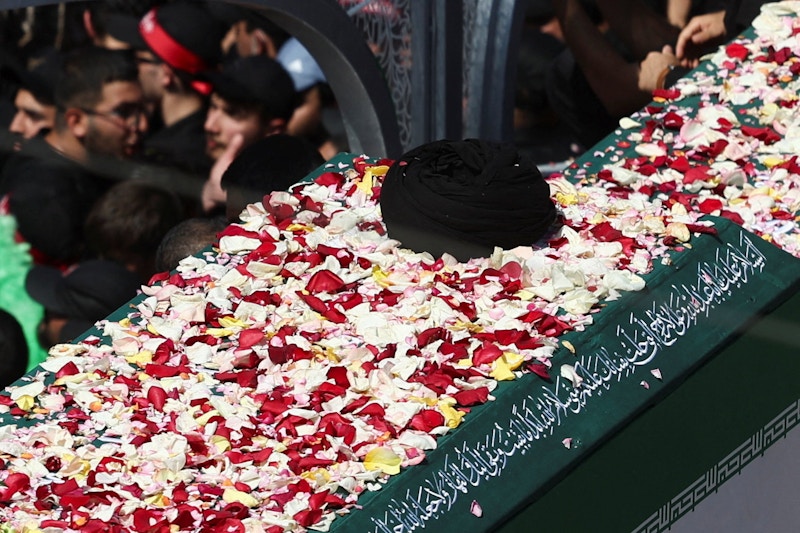
Israeli Defence Minister Katz threatens to 'eliminate' Iranian leaders
Israel’s defence minister has claimed that his country assassinated Khamenei for allegedly leading a “plan to destroy” Israel and again threatened to “eliminate” any Iranian leader who tries to promote such actions, Al Jazeera reports, citing Israel’s Channel 13.
Israel Katz made the comments in response to the ongoing funeral procession in Tehran, the Israeli broadcaster reported.
Katz added that Israel remains prepared to defend itself at any time and against any threat.
Fleet of 10 Japan-related ships exit Hormuz, data shows
A fleet of 10 Japan-linked vessels was exiting the Strait of Hormuz on Monday while a supertanker carrying Saudi crude for South Korea left over the weekend, shipping data on LSEG showed, after the ships were stranded in the Gulf for months because of the Iran war, Reuters reported.
The Japan-linked ships include six very large crude carriers loaded with 12 million barrels of Middle Eastern crude, two chemical tankers, a vehicle carrier and a container ship, the data showed. The tankers are carrying crudes from Saudi Arabia, the United Arab Emirates and Qatar that were loaded in late February to early March.
Most of the vessels are managed by Japanese shipper Mitsui O.S.K. Lines (MOL) (9104.T), opens new tab which had said it would prioritise the safety of its seafarers, cargo and vessels when traversing the strait.
Mitsui OSK declined to comment.
Separately, South Korean refiner S-Oil said on Monday that the VLCC Long Wind carrying oil for its refinery exited the strait on Saturday. The vessel, loaded with 2 million barrels of Saudi crude in early March, is expected to arrive at Onsan, South Korea, on July 26, LSEG data showed.
Enforcement of MoU is 'difficult, but possible,' says Iran's parliament speaker
Iran’s Parliament Speaker and chief negotiator Bagher Ghalibaf has said that significant differences remain between Tehran and Washington despite the signing of a recent memorandum of understanding, adding that enforcing the MoU would be “difficult, but possible.”
He made the remarks during a meeting in Tehran with Mohammad Darwish, head of Hamas’s leadership council, who visited Iran to attend the funeral ceremonies of former Supreme Leader Ali Khamenei.
Ghalibaf noted that while the memorandum represents a diplomatic step, deep political disagreements between Iran and the United States continue to persist. He suggested that the success of the agreement would depend on overcoming these challenges during implementation.
“Today, this memorandum is being implemented, and its enforcement is difficult, but possible,” he said.
How many people have died in the Iran war?
Thousands of people across the Middle East have been killed since the start of the war, which began when the U.S. and Israel launched a "pre-emptive" strike on Iran on February 28.
Those strikes triggered Iranian attacks on Israel, US bases and the Gulf states, while opening a new front in Lebanon.
More than 3,000 Iranians have been killed, including many of Iran's most senior politicians and military commanders.
Iranian military bases and major infrastructure projects were destroyed causing billions of dollars in damage.
But Iran successfully struck U.S. bases in the region, inflicting pain on the Gulf Arab countries that host them and killing dozens of people before the current ceasefire.
Iran has also asserted its control of the Strait of Hormuz, causing a spike in global energy prices.
Over 4,000 Lebanese have been killed and more than a million displaced by Israel's campaign in Lebanon since March. At least 32 Israeli soldiers ?and four Israeli civilians have ?been killed in strikes by Iranian ally Hezbollah, most ?of them in southern Lebanon.
Khamenei's killers will not die a natural death, says Iranian official
Mohammad Mokhber, a member of Iran’s Expediency Discernment Council and former vice president, vowed revenge for the killing of former Supreme Leader Ali Khamenei, saying his killers would “not die a natural death.” Speaking to state media at Khamenei’s funeral in Tehran, he… pic.twitter.com/1kcUIVLjhY
— Iran International English (@IranIntl_En) July 5, 2026
Peace talks are on hold during funeral week
US President Donald Trump told the Axios news website that peace talks to end the Iran war have been paused for a week for the events surrounding the funeral.
A shaky ceasefire has suspended the four-month-old war under an agreement with Washington that Iran's authorities say will ultimately bring huge economic benefits, in line with what they describe as a victory over a superpower.
An interim deal reached last month includes the unfreezing of billions of dollars in Iranian assets held abroad, and waivers from financial sanctions that had brought Iran's economy to its knees.
In Washington, Trump said last week the two sides were making progress on possible limits to Iran's nuclear program — the main reason he launched the war along with Israel in February.
Iran's supreme leader reappoints Mohseni-Ejei as head of country's judiciary
Iran Supreme Leader Mojtaba Khamenei has reappointed Gholam-Hossein Mohseni-Ejei as head of the country’s judiciary, Al Jazeera reported.
In a decree, the supreme leader praised Mohseni-Ejei’s “valuable and sincere efforts” as judiciary chief.
What is the schedule for Monday's mourning?
After what authorities are billing as a massive procession in central Tehran on Monday, the remains will be taken to the seminary city of Qom for ceremonies on Tuesday.
His body will be moved by land in a special vehicle, Iran's state media cited an official as saying.
From there the body will be flown to Iraq for ceremonies in holy shrine cities of Najaf and Kerbala on Wednesday
It will return to Iran on Thursday for another procession in Mashhad, to be buried near the tomb of another of the medieval Shi'ite imams.
Authorities plan to mobilize millions of people for big processions over the coming days, offering transport, food and lodging.
Security will be tight, with temporary airspace restrictions in place over Tehran and other cities and threats of a powerful response if either the United States or Israel resumes attacks.
Iran praises Pakistan's support and reaffirms bilateral ties
Iran's Ambassador to Pakistan, Reza Amiri Moghadam, has expressed gratitude to Pakistan for its high-level participation in the funeral ceremony of Iran's late Supreme Leader, Ayatollah Ali Khamenei.
In a statement shared on X, the ambassador conveyed appreciation on behalf of the Iranian government and people, thanking Prime Minister Shehbaz Sharif, the Field Marshal, and the Deputy Prime Minister for their participation.
He also acknowledged the presence of Senate Chairman Yousaf Raza Gilani, National Assembly Speaker Ayaz Sadiq, Interior Minister Mohsin Naqvi, Information Minister Attaullah Tarar, along with other senior government officials, religious figures, political leaders, and cultural personalities who attended the ceremony.
He said Pakistan's representation at the event reflected the longstanding friendship and mutual respect between the two neighbouring countries. He said the high-level participation highlighted the historic relationship and shared values that have shaped ties between Iran and Pakistan over the years.
Reza Amiri Moghadam added that the two countries have consistently stood by one another during both difficult and significant moments in their history. He expressed hope that the spirit of solidarity and cooperation between Iran and Pakistan would continue, praying for lasting peace, prosperity, and dignity for both nations. He also voiced the wish that bilateral relations would grow even stronger for future generations.
Ghalibaf calls MoU with US as achievement for Tehran's 'axis of resistance'
Iranian Parliament Speaker Mohammad Bagher Ghalibaf held a meeting with Mohammed Al-Nuaimi, vice chairman of the Houthi Supreme Political Council when he called the memorandum of understanding (MoU) signed with the United States as a significant political and military success for Tehran and its regional partners.
Ghalibaf said the agreement reflected growing recognition of Iran's allied groups across the region.
“The United States and Israel were forced to practically recognise Iran’s allies in the axis of resistance, and this is one of the achievements of this memorandum,” Ghalibaf said, according to Iranian media.
The alliance referred to by Tehran as the "axis of resistance" consists of several Iran-aligned armed groups, including Hezbollah in Lebanon, the Houthis in Yemen, Hamas in Gaza, and armed factions operating in Iraq.
Ghalibaf also characterised the agreement as “a defeat for the United States and an achievement for the axis of resistance, both militarily and politically”.
He further warned that the United States and Israel would “resort to war” if they believed Iran lacked sufficient military strength.