Updated on
Summary UK Head teachers at leading schools have complained about the low grades of examiners.
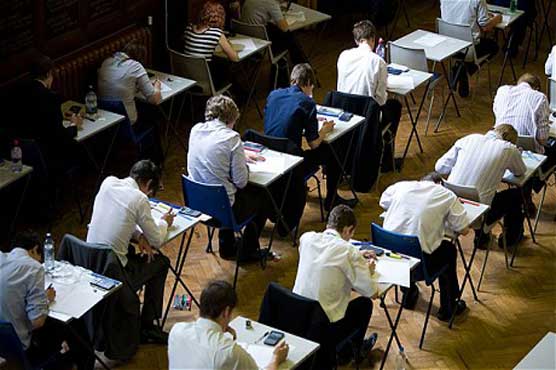
Concerns are growing in secondary schools across the country that the huge burden of assessment is making it impossible for exam boards to ensure fair marking.One school, St Pauls Girls, in west London, requested more than 200 “re-marks” this year.In some cases the queries resulted in significant increases in the number of marks awarded, with no explanation as to why.The disclosure raises serious questions over the integrity of the exam system, which has become increasingly reliant on “modular” exams which involve sitting many more papers than in traditional end of course exams.Kenneth Durham, the chairman of the Headmasters and Headmistresses Conference of leading independent schools and the headmaster of University College School, said that the “assessment monster” that had developed in recent years meant that exam boards were presiding over a system that was “probably unmanageable”.“Part of that is the problem with recruiting enough good examiners,” he said. “Once upon a time, families would ask if they should get a remark and I would have a look and often say I don’t think it merits one’.I wouldn’t do that now. I would never discourage anyone these days.”His warning came as a series of schools told of their concerns.Andrew Jarman, the head master of Lancaster Royal Grammar, a state boarding school in Lancashire, is to write to all three exam boards in England to complain about the consistency of marking after none of the sixth formers who took AS-level English this summer received grades higher than a B.King Edward VI School, Handsworth, a grammar school in Birmingham, requested 100 reviews of exam scripts, the majority of them A-levels. About a third were returned with a grade improvement.At University College School, an independent in north London, about a quarter of A-level exam results were queried.Concerns about A-levels generally come on the back of problem with English and drama GCSE and evidence that modern languages A-level pupils are missing out on the A*s they deserve because of severe marking.At St Paul’s sixth formers taking A-levels in history, Spanish, maths, physics, economics and Chinese have seen their grades improve after remarks.Clarissa Farr, the private school’s headmistress, said the standard of marking was deteriorating.“The level of remarks, which is higher than in previous years, seems to reveal an incredible level of unreliablity of initial marking. The appalling inaccuracies of so much first time marking calls in to question the credibility of the whole exam system.“It leads to high anxiety among sixth formers on the brink of going to university. It also leads to a huge remarking industry. I’m sure more pupils would request remarks if it wasn’t for the up front cost charged by exam boards.”Mr Jarman, the head of Lancaster Royal Grammar, said results in some subjects this year revealed “fundamental flaws” in the consistency of marking, particularly in English.“We did not have a single A grade at AS level despite having boys in that cohort who we will be recommending to apply to Oxbridge to study English” he said.“Either the judgement of department heads is cockeyed, which I don’t believe, or there are some serious problems with the mark schemes, which I think are getting worse.“The results have baffled some very experienced senior teachers and upset boys and parents. Top universities take AS results very seriously and do not look kindly on resits.”Elspeth Insch, the head of King Edward VI, also raised concerns about English, while the highest proportion of A-level upgrades at Manchester Grammar School were in history, according to Christopher Ray, the high master.Priority remarks, for students who are waiting to confirm university places, cost £50 and exam boards have to complete them within 18 days.Last year, 171,700 queries about results were made to the exam boards, leading to 24,200 regrades of GCSE papers and 10,500 regrades at A-level.Exam boards insist that examiners are well qualified and go through thorough training.A-level examiners need to be educated to degree level, be qualified or qualifying as a teacher and have UK-based teaching experience in the relevant subject at the relevant level.While most examiners are experienced teachers, trainee teachers can qualify to be examiners.