Updated on
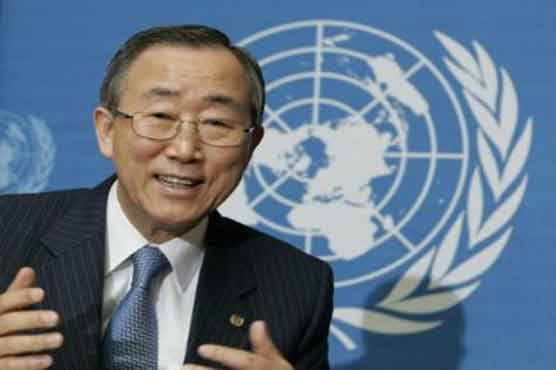
Summary Ban Ki-moon launched Education First initiative on Wednesday at UN Headquarters in New York.
Under the plan, the various UN agencies and programmes will “unite” with governments, business leaders and civil society in a push to put education at the top of the global agenda ahead of the 2015 Millennium Development Goals deadline.Among the challenges to be tackled by the initiative is the global need for two million more teachers, which will require major upscaling of teacher training by universities and colleges in numerous countries.In its PovertyMatters blog on Thursday, the UK’s Guardian newspaper said Ban’s initiative was “refreshing for its recognition of the role of teachers – drawing attention to the need to create two million new teaching positions, reprioritise training and professional development, and redignify the profession”.During the event, Ban appointed 10 Education First Champions of the UN’s global education initiative: the heads of state from Australia, Bangladesh, Croatia, Denmark, Guyana, Liberia, Russia, South Africa, Timor Leste and Tunisia.He said that in 2000, 189 of the world’s nations pledged to achieve universal primary education by 2015.It was the second of eight Millennium Development Goals aimed at freeing people from poverty and multiple deprivations.“Although significant progress has been made, the latest data shows a clear slow-down. Without a major effort, there is a real danger that more children will be out-of-school in 2015 than today,” he said.Along with the Education First champions, Ban was joined at the launch by various business and civil society leaders and UN officials.They included Sheikha Moza bint Nasser of Qatar, former UK prime minister Gordon Brown who is Special Envoy of the Secretary-General for Global Education, Irina Bokova, director-general of UNESCO and executive secretary of the steering committee for Education First, Anthony Lake, executive director of UNICEF, Jim Yong Kim, president of the World Bank, Aliko Dangote, president of the Nigerian Dangote Group and Chernor Bah, a youth leader from Sierra Leone.A panel discussion followed the launch with Queen Rania Al Abdullah of Jordan, UNICEF Eminent Advocate for Children, Aung San Suu Kyi, the new Burmese MP and Nobel Peace Prize Laureate, Teopista Birungi Mayanja, a teacher representative from Uganda and Charles Young, a student representative from Jamaica.How the citizens of the 10 countries felt about the honour being bestowed on their leaders as ‘champions of education’ is unknown.But in South Africa there were rumblings about the position going to the head of a government that has failed to improve a shockingly poor school system, although it has upped access.And there was some wry cynicism in Australia’s universities and research institutes, where researchers fear the government is about to impose a freeze on new research grants as part of its efforts to slash spending and create a budget surplus.The current uncertainty is generating increasing anxiety – and anger – among an estimated 1,700 young researchers who could lose their jobs by the end of the year.Nevertheless, the lobby group Universities Australia congratulated Prime Minister Julia Gillard on her appointment. Chief Executive Belinda Robinson said Gillards appointment reinforced the importance of education reform as a national priority and of ensuring Australias education system remained world-class.The position, she said, “underscores the imperative of achieving the participation in education required for lifting national productivity and meeting the demands of the future workforce, although just last week Robinson had declared it would be an astounding about-face if the government were to cut or delay research funding.Still, here was an opportunity to make the point that investment in education had numerous benefits for society, underpinning productivity growth, innovation and economic prosperity – hoping the prime minister might read what she had said.