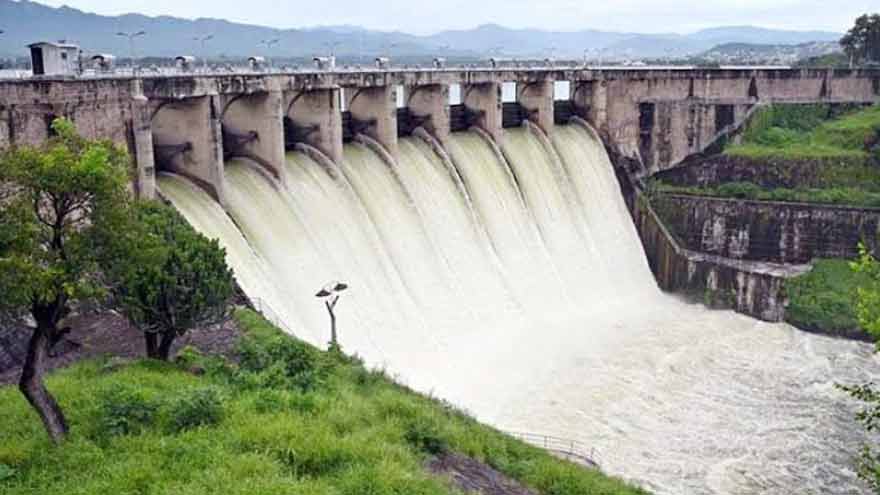
Summary Rawal Dam remains Islamabad's main water source and a major tourist attraction, while environmental conservation efforts continue to protect the reservoir from pollution and encroachment.
ISLAMABAD (Dunya News) – Nestled at the foothills of the Margalla Hills, Rawal Dam stands as one of Islamabad's most iconic landmarks, serving as the capital's primary source of drinking water while offering breathtaking scenery, recreational opportunities and a rich ecological habitat.
Construction of the dam began in 1960 and was completed in 1962. It was inaugurated by then-President Field Marshal Muhammad Ayub Khan to supply clean drinking water to Islamabad and Rawalpindi and provide irrigation for surrounding agricultural lands. Built across the Korang River, the reservoir covers approximately 8.8 square kilometres and can store millions of gallons of water.
Rawal Dam's picturesque setting makes it one of the capital's most attractive destinations. Surrounded by the Margalla Hills and neighbouring areas such as Bani Gala and Malot, the reservoir offers panoramic views of blue waters, lush greenery and rolling hills. During winter, mist and occasional snowfall on the nearby peaks create a landscape often compared to European valleys, while sunsets paint the lake with striking golden reflections.
The reservoir has also emerged as one of Pakistan's leading tourist attractions. The adjacent Lake View Park features landscaped gardens, children's play areas and one of Asia's largest walk-in aviaries. Visitors can enjoy motorboat and paddle boat rides across the lake, while designated picnic spots make the area a popular destination for families, photographers and nature lovers.
Rawal Dam also supports a diverse ecosystem. Forests surrounding the lake are home to trees including kachnar, amaltas and pine, while wildlife such as jackals, foxes, wild boars and various reptiles inhabit the area. Every winter, thousands of migratory birds from Siberia and Central Asia arrive at the reservoir, making it a favourite destination for birdwatchers.
Beyond its scenic appeal, the dam plays a crucial economic role. It remains a major source of water for Rawalpindi, while canals originating from the reservoir irrigate nearby farmland. The lake also supports fisheries, with the Fisheries Department regularly stocking species such as rohu and mahseer, creating employment opportunities for local communities.
Despite its importance, Rawal Dam faces growing environmental challenges. Untreated sewage and waste from expanding nearby settlements, sediment accumulation from seasonal rains and illegal construction along the shoreline have affected water quality, reduced storage capacity and threatened the area's natural environment.
To address these concerns, the government and the Capital Development Authority (CDA) have launched initiatives including the installation of sewage treatment plants, tree plantation campaigns and anti-encroachment measures. The Supreme Court of Pakistan has also issued directives aimed at preserving the lake and protecting it from environmental degradation.
As one of Islamabad's most valuable natural assets, Rawal Dam continues to provide water, recreation and ecological benefits. Its long-term preservation will depend on sustained conservation efforts and responsible public participation to protect this vital national resource for future generations.