Updated on
Summary Amla's Test average was 46.98; when he finished his innings,the average had climbed to 50.26.
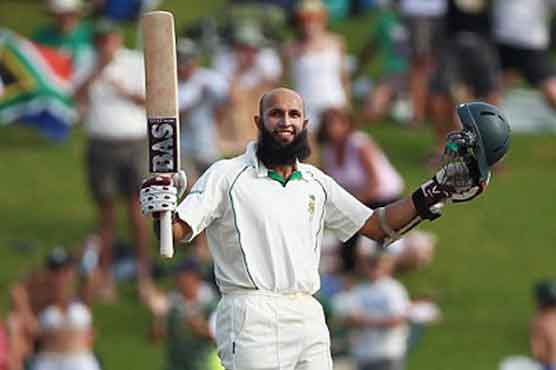
Hashim Amlas triple-century at The Oval did several things for the team and the series: it completely shut England out of the Test and set South Africa up for a magnificent victory, which has in turn given them a fine chance to wrest the No. 1 spot from England.It did something significant for the batsman too: before he began the innings, Amlas Test average was 46.98; when he finished it, the average had climbed to 50.26. For the last few years Amla has played a brand of cricket that clearly proves he is among the top batsmen around today, but it was the unbeaten 311 that finally took his career average beyond the mark that has historically separated the great batsmen from the very good.Finally, in his 60th Test match, Amlas average breached the 50-mark. The way he has been batting over the last few years suggests it will stay there for a long time.Its true that the significance of a 50-plus average has diminished over the last decade, thanks to the overall dominance that batsmen have enjoyed during this period: among the 32 batsmen who have scored 4000-plus runs at 50-plus averages, almost 50% have played a major chunk of their cricket in the 2000s. Given his immense batting talent, though, it feels right that Amla has breached the 50 mark; if anything, it would appear even more incongruous, in this era of batting dominance, if his average stays below 50. He clearly belongs in the elite club.That Amla had to wait 60 Tests for his average to touch 50 is because he had to carry the burden of a poor start in international cricket: in his first 15 Tests, he averaged 25.50, with one century. (Click here for Amlas cumulative numbers in Tests.) Since then, he has been on a tear, averaging more than 60, with 14 hundreds in his last 45 Tests.Another factor that has dampened Amlas overall numbers is the conditions in which he has played the majority of his cricket.South Africa has clearly been the most bowler-friendly country over the last few years: since the beginning of 2004, the batting average in South Africa is 30.07, the lowest among all countries; its 39.60 in Pakistan, and 35.70 in India. In the 60 Tests that Amla has played, the overall batting average is 32.48; compare that with the numbers in the Tests that, say, Gautam Gambhir has played, and the difference becomes apparent: Gambhirs Test career has also spanned almost the same period, but in the 48 Tests that Gambhir has played in, the overall batting average is almost 10% higher, at 35.66.Add that factor to Amlas batting average, and it goes up from 50.26 to almost 55. (Though admittedly, Indias poor bowling attack is also a reason why the averages are high in matches featuring Indians.)Currently Amla averages 58.58 in away or neutral venues (up from 51.34 before the Oval Test) and 43.38 at home - a difference of 15.20.The numbers arent dissimilar to those of two of his contemporaries, Graeme Smith and AB de Villiers. Smith averages 55.44 overseas and 44.64 at home (difference 10.80), while for de Villiers the corresponding numbers are 60.02 and 40.89 (difference 19.13).