Summary The allegations regarding the prices being offered by tobacco companies were made by the protesting farmers and were not independently verified in the information provided.
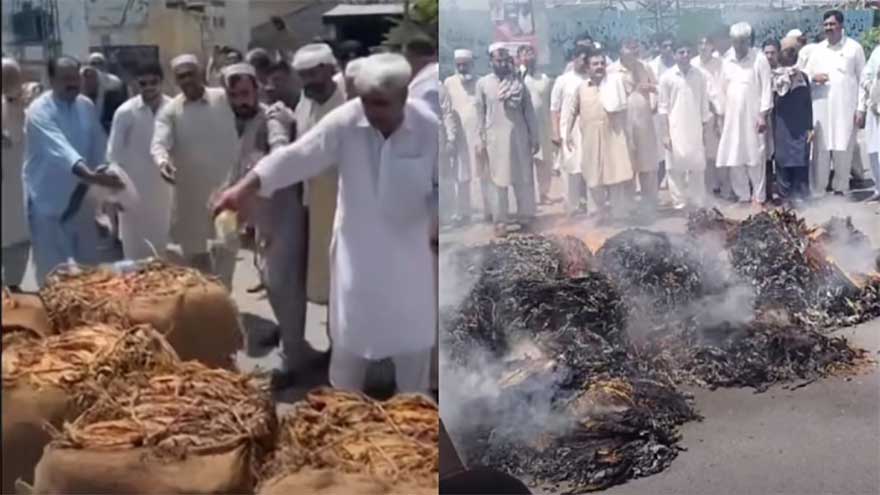
SWABI (Dunya News) - Tobacco growers staged a protest outside the Swabi Press Club against what they described as unfairly low prices being offered by tobacco companies, with one farmer burning around 500 kilograms of tobacco in protest.
Farmer Tamrez Khan set fire to bundles of tobacco during the demonstration, saying the protest was intended to highlight the financial difficulties faced by growers.
“This is not just tobacco that I have burned; I have burned my children’s blood and the resources needed for their necessities,” Khan said while addressing the protesters.
The farmers claimed that the Pakistan Tobacco Board had fixed the price of tobacco at Rs740 per kilogram, but alleged that multinational and local companies were purchasing the crop from growers at rates ranging between Rs300 and Rs350 per kilogram.
The growers called on the government to intervene and ensure that tobacco companies comply with the notified purchase price.
According to the protesting farmers, around 30,000 families in Swabi depend on tobacco cultivation for their livelihoods, making the crop an important source of income for the district’s rural population.
The farmers also highlighted the tobacco sector’s contribution to government revenues. They claimed that during the 2025-26 financial year, the federal government collected Rs329 billion from the tobacco sector through Federal Excise Duty and General Sales Tax, while total federal tax collection, including income tax, stood at Rs357 billion.
The growers argued that despite the substantial revenue generated from the tobacco industry, farmers were struggling to receive what they described as a fair return for their produce.
They urged the government, Pakistan Tobacco Board and other relevant authorities to ensure that companies purchase tobacco at the officially fixed rate and provide growers with adequate compensation for their production costs.
The protesters warned that if their demands were not addressed, they would expand their protest to government and administrative offices.
The allegations regarding the prices being offered by tobacco companies were made by the protesting farmers and were not independently verified in the information provided. No response from the tobacco companies or relevant authorities was included in the report.