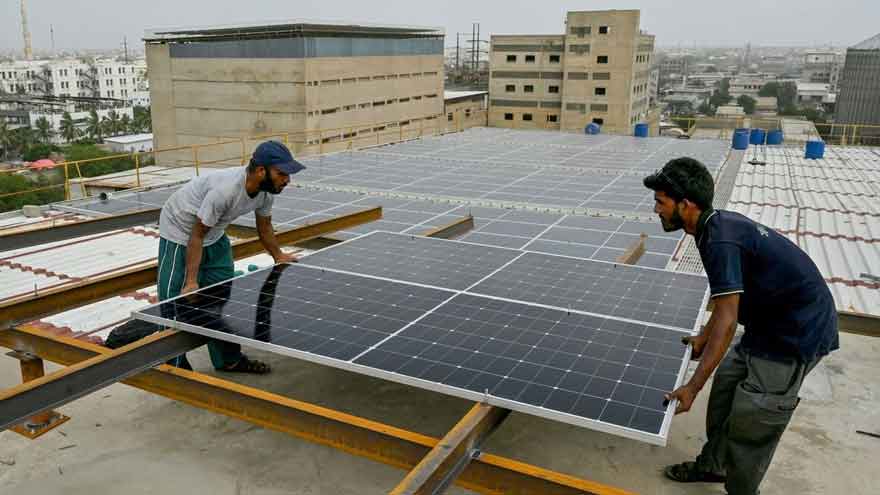
Summary The report states that Pakistan's solar imports doubled compared with the previous year
ISLAMABAD (Dunya News) - Pakistan has become the world's third-largest importer of solar panels after importing 17 gigawatts (GW) of solar power systems in 2024, according to the Pakistan Climate Prosperity Plan (CPP) jointly prepared by the Ministry of Finance and the Ministry of Climate Change.
The report states that Pakistan's solar imports doubled compared with the previous year, reflecting a sharp rise in demand driven by soaring electricity tariffs and falling global solar panel prices.
The report outlines an ambitious roadmap for transforming the country's energy sector, targeting a 60% share of clean energy by 2030, increasing renewable sources to 50% of electricity generation by 2035, and reaching 95% renewable electricity generation by 2040.
It also proposes phasing out or converting 14,000 megawatts (MW) of fossil fuel-based power plants by 2035, reducing transmission and distribution losses from 19% to 8%, achieving universal electricity access, and installing rooftop solar systems in all government secondary schools by 2035.
According to the report, Pakistan's power sector continues to face mounting financial pressure due to expensive power purchase agreements (PPAs), volatile global fuel prices and currency depreciation, which have contributed to rising electricity tariffs and an expanding circular debt burden.
The report says the country has often been paying for costly power generation capacity that remains underutilised, underscoring the need to reduce reliance on imported fossil fuels by expanding domestic renewable energy sources such as solar, wind, hydropower and biomass.
It argues that a faster transition to renewable energy would improve energy security, reduce fuel import costs, lower greenhouse gas emissions and ease pressure on foreign exchange reserves while helping bring down electricity prices for consumers.
To support this transition, the report recommends significant investment in large-scale solar and wind projects, battery storage systems and modernising Pakistan's electricity grid to improve reliability as renewable energy capacity expands.
It also calls for restructuring high-cost power purchase agreements, introducing more cost-reflective electricity tariffs and gradually retiring inefficient fossil fuel power plants to help tackle the country's circular debt crisis.
In addition, the report recommends introducing transparent competitive auctions for new renewable energy projects and strengthening credit guarantees to attract greater private sector investment, creating the fiscal space needed to upgrade the national power infrastructure and support long-term energy reforms.