Summary Under pressure to meet austerity conditions from IMF, Finance Minister Muhammad Aurangzeb will submit a delayed 17.1-trillion-rupee spending plan for the fiscal year starting next month
ISLAMABAD (Reuters) - Pakistan's government will propose a budget on Friday that hits the middle class and registered businesses as it seeks to raise revenue and cut spending while shielding the nation's poorest.
Under pressure to meet austerity conditions from the International Monetary Fund, Finance Minister Muhammad Aurangzeb will submit a delayed 17.1-trillion-rupee ($61-billion) spending plan for the fiscal year starting next month, according to widespread domestic media reports.
The burden of higher fuel and power costs and taxes will fall largely on formally registered businesses and salaried workers in the South Asian nation, as politically powerful sectors such as agriculture, retail and real estate remain difficult to tax, experts say.
ECONOMIC TOLL OF IRAN WAR
"The government's hands are tied as it will once again prioritise fiscal consolidation over economic growth," said Mustafa Pasha, chief investment officer at Lakson Investments.
"To achieve its targets, the government will have to crack down on non-filers, agriculture and traders," Pasha said. "But the political will to materially expand rather than deepen the tax net is missing."
The finance ministry did not immediately respond to a request for comment on the budget numbers or its fiscal priorities.
Policymakers must contend not only with the conditions from the latest IMF bailout package but also an outsized impact from the US-Israeli war on Iran - a conflict Islamabad has sought to mediate.
The surge in oil prices sparked by the war has driven Pakistan's inflation back to double digits just as the economy had appeared to be finding its footing.
Pakistan is the most vulnerable major Asia-Pacific economy to a prolonged Middle East conflict, given its dependence on Gulf energy imports, remittances and financing support from the region, said Ahmad Mobeen, principal economist at S&P Global Market Intelligence.
The government is aiming for fiscal 2026-2027 economic growth of 4.1%, up from this year's projected 3.7% and above the IMF's 3.5% forecast, and is targeting 8.2% full-year inflation, well below the 11.7% reported for May.
But business confidence was the lowest in May since S&P began its manufacturing survey last year, while input costs hit a 21-month high and employment fell for a second month.
The central bank raised interest rates by a percentage point in April, its first increase in almost three years.
Pakistan's government is pressing the Federal Board of Revenue to raise next year's tax collections to 37% above the target for this year - which the agency is set to miss.
MUCH OF ECONOMY BEYOND THE TAXMAN'S GRASP
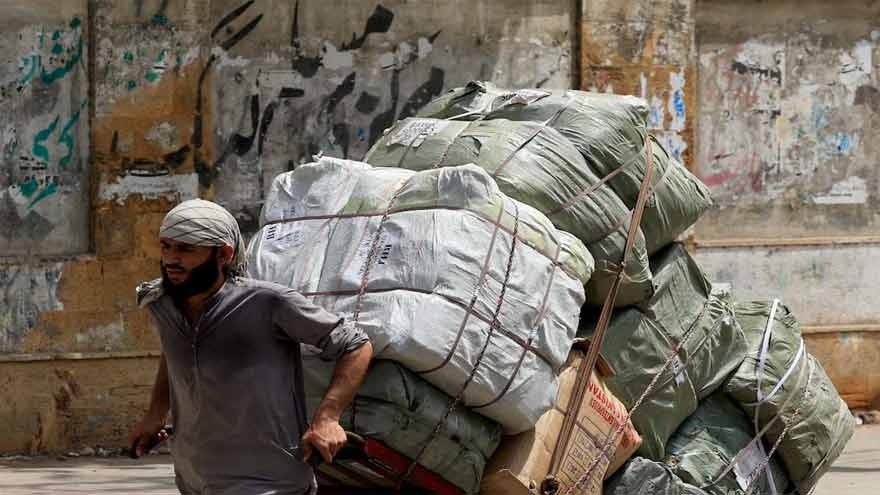
The extensive unofficial economy keeps much of Pakistan's cash beyond the FBR's reach: just 1.3% of Pakistanis filed returns showing taxable income last year, and just 7.7% of adults hold a debit or credit card.
The number of tax filers has risen, but revenue has not kept pace.
Corporate tax rates are already high by global standards, while raising income tax would crush purchasing power still recovering from two years of inflation.
"The remainder must come from new tax measures or tougher enforcement. These are usually the areas where the FBR slips up," said Mazhar Waseem, a public economics researcher at the London School of Economics.
Without taxing agriculture, real estate and retail, "the fiscal deficit may narrow, but the trust deficit between citizens and the state will widen", said Abid Suleri, executive director of the Sustainable Development Policy Institute.
Spending on economic development is feeling the squeeze: Planning Minister Ahsan Iqbal said no new projects would be launched in the coming year except for defence and interior policies.
The budget is expected to protect the poorest citizens by providing them with cash transfers.
The government has not explained the one-week delay in submitting the budget.
A source told Reuters it was because the government was trying to resolve some issues with the IMF, including on funds to be relinquished by the provinces for federal spending.
The global lender said last month that Pakistan had agreed to target a budget surplus of 2%, excluding debt-service payments, for the coming fiscal year.
"Traditionally, IMF programmes have been used as political cover for unpopular measures," Waseem said. "This is unlikely to change."