Summary Pakistan opens the 11th National Finance Commission process with plans for up to seven working groups and fresh proposals to revisit both vertical and horizontal resource distribution.
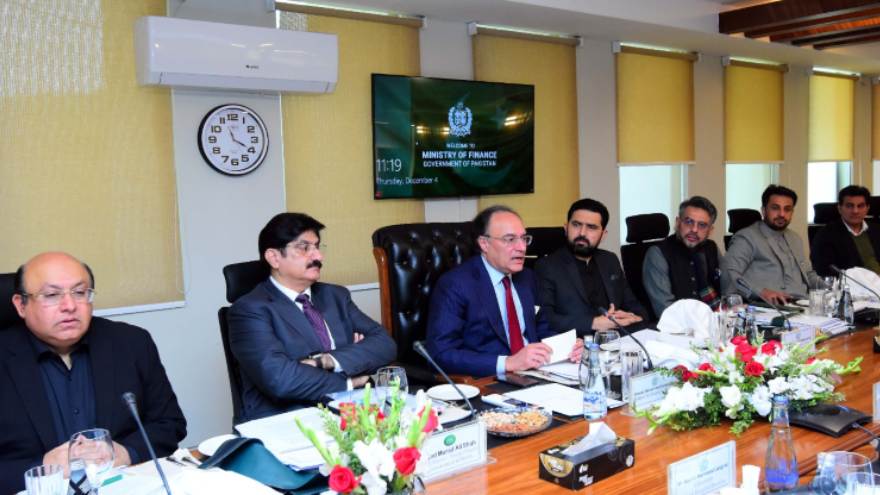
ISLAMABAD (Dunya News) – The opening meeting of Pakistan’s 11th National Finance Commission (NFC) convened in Islamabad on Thursday, setting in motion a renewed national dialogue on fiscal distribution between the federation and the provinces.
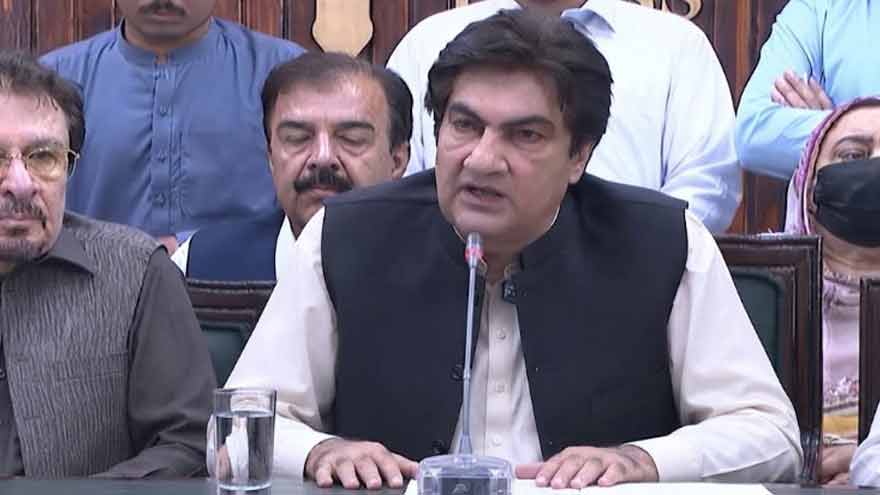
Chaired by Finance Minister Muhammad Aurangzeb, the session brought together the chief ministers of Sindh and Khyber Pakhtunkhwa, participating as provincial finance ministers, while Punjab and Balochistan were represented by their respective finance ministers. Advisers, secretaries, private members and senior officials including the Federal Board of Revenue chairman also attended.
OPENING SESSION
The federal and provincial finance teams briefed the forum on their respective fiscal positions. Aurangzeb thanked the chief ministers, provincial ministers and officials for their attendance, describing the inaugural meeting as an important moment of constitutional responsibility. He recalled that the forum, established under Article 150 of the Constitution, had not produced awards for the 8th, 9th and 10th NFCs, with the previous award expiring on 21 July 2025.
The finance minister stressed that the prime minister had taken a personal interest in ensuring that the 11th NFC’s maiden session was held without delay. He said the recent destructive floods in Punjab, Sindh and KP had forced an earlier postponement. Addressing speculation surrounding the NFC process, he emphasised the need for sincere dialogue, stating that the federal government was present “to hear the provinces’ position”.
PROVINCES’ ROLE
Aurangzeb commended provincial cooperation in achieving mandatory surpluses and supporting the IMF programme. Reflecting on the year’s challenges, he said Pakistan had faced extraordinary threats from India and severe floods yet remained united as a strong federation. He added that this sense of unity should guide the 11th NFC deliberations in the coming weeks and months.
Sindh Chief Minister Murad Ali Shah confirmed after the meeting that it had been agreed to set up working groups to push financial matters forward. KP’s adviser on finance, Muzzammil Aslam, described the environment as constructive, confirming that six to seven groups will be formed, with an umbrella group above them. He added that one dedicated group would examine the fiscal integration of the former FATA districts. He clarified that no proposal on reducing provincial shares was discussed.
Sources said the next meeting of the NFC is expected on either 8 or 15 January.
RESOURCE DISTRIBUTION PROPOSALS
Fresh proposals have also been presented by the Ministry of Planning to the prime minister under a working paper titled “Revisiting the NFC Award”. Two scenarios for vertical resource sharing have been outlined.
In Scenario I, 2.5% of the divisible pool would be allocated upfront for national priorities including counterterrorism operations, water security, Civil Armed Forces and grants for Azad Jammu and Kashmir and Gilgit-Baltistan. The remaining pool would then be divided using the existing 57.5% provincial and 42.5% federal ratio, offering slight fiscal relief to the Centre from FY2027.
In Scenario II, expenditures for the Benazir Income Support Programme and the Higher Education Commission would be deducted before distribution of the divisible pool, resulting in an estimated 11 to 12% increase in federal resources by FY2030.
HORIZONTAL DISTRIBUTION OPTIONS
The working paper also proposes a recalibration of the provincial distribution formula, currently dominated by population at an 82% weight. Three alternative options suggest reducing this weight and increasing the significance of revenue generation, fertility indicators and forest cover.
Under these options, Punjab’s share would shift from the existing 51.74% to between 47.26% and 41.89%, depending on the scenario. Sindh’s share would remain around 25%, with minor adjustments. KP’s share would rise to between 15.67% and 17.12%, while Balochistan’s allocation would increase to between 9.75% and 12.02%. ICT would also see incremental gains under all scenarios.
The paper notes that despite receiving 57.5% of the divisible pool, provincial revenues have remained around 1% of GDP due to weak performance in services, agriculture income and property taxation. It warns that structural imbalances have led to persistent federal deficits of 5 to 8.4% over the past decade, driving up debt servicing and narrowing fiscal space.
As the 11th NFC process begins, the formation of the new working groups is expected to shape the next phase of negotiations, with the federation and provinces preparing to navigate one of Pakistan’s most consequential fiscal exercises.