Summary Leghari urges action to reverse trade decline, targets $100 million in bilateral trade
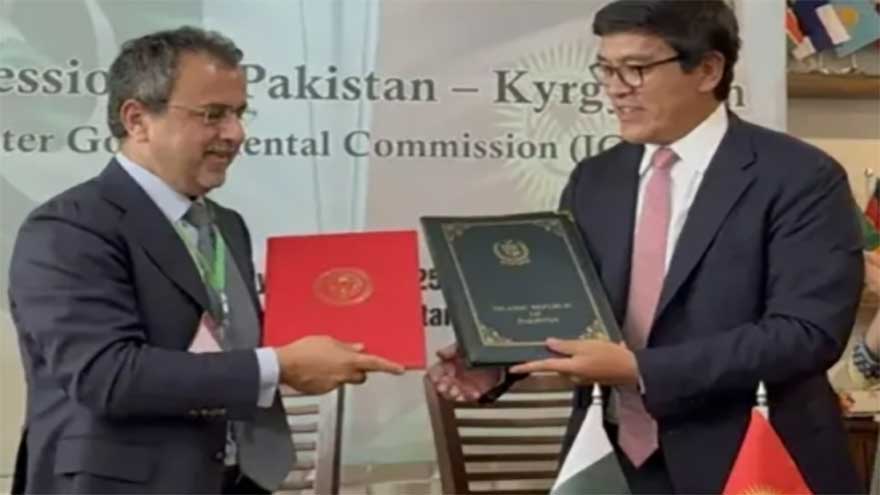
(Web Desk) - Pakistan and Kyrgyzstan have signed multiple protocols and Memorandums of Understanding (MoUs) during the 5th Session of the Pakistan-Kyrgyzstan Inter-Governmental Commission (IGC) on Trade, Economic, Scientific and Technical Cooperation, held in Islamabad on Monday.
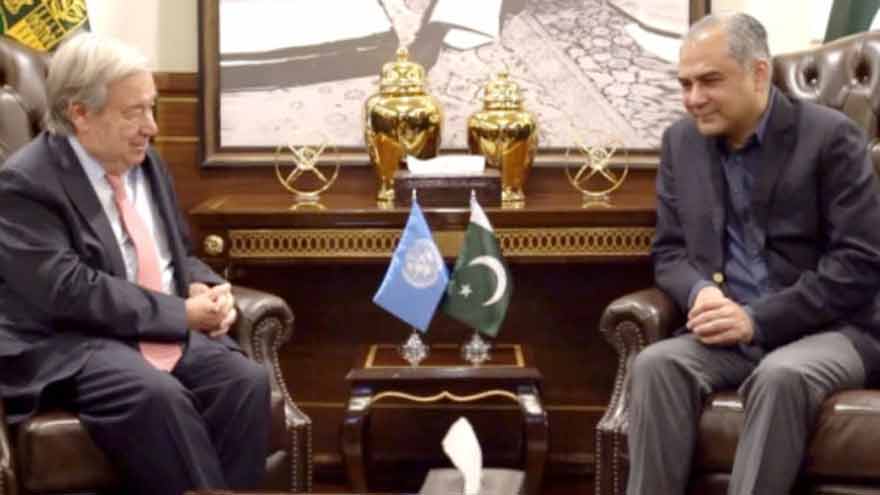
The session, co-chaired by Minister for Energy (Power Division) Sardar Awais Ahmad Khan Leghari and Deputy Chairman of the Cabinet of Ministers of the Kyrgyz Republic Edil Baisalov, marked a significant advancement in bilateral relations and reaffirmed a shared commitment to expand cooperation across a broad range of sectors.
Despite a noticeable drop in trade volume—from $11.2 million in 2022–23 to $5.18 million in 2024–25—both sides agreed on the urgent need to revitalize commercial engagement. They set a new bilateral trade target of $100 million and emphasized the importance of diversifying import-export portfolios. In this context, discussions focused on reviving the Pakistan-Kyrgyz Joint Business Council, organizing sector-specific trade fairs, and encouraging business-to-business exchanges to generate momentum.
The two countries signed a number of MoUs to formalize cooperation in key areas. One agreement was inked between the Center for Standardization and Metrology under Kyrgyzstan’s Ministry of Economy and Commerce and the Pakistan Standards and Quality Control Authority (PSQCA) under the Ministry of Science and Technology. Another MoU was signed between the National Investments Agency under the President of Kyrgyzstan and the Board of Investment of Pakistan, aimed at bolstering bilateral investment. A third MoU focused on Halal trade collaboration and was signed by the Pakistan Halal Authority and Kyrgyzstan’s Center for Development of Halal Industry.
Energy cooperation emerged as a key pillar of the dialogue. The Kyrgyz side proposed joint participation in a cross-border power transmission line connecting Kyrgyzstan, China, and northern Pakistan. Both countries agreed to explore electricity imports, collaboration in renewable energy, mining, and hydrocarbons, and to strengthen institutional linkages between the Hydrocarbon Development Institute of Pakistan and the Kyrgyz State Technical University.
Regional connectivity also figured prominently in the session. Both sides committed to enhancing cooperation in postal services, civil aviation, cargo, and rail transportation. Pakistan proposed transitioning Kyrgyz airlines from charter services to regular passenger flights. It also welcomed Kyrgyzstan’s proposal to establish a new air corridor linking the two countries via China and expressed interest in further engagement on regional aviation links. Additionally, the Kyrgyz delegation proposed Pakistani participation in a high-speed fiber-optic communication line spanning the Pakistan-Kyrgyzstan route.