Summary The draft framework is expected to be completed on the priority basis.
(Web Desk) – The federal government has been formulating an effective plan for the implementation of the National Framework for Developing Social Protection Policies for lowering the ratio of poverty in Pakistan.
The draft framework is expected to be completed on the priority basis, and would be presented for approval at a competent forum.
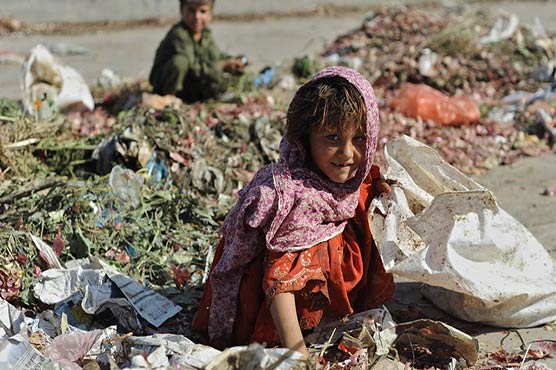
According to sources in the Planning, Development and Reforms Division, the government utilises two parameters to ascertain and report level of poverty in Pakistan: Cost of Basic Need (CBN) and Multidimensional Poverty Index (MPI) methods.
According to CBN method, poverty headcount ratio is 24.3 percent based on latest available HIES data of 2015-16. Other steps include steering the economy towards higher and sustained growth path and making growth inclusive, creation of a Poverty Alleviation Coordination Council to synergise efforts of various organisations working for poverty alleviation in public and private sector, eliminating duplication and overlap, developing a framework to improve effectiveness and implementing plans for capacity building and performance enhancement of such organisations.
Reducing burden of indirect taxation and broadening tax base, opening doors of socio-economic uplift through China Pakistan Economic Corridor (CPEC), signing MoU with China to learn from their experience in poverty reduction were the other steps taken.
The authorities concerned are also re-prioritizing Public Sector Development Programme (PSDP) to focus more on pro-poor projects, and projects for less developed areas, scaling up activities of Benazir Income Support Programme (BISP), Pakistan Poverty Alleviation Fund (PPAF) and re-organising Pakistan Baitul Mal to focus on poverty alleviation and asset transfer to rural poor to graduate them out of poverty.
Other measures adopted were approval of provision of US $82.6 million funds (IFAD funded) as grant to PPAF for disbursement to 320,000 beneficiaries of BISP to help them graduate out of poverty.
Micro-credits for low cost housing to provide shelter to homeless and providing free of cost shelters for the poorest homeless, employment creation through housing construction, increased access to microfinance under Prime Minister’s Naya Pakistan Housing Scheme and designating 20 new destinations to promote tourism industry and improve livelihoods are the other steps.
They also included expanding coverage of Prime Minister’s Health Insurance scheme by launching first phase of countrywide Sehat Insaf Card Scheme to provide free medical treatment to approximately 80 million people, while finalisation of National Nutrition Program is also in process to upscale nutrition and ensure food security.