Summary ADB private sector transactions committed in 2017 are expected to create 17,000 new jobs.
MANILA (APP) - Asian Development Bank (ADB) private sector operations over the past year reached $2.3 billion, growing the bank’s overall portfolio of private sector operations by 17% to $10.9 billion, according to ADB Private Sector Operations Department’s (PSOD) Development Effectiveness Report 2017.
The 27 new private sector operations committed in 2017 accounted for 13.4% of overall signed regular ordinary capital resources financing. Last year’s commitments were complemented by $5.9 billion in co-financing, representing 50% of all co-financing mobilized by ADB. The report was released here at the 51st Annual Meeting of ADB’s Board of Governors.
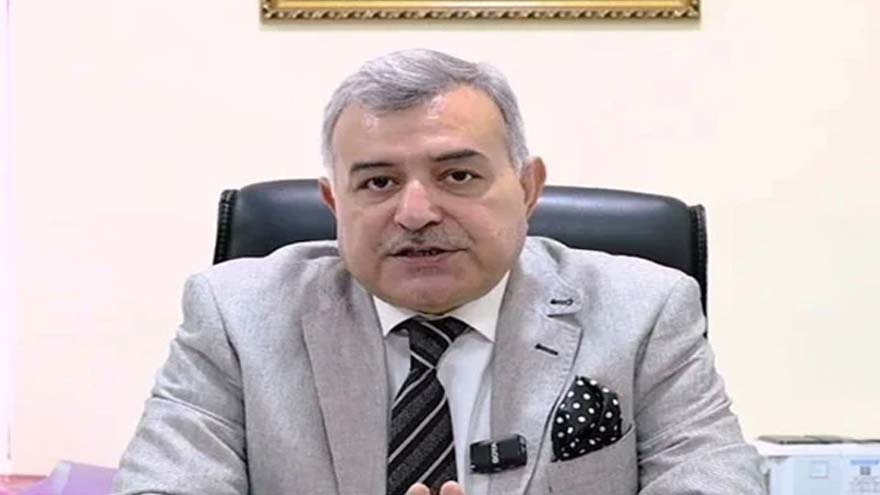
“ADB is firmly committed to partnering with the private sector to help improve infrastructure, expand access to finance, and achieve the Paris Agreement on climate change and the Sustainable Development Goals,” said ADB Vice-President for Private Sector and Co-financing Operations Mr. Diwakar Gupta. “PSOD will continue to ambitiously work to expand its private sector operations from 13.4% to 20% of total commitments by 2020, including by working in new frontier markets and sectors and increasing support for high-level technologies to improve development impact.”
ADB private sector transactions committed in 2017 are expected to create 17,000 new jobs in Asia and the Pacific, while generating more than $492 million in government revenues and enabling the procurement of $2.2 billion of goods and services from local firms.
Private sector commitments last year are also projected to improve infrastructure access and services, helping treat 750 million cubic meters of wastewater every year and generating around 7,755 gigawatt hours of electricity—enough to power 870,000 households.
Private sector operations support for financial inclusion in 2017 will result in over 11.8 million individuals and small businesses in the region having better access to finance. Among these, 90% are expected to be women or enterprises owned by women. Agribusiness projects committed last year will help more than 2,800 farming households, while over 400,000 farmers and rural households are expected to benefit from improved financial services.
Active private sector operations have already contributed to the region’s economy, providing employment for an additional 133,850 people and training 308,000 beneficiaries, mostly in financial literacy. ADB’s private sector clients have also achieved carbon emissions reductions of 4.1 million tons annually.
The figures in the report are based on ADB’s new performance measure of “commitments,” or the amount of loans, grants, and investments signed in a given year. This indicator was introduced in 2017 to promote project readiness at approval stage, expedite post-approval steps, and get closer to project disbursement, by placing more emphasis on when the projects are signed, rather than when they are approved by ADB’s Board of Directors.
The report said Global trade, estimated to have a total value of $1.5 trillion in 2017, is the source of many business and employment opportunities. Some 40% of global trade has originated in Asia and the Pacific.
Through its Trade Finance Program (TFP), PSOD helps to overcome market barriers and stimulate cross-border trade by providing banks with guarantees and loans. In 2017, TFP facilitated 3,505 transactions valued at $4.5 billion, with over $2.8 billion cofinancing from banks, private insurers, and official agencies, exceeding the results from previous years. Among the 22 TFP countries of operation, the five most active were Bangladesh, Pakistan, Sri Lanka, Uzbekistan, and Viet Nam. Of the total transactions, 2,822 supported SMEs and 853 supported trade between DMCs.