Summary Currently mainland Chinese institutions are allowed to invest in Taiwan's stock market.
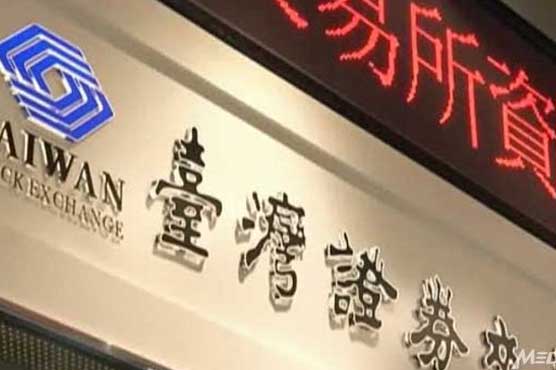
TAIPEI (AFP) - Taiwan may open up its stock market for the first time to individual Chinese investors later this year in a bid to attract more investments to its shrinking bourse, officials said Thursday.
The Financial Supervisory Commission (FSC) said it was hoping to make a decision in June whether to go ahead with the plan.
Currently mainland Chinese institutions are allowed to invest in Taiwan s stock market, but individuals are not.
The new link-up would allow individuals to buy or sell stocks listed on the Taiwan bourse through offshore securities units of local brokers.
"We hope to attract more investors to Taiwan s stock market," said Wu Yui-chun, director of the FSC s securities and futures bureau.
"When Chinese people visit Taiwan, they will be able to not only buy local pineapple cakes, but also buy local shares by opening accounts in Taiwan," FSC chairman William Tseng said Wednesday.
Daily trading volume has shrunk in Taiwan to around Tw$90 billion ($2.9 billion), down from Tw$130 billion at its height in the 1990s, as Taiwanese investors sought to diversify their investment portfolio.
Taiwan has allowed Chinese institutional investors to invest up to $500 million in its stock market since 2010, amid improving ties since the island s Beijing-friendly government took power in 2008.
The two sides signed three financial memoranda in late 2009 to promote cooperation in banking, insurance and securities, including opening up its stock market to mainland institutional investors.
Analysts were cautious over whether the new move would appeal to mainland buyers.
"It is not clear if the opening up of the market will lure investors -- the Chinese mainland market seems more attractive since it s much bigger and it s on the rebound," said Vickie Hsieh of President Capital Management Corp.
"However, Taiwan has its own niche as it is strong in the semiconductor industry," added Hsieh.
Some lawmakers expressed concerns that the move would give China a greater grip on Taiwan s economy -- a sensitive issue as fears grow of the mainland s increasing influence on the island.
China and Taiwan split in 1949 after a civil war, but Beijing still considers the island part of its territory.
"What if Taiwan s listed companies are bought by China? China has many problems involving corruption and illegal gains and what if (Chinese individuals) use this channel to come to Taiwan to launder money?" said lawmaker Lai Chen-chan of opposition Taiwan Solidarity Union.
But Tseng said Chinese individuals would also be subject to the same restrictions on institutional investors.
Under Taiwanese regulations, Chinese institutional investors can own up to a 10 percent stake in local gas, financial or other companies controlled by the economic ministry, and 8 percent ceiling for shipping firms.
However, they are barred from buying airlines, air cargo, futures, construction, real estate and broadcasting stocks.