Summary ECB kept its key interest rates unchanged at its regular monthly policy meeting.
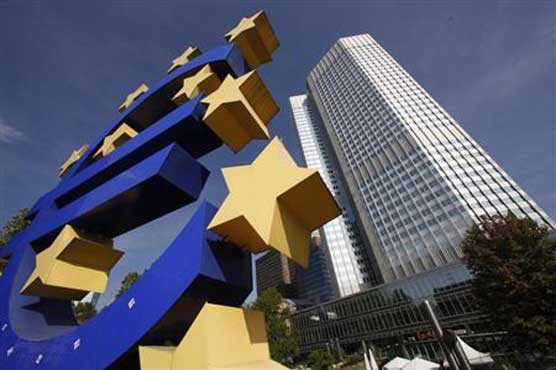
Frankfurt (AFP) - The European Central Bank held its fire on any new policy measures on Thursday, but said it was actively preparing more moves if needed to ward off deflation in the euro area.
As widely expected, the ECB kept its key interest rates unchanged at its regular monthly policy meeting.
It held its main "refinancing" rate steady at 0.05 percent, and its two other rates -- the marginal lending and the deposit rates -- at 0.30 percent and minus 0.20 percent, respectively.
Nevertheless, the ECB is actively preparing additional moves should the situation need it, central bank chief Mario Draghi told a news conference afterwards.
"The governing council has tasked ECB staff and the relevant Eurosystem committees with ensuring the timely preparation of further measures to be implemented, if needed," he said.
In addition to cutting rates, the ECB has rolled out a series of programmes to kick-start stymied credit in the 18 countries that share the euro.
"Looking ahead... the governing council will closely monitor and continuously assess the appropriateness of its monetary policy stance," Draghi said.
"Should it become necessary to further address risks of too prolonged a period of low inflation, the governing council is unanimous in its commitment to using additional unconventional instruments within its mandate," he said.
Among the additional measures being considered is so-called quantitative easing or QE, the large-scale purchase of government bonds, a policy hitherto used by other central banks around the world.
Earlier, the OECD in Paris had urged the ECB to step up QE until the eurozone s chronically low inflation is back on track.
- Boosting the balance sheet -
Until now, the ECB has focused on buying packages of loans known as asset-backed securities (ABS) and so-called covered bonds to pump cash into the economy.
Those measures, together with the series of targeted longer-term refinancing operations or TLTROs -- cheap funding made available to banks on condition they lend it on to businesses -- "will have a sizeable impact on our balance sheet, which is expected to move towards the dimensions it had at the beginning of 2012," Draghi said.
At that time, the ECB s balance sheet total amounted to around 3.0 trillion euros ($3.7 trillion).
Media reports this week have suggested that there are deep differences and even a "palace revolution" on the governing council over the issue, particularly between Draghi and the head of the German central bank or Bundesbank, Jens Weidmann.
But Draghi played down such speculation.
It was "relatively normal" for there to be different views, he said.
"But when we differ in our views and our policies, there is no drawing line between North and South. There is no coalition. Not at all."
- QE is coming -
Berenberg Bank economist Christian Schulz felt that Draghi s comments at the press conference were "a demonstration of unity and readiness to act at the ECB."
Reports "about a serious rift between Draghi and a German-led minority over Draghi s conduct of the press conferences had caused some market volatility ahead of the meeting. The governing council now closed the ranks and emphasised their easing bias," Schulz said.
Commerzbank economist Joerg Kraemer agreed.
"There was no sign at the press conference of a palace revolution" against Draghi s alleged autocratic style, he said.
"On the contrary," Kraemer said. "We still expect the ECB to start QE, probably at the beginning of next year."
Postbank economist Thilo Heidrich noted that the ECB was not only prepared to act, but had already issued orders for those preparations to be made.
"We see this as a sign that the ECB will follow through shortly," he said.
IHS Global Insight economist Howard Archer said he suspected the ECB "would ideally like to sit tight for an extended period" while previous measures "kick in and hopefully increasingly take effect."
"We suspect that there is still appreciable reluctance within the governing council to engage in full-blown quantitative easing. Nevertheless, unless there is a sustained, clear change in the eurozone s fortunes, the ECB could yet ultimately have to go down the QE road," Archer concluded.