Summary Hungarian households now owe about 10 billion euros ($13.5 billion) to the banks.
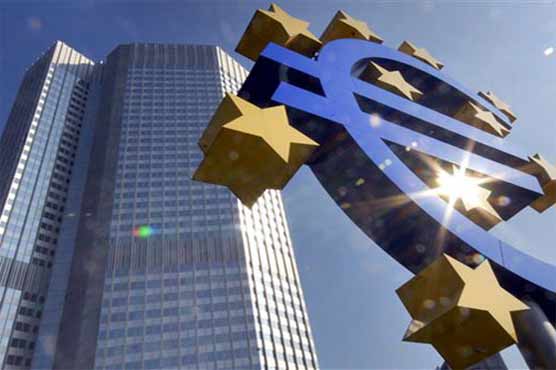
FRANKFURT (AFP) - The European Central Bank has criticised plans by Hungary to ease household debt, warning they posed a possible threat to the Hungarian banking sector.
In a legal opinion, signed by ECB president Mario Draghi and posted on its website, the central bank criticised the Hungarian authorities for failing to consult properly with the ECB on legislation adopted by parliament in July.
The measures introduced by Hungarian Prime Minister Viktor Orban are aimed at helping Hungarians, still struggling to repay foreign-currency loans which many took before the 2008 financial crisis, but then faced huge payments when the forint plunged.
It would allow the conversion of foreign-currency loans into forints at below-market rates, and force banks to compensate borrowers for certain practices, including unilateral increases in interest due.
"The Hungarian authorities have ... failed to comply with their duty to consult the ECB," Draghi wrote in the legal opinion.
"The draft law was adopted on July 4, 2014, shortly after the ECB was consulted, and before it could adopt its opinion. As a consequence, it was not possible for the Hungarian parliament to take the ECB s views into account before legislating," the statement said.
"Moreover, the law differs substantially from the draft law as a result of several amendments submitted to the parliament in the interim, none of which was sent to the ECB in draft form."
About a million Hungarians took out foreign-currency mortgages -- mostly in Swiss francs -- before the financial crisis, only to see the forint fall sharply after that, leaving hundreds of thousands with soaring monthly instalments.
Hungarian households now owe about 10 billion euros ($13.5 billion) to the banks.
- Burden for banks -
The measures are likely to result in big losses for Hungary s mostly foreign-owned banks.
The National Bank of Hungary has estimated that the compensation could cost the banking sector about 900 billion Hungarian forint ($3.82 billion).
The main foreign banks include Austria s Erste and Raiffeisen, Italy s Intesa and Belgium s KBC.
The ECB said the potentially significant costs of the new measures "may in some cases require material capital injections from the owners of the financial institutions."
The statement was wide-ranging in its criticism.
"The ECB suggests that the Hungarian authorities carry out a thorough analysis of the possible effects of the measures having retroactive effect, as such measures could put a significant strain on the banking sector, potentially adversely affecting the stability of the Hungarian financial sector as a whole," it said.
Budapest has said that the next batch of legislation, which will lay out how banks will have to settle the refunds with borrowers, will be submitted to parliament in the autumn.
The ECB said that this settlement process and the planned conversion of forex loans into forints could pose risks and the Hungarian government should take these into account.
"In particular, further measures to be applied to the planned conversion of FX (forex) loans should also take into account the need to preserve financial stability, ensure an appropriate burden sharing among all stakeholders and avoid moral hazard in the future," the ECB said.
Depending on the nature of further measures on the repayment or write-down of funds to be repaid to customers, "cross-border spillover effects on banking groups consolidated profits and capital positions may occur."
The ECB warned: "In addition to the possible significant adverse financial impact on the banking system, the possibility of negative effects on the Hungarian economy and financial markets cannot be excluded."