Summary Shell has not pumped crude from Ogoniland since 1993, when it was forced to pull out.
LAGOS (AFP) - Nigeria and Shell have done almost nothing to ease oil pollution in the Ogoniland area of the Niger Delta, three years after a landmark UN report called for a $1 billion clean-up, rights groups said Monday.
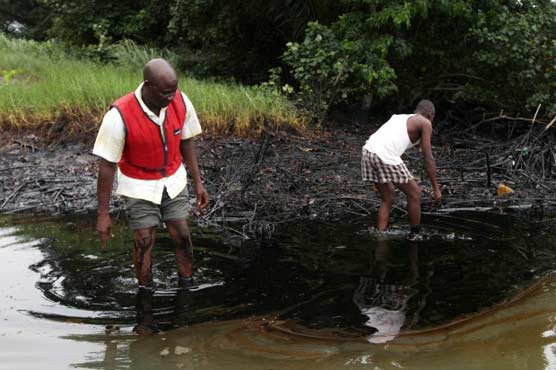
Environmental devastation in Ogoniland has for many come to symbolise the tragedy of Nigeria s vast oil wealth.
Decades of crude production filled the pockets of powerful government officials and generated huge profits for oil majors like Shell, while corruption and spills left the people with nothing but land too polluted for farming or fishing.
Exactly three years ago, a United Nations Environment Programme (UNEP) report said the area may require the world s biggest-ever clean-up and called on the oil industry and Nigerian government to contribute $1 billion (around 750 million euros).
But in a report published on Monday, Amnesty International, Friends of the Earth and three other groups rights groups claim not enough has been done.
"Three years on and the government and Shell have done little more than set up processes that look like action but are just fig leaves for business as usual," said Godwin Ojo of Friends of the Earth Nigeria.
Shell has not pumped crude from Ogoniland since 1993, when it was forced to pull out because of unrest.
Two years later, environmental activist Ken Saro Wiwa, who had fiercely criticised Shell s presence in Ogoniland, was executed by the regime of dictator Sani Abacha, one of the most condemned episodes in the region s history.
Nigeria returned to civilian rule in 1999 after Abacha s death, but critics say the governments elected since have done little to improve pollution in the Niger Delta.
"No matter how much evidence emerges of Shell s bad practice, Shell has so far escaped the necessity to clean up the damage it has caused," said Audrey Gaughran of Amnesty.
- Making progress -
Shell Petroleum Development Company of Nigeria (SPDC) said it "has made progress in addressing all the recommendations directed to it in that publication," but stressed than much of the work requires "multi-stakeholder efforts".
"It is important to emphasise that neither SPDC nor any other stakeholder is in a position to implement the entirety of UNEP s recommendations unilaterally," it said in a statement.
"SPDC has an activity programme in place, focused on delivering improvements in the environmental and community health situation on the ground," it said.
"We continue to work with the government, communities and a number of constructive NGOs and civil society groups in the Niger Delta to accelerate progress."
In April 2013, Shell staff returned to Ogoniland for the first time in two decades to study how best to decommission their decaying assets in the region.
The company described the move as "a key step" in complying with the UNEP report.
Nigeria is Africa s largest oil producer, pumping out roughly two million barrels a day, with crude accounting for more than 90 percent of its foreign exchange earnings.