Summary Attention now turns to the release of Japanese trade data on Wednesday.
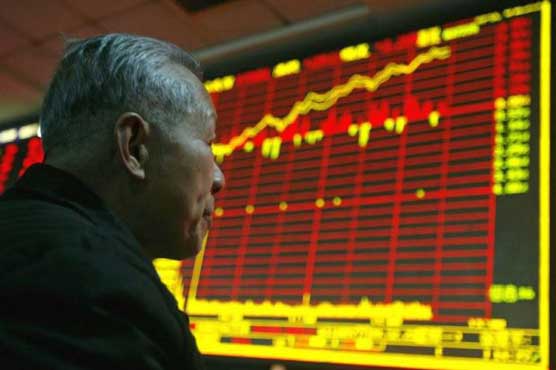
HONG KONG (AFP) - Asian markets mostly rose Tuesday following gains on Wall Street, but Thailand's main index slipped after the army declared martial law following months of deadly anti-government protests.
With little to drive buying action, investors were focusing on the release later in the week of several key economic indicators and minutes from the latest US Federal Reserve policy meeting.
Tokyo rose 0.49 percent, or 68.81 points, to 14,075.25 after four straight days of losses, while Sydney gained 0.21 percent, or 11.4 points, to 5,420.4.
Seoul ended 0.19 percent lower, losing 3.88 points to 2,011.26.
In afternoon trade Hong Kong was up 0.56 percent, while Shanghai was flat, ticking up 0.08 percent.
US stocks were lifted by a rally in tech shares, which have suffered heavy selling in recent weeks on concerns big-ticket firms such as Twitter and Netflix were overvalued.
The upbeat atmosphere came after Apple and Google said late Friday they were dismissing lawsuits against each other and would work together on patent reform. The good news spread throughout Wall Street.
The Nasdaq rose 0.86 percent, the Dow added 0.12 percent and the S&P 500 gained 0.38 percent Monday.
Attention now turns to the release of Japanese trade data on Wednesday as well as the Bank of Japan's latest policy meeting. That will be followed by the release of minutes from the US Federal Reserve's most recent policy meeting, which will give a better insight into the thinking of board members.
Thursday will see HSBC release its preliminary results on May manufacturing activity in China, with analysts hoping for signs of a pick-up in the world's number two economy.
The British banking giant will also unveil its early results for the eurozone and United States later in the day.
- Martial law 'surprise' -
In Bangkok the Stock Exchange of Thailand was 0.84 percent lower after the army's martial law announcement, which followed almost seven months of anti-government protests that have left 28 people dead and hundreds wounded.
Army officials said the move had been made "to restore peace and order for people from all sides", stressing that it "is not a coup".
However, the market pared initial losses of 1.50 percent, while the baht only eased slightly against the dollar as analysts indicated the move could prove positive for the economy in the long term.
The dollar edged up to 32.57 baht early Tuesday from 32.47 baht on Monday.
Invesco fund manager Jalil Rasheed said the imposition of martial law was a surprise, given the military has stayed away from the political standoff.
He said Thailand's brand "is definitely taking a beating" but from a markets perspective, "the largest participants are local retail investors, who have been through this before".
Despite the long-running political stand-off the Thai stock exchange is still up more than seven percent this year.
It even edged up on Monday after data showed the economy shrank in the first three months of 2014 because of the impact of the disorder on tourism and consumer confidence. The contraction is the first since the end of 2011.
In other forex trade the greenback was at 101.51 yen against 101.45 yen in New York, while the euro fetched $1.3709 and 139.19 yen compared with $1.3709 and 139.13 yen.
Oil prices rose in afternoon trade. The US benchmark, West Texas Intermediate for delivery in June, was up 12 cents to $102.73. Brent North Sea crude for July rose 16 cents to $109.53.
Gold fetched $1,291.07 an ounce at 0630 GMT compared with $1,299.89 late Monday.
In other markets:
-- Taipei fell 0.14 percent, or 12.11 points, to 8,887.79.
Smartphone maker HTC rose 0.92 percent to Tw$165.0 while Formosa Plastics slipped 1.3 percent to Tw$76.3.
-- Wellington lost 0.64 percent, or 32.89 points, to 5,134.89.
Trade Me was off 3.81 percent at NZ$3.51 and Xero eased 0.31 percent to NZ$32.30.