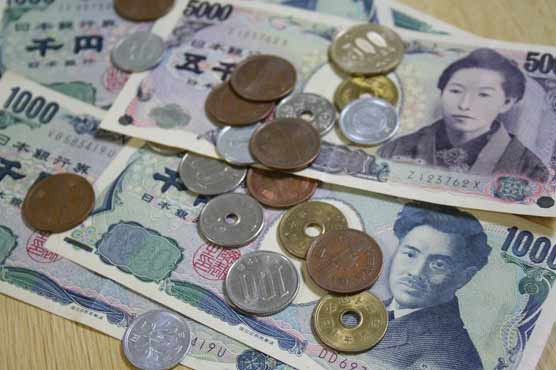
Summary The dollar weakened to 101.45 yen, from 101.76 yen in New York.
TOKYO, March 03, 2014 (AFP) - The yen gathered steam in Asia Monday on rising geopolitical fears as Ukraine mobilised its army with Russian troops poised to invade the former Soviet state.
In Tokyo afternoon trade, the dollar weakened to 101.45 yen, from 101.76 yen in New York Friday afternoon.
The euro was also down at 139.79 yen from 140.44 yen, while it weakened to $1.3778 against $1.3800 in US trade.
Russia's parliament voted Saturday to allow President Vladimir Putin to send troops into Crimea -- a predominantly Russian-speaking peninsula in the southeast of Ukraine -- following the ouster of the country's pro-Moscow government.
The move was met with global condemnation, with the leaders of the world's top industrialised powers -- Britain, Canada, France, Germany, Italy, Japan, and the United States -- calling it a "clear violation" of Ukraine's sovereignty.
Symbolically billing themselves as the G7, they warned in a statement that Russia's actions were incompatible with the Group of Eight Nations, which Moscow joined in 1997. They also said they would not take part in preparatory talks for June's G8 summit in Sochi, Russia.
US Secretary of State John Kerry is to visit Kiev for talks on Tuesday that US officials said would lend support to Ukraine's interim Western-allied leaders.
"The escalating geopolitical risk is likely to raise risk aversion in markets until tensions ease," National Australia Bank said.
The downbeat atmosphere was compounded by another disappointing set of manufacturing figures from China that added to concerns about growth in the world's number two economy.
And on Friday, the US Commerce Department said US gross domestic product growth in the final quarter of 2013 came in at 2.4 percent, compared with its initial estimate of a 3.2 percent expansion.
The downward revision dented confidence in the state of the US economic recovery, although the results have been partly dismissed as being due to extremely cold weather that dampened activity.
The euro had enjoyed a brief rally Friday after data showed eurozone inflation was low but stable, giving some respite from fears the 18-nation bloc could slip into a deflationary spiral.
The data reduced expectations of policy action by the European Central Bank at a meeting this week.
The dollar was mixed against other Asia-Pacific currencies.
It weakened to Sg$1.2674 from Sg$1.2675 on Friday, to 11,575 Indonesian rupiah from 11,645 rupiah and to 61.91 Indian rupees from 62.16 rupees.
The greenback also slipped to 32.59 Thai baht from 32.66 baht, while it rose to 44.73 Philippine pesos from 44.67 pesos and to 1,070.45 South Korean won from 1,068.06 won.
The Australian dollar eased to 89.11 US cents from 89.50 cents and the Chinese yuan bought 16.47 yen against 16.46 yen.