Summary 12,000 rubber farmers protested Tuesday after govt failed to boost declining rubber prices.
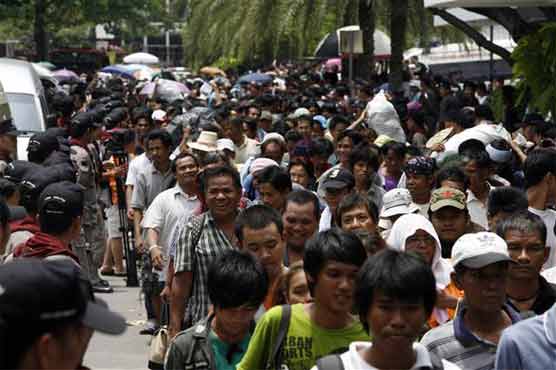
SURAT THANI (AP) - More than 12,000 rubber farmers protested and blocked roads Tuesday in Thailand s south after the government failed to answer their demands to boost declining rubber prices, police said.
Farmers from several provinces in the South, where most of Thailand s rubber plantations are located, were blocking a main highway near an agricultural cooperative office in Surat Thani province, 640 kilometers (400 miles) south of Bangkok, police Maj. Gen. Kiattipong Khaosam-ang said.
Demonstrations in at least three other provinces have spread from a weeks-long protest in the neighboring province of Nakhon Si Thammarat, where a main highway and a railway have blocked by protesters for more than a week. One protester was killed by gunfire at the blockade site although police believed it was triggered by infighting among the demonstrators.
Kiattipong said about 300 anti-riot police officers were deployed near the protest site in Surat Thani over concerns that demonstrators might attempt to break into a nearby airport.
The farmers called on the government to guarantee the price of rubber to help increase their incomes.
In failed negotiations in Bangkok last week, representatives of the farmers demanded that the government fix a price of 120 baht ($3.70) per kilogram (2.2 pounds) for rubber products, but the Agriculture Ministry made an offer of 80 baht ($2.50).
This week, the farmers lowered their demand to 101 baht ($3.14), but the government said price intervention was not the answer to the declining prices. The current price is 86.15 baht ($2.68).
"The government doesn t believe this measure would improve rubber prices because the price guarantee might lead to weaker market prices," Deputy Prime Minister Kittirat Na Ranong told reporters in Bangkok on Tuesday.
Thailand is the world s top producer and exporter of natural rubber, which is used in products from condoms to car tires.
Rubber prices in Thailand have continually dropped since peaking in 2011 due to weaker demand in a sluggish global economy.
The government already subsidizes rice growers by paying them above-market prices, a scheme that has accumulated losses of at least $4 billion since its inception two years ago and resulted in Thailand losing its spot as world s No. 1 rice exporter.