Summary Central bank focused on forex-selling to support lira.
ISTANBUL (Reuters) - Turkey s central bank faced calls on Thursday to raise interest rates to steady the embattled lira despite political pressure from Prime Minister Tayyip Erdogan to keep rates low - a dilemma which could put the bank s credibility at stake.
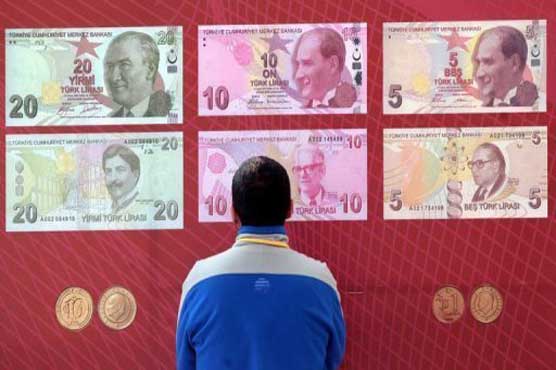
The lira has tumbled some 9 percent against the dollar since the beginning of May, $3.55 billion sold off in two days this week alone in its defence. Investor concerns the U.S. Federal Reserve would scale back stimulus measures and anti-government protests across Turkey lst month have driven losses.
An overnight signal that U.S. money-printing may not end as soon as expected has eased pressure on the lira for now but Turkey remains most vulnerable to foreign capital outflows among emerging markets as it combats a huge current account gap. Investor concerns about the bank s room for manoeuvre have risen since Erdogan, who has overseen a boom in the Turkish economy during his 10 years in power, accused a high interest rate lobby of instigating unprecedented protests against his government last month.
Without identifying the grouping any further, he accuses it of manoeuvring to undermine the Turkish economy in order to curb growing Turkish political and economic influence.
Such comments cast doubt on prospects for a rate hike, although a sharp whittling down of net reserves, now estimated by bankers to be below $40 billion, could set limits to the forex auctioning policy pursued this week.
"The central bank s willingness to undertake such a rate adjustment is unclear, in particular given the strong government rhetoric against high interest rate lobbies ," said Christian Keller, Barclays Capital economist.
"Ultimately, only a combination of continued pressure on the lira and further forex reserve losses might force the central bank to act," he said.
Analysts said the central bank could not afford to allow the lira depreciation to continue, while above-target inflation and rapid consumer loan growth also argued against the current low level of interest rates.
"The central bank cannot let the currency go as this could potentially lead to an inflation/depreciation spiral, hurt the bank s credibility dearly and have a detrimental impact on corporate balance sheets," JPMorgan economist Yarkin Cebeci said.
"Instead, if the lira remains under pressure, hiking rates would be a safer strategy for the central bank...We expect the bank to hike the policy rate at most by 100 basis points as a sharper increase could lead to increased political pressure and its benefit would be doubtful," he said.
The central bank kept its main policy rate, the one-week repo rate, at 4.50 percent, its borrowing rate at 3.5 percent and lending rate at 6.5 percent at its last meeting on June 18. Its next meeting is on July 23.
However the bank is more concerned about growth which slowed sharply to 2.2 percent last year. It has undertaken a series of rate cuts since last September to try to spur the economy until last month, when it kept its rates on hold.
The bank is now focused on tightening liquidity to support the lira, burning $3.55 billion in two days this week after the lira hit an all-time low of 1.9737 against the dollar on Monday. It has sold $6.2 billion this year.
Central Bank Governor Erdem Basci vowed the tightening would be "strong, effective, temporary" and said it would only make a change in the bank s interest rate corridor if the tightening fails to prevent excessive loan growth.