Summary Fresh records for the S&P and the Dow Jones Industrial Average confirmed the complete recovery.
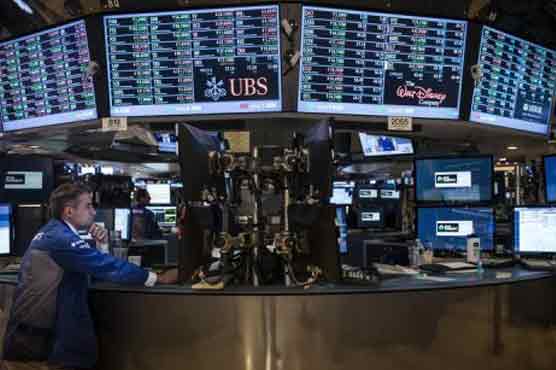
NEW YORK CITY (AFP) - The S&P 500 scored its best rise for the first six months of the year in 15 years as US stocks closed out a strong first half, despite losses for June driven by worries of monetary tightening.
The plodding economic recovery brought investors average gains of more than 12 percent for the six months, helped by the Federal Reserve's easy money policy but also underpinned by strong corporate profits.
Fresh records for the S&P and the Dow Jones Industrial Average confirmed the complete recovery, at least for stocks, from the crisis of 2008.
The return of small investors to the markets also fed a jump in new stock offerings and mergers and acquisitions, both at multi-year highs as Wall Street got much of its pre-crash mojo back.
It turned US shares into the world's best performer among major markets, while Europe sagged and emerging markets lost nearly 11 percent.
The S&P 500, the broadest measure of US stocks, put on 12.6 percent in the January to June period, the strongest first-half performance since 1998.
The Dow blue chips did even better, rising 13.8 percent -- their best for the period in 14 years -- while the Nasdaq Composite rose 12.7 percent.
The gains held despite index losses of more than 3 percent in June as the future of the Fed's quantitative easing (QE) easy money policy came into question and bond yields jumped amid expectations of higher interest rates.
But June will likely be seen as a turning point for market sentiment, with investors more cautious and focused both on corporate earnings and monetary police, rather than the momentum of money itself.
Fed chairman Ben Bernanke's comments that a tapering of the $85 billion a month QE bond purchases -- aimed at holding interest rates down -- could begin in September and the purchases be fully wound up in mid-2014, spurred speculation that the Fed could actually begin raising its ultra-low interest rates by next year.
That sparked a sweeping downward repricing of bonds and stocks by the end of the first half.
Especially hit were stocks like telecoms and utilities that are liked for their dividends. With the 10 year Treasury bond yield jumping from 1.48 percent at the beginning of the year to 2.48 percent by the end of June -- conservative investors were jettisoning such shares.
Also dumped in the past two months were some key commodity stocks, especially gold, both on the rise in rates and the slowdown in China and other emerging markets.
But as the final week of June's slight rebound showed, not all were convinced of the prospect of real monetary tightening by the Fed -- a view fed officials were taking pains to reinforce throughout the week.
Top allies of Bernanke stressed that markets had overreacted to the tapering comments, adding that everything depended on whether economic growth picks up or not from the sub-2 percent annual pace of the first half.
One, William Dudley, the chief of the Fed's New York branch, said market expectations had gotten "quite out of sync" with the thinking of Fed policy makers.
Analysts were then cautiously optimistic about the rest of the year.
"It appears as if the Fed is doing everything that it can to indicate 'we are not looking to slow the economy, just reduce the stimulus,'" said Sam Stovall of Standard & Poor's Capital IQ.
"We might find that the market moves higher in the beginning of July as investors buy back all of the shares that were beaten up in June."
Hugh Johnson of Hugh Johnson Advisors said the slight rise in the final week of June could be described as "the restoration of sanity" after several rocky weeks.
IPO industry expert Renaissance Capital said there was still enough strength in the markets to support more new issues, after the second quarter's 61 companies going public, the most active quarter in nearly six years.
"Though the Fed's hints at a retreat from stimulus efforts brought a dose of renewed volatility to the markets last week, investors showed a willingness to continue putting money to work in IPOs, as long as valuations were adjusted."
Most expect a slow market for the coming week, shortened by the Fourth of July holiday.
But a slew of fresh data on the economy in June -- car sales, manufacturing and service industry growth, trade and job creation -- will fill out the picture of how strong or weak the first half really was. And that will spark new speculation on the Fed's data-shaped path.