Summary The segment is a small but growing slice of the $27.9 billion U.S. coffee market.
NEW YORK (Reuters) - For exotic coffee connoisseurs like Geoff Watts, the search for the perfect bean isn t the solitary quest it once was.
On a recent visit to Ethiopia s southern Yirgacheffe region eight hours from Addis Ababa, the buyer for Intelligentsia Coffee bumped into a familiar face.
U.S. craft coffee purveyors are getting less lonely. The segment is a small but growing slice of the $27.9 billion U.S. coffee market, which has increased in recent years at an annual average rate of 5.6 percent and is expected to reach $33.7 billion by 2018, according to research firm IBISWorld, though it does not yet separate revenues for high-end purveyors.
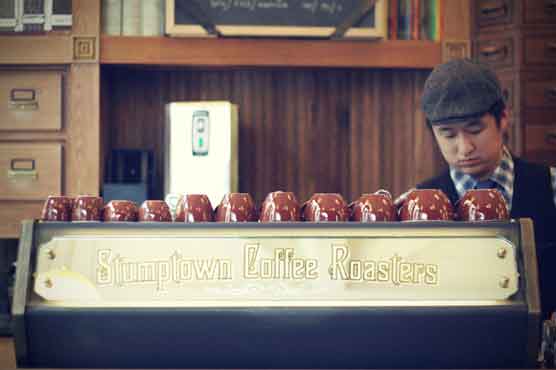
Small bi-coastal chains Intelligentsia, Blue Bottle Coffee and Stumptown Coffee Roasters lead the so-called "third wave" or "slow coffee" movement, while industry behemoth Starbucks Corp shows off its craft roots selling limited-supply "reserve" coffees for up to $50 for a half-pound bag.
The new generation of upscale coffee shops and roasters includes dozens of operators around the country. They are in a race to find rare and distinctive beans and hope to elevate one of the world s oldest and most popular drinks in the same way that craft beer brewers, boutique wineries and olive oil makers won fans by focusing on high-quality ingredients and production.
During the last two years, private equity firms, venture capitalists and wealthy individuals such as former professional skateboarder Tony Hawk, and tech luminaries Instagram Chief Executive Kevin Systrom and Jack Dorsey, a co-founder of Twitter and Square, have poured in well over $55 million - including a large cash jolt for San Francisco-based Philz Coffee in May.
Not your typical retirement investors, they are often coffee connoisseurs themselves and are eager to capitalize on the new breed of enthusiasts who were raised on espressos and lattes popularized by Starbucks.
Customers are willing to pay dearly for their java habit - $80 for a half-pound of rare, roasted beans and $3 and up for a cup of individually prepared "pour over," high-tech "siphon" coffee, or old school espresso. Those prices are as much as triple the cost for an average cup of coffee and bean prices are at least 10 times more.
Sales are expected to climb as the U.S. job market improves and more Americans treat coffee as an experience rather than a utilitarian pick-me-up, said IBISWorld analyst Andrew Krabeepetcharat.
But experts also wonder if there will be enough demand beyond wealthy, urban enclaves to support meaningful growth and whether getting bigger would hurt the mystique that fueled the craft operators in the first place.
For around $5, "you can have an incredible experience at a high-end coffee bar and get something impeccably sourced and roasted and made," said Freeman. "It s the democratization of luxury."
The new movement is built on the success of Starbucks, whose founder and CEO Howard Schultz often speaks of the "romance" and "theater" of coffee and is credited with pioneering coffee s "second wave" by shifting the masses from cheap, hours-old brew to fresh-made drinks from premium beans.
With some 12,900 cafes in its U.S.-dominated Americas region, Starbucks holds the biggest share of the country s coffee market with 18.7 percent of revenue, according to IBISWorld. That figure shows how competitive and fragmented the business is in the United States, where local cafes, fast-food chains and even gas stations peddle coffee and lattes.
Seattle-based Starbucks is a major buyer of artisan beans, going up against rivals like Chicago-based Intelligentsia, which sells half-pound (8-ounce) bags of its Santuario Geisha roast from Colombia for $80.50 and expects to grow to 12 stores this year from nine.
He and fellow investor Hawk, who said he kicked in $100,000, also advise Blue Bottle on its growth plans.
Investment opportunities appear limited to the very wealthy - but it is not for a lack of effort from fans of the cafes.